Episode 67







Why AI Forces Entrepreneurial Thinking
SPEAKER_01 0:00
That is a need for everybody in the organization to act much more entrepreneurially and less managing for business as usual. I think that mentality where we always looked at technology as taking the most, I guess, like manual or junior roles, whatever is inversely correlated to education, is something that's making a lot of us pretty uncomfortable, frankly. Because, you know, it's it's now making that knowledge and intelligence that a lot of folks thought was their personal and professional and and business mote no longer remote. And that's that's scary. And so I think there's a big difference between what you can vibe code as a demo and what it takes to actually have a real product. And I also think that the kind of one-shot vibecode experience, which is so just amazingly like magic, kind of lulls us. A lot of us who love building products, it's convinced us that everybody, therefore, is going to want to build products and we're all going to want to build software. And I think about gardening as a metaphor. I like to have a nice garden like the next person, but I can't stand actually gardening.
Rajiv Parikh 1:09
Today's
Meet Jeff McQueen And Worksites AI
Rajiv Parikh 1:10
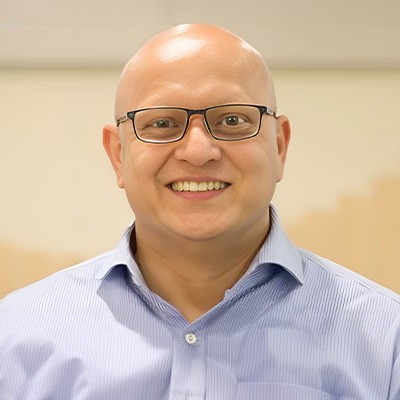
episode with Jeff McQueen is really going to be fun. He's a four-time entrepreneur from Australia that came to Silicon Valley and built his companies and his businesses. And what's poignant about him is that he's gone from building software companies to now building an AI company that comes out of the notion of revealed preference. Not just what people tell you they want, but when you talk with them and work with them, they express what they really want. And it's something that you can't get out of surveys. It's something that he, because of his natural curiosity, got from people in terms of how he's building his next business and how he advises entrepreneurs on it. He has really interesting notions of how AI is inverting the pyramid, the traditional pyramid, but in much more unique and entrepreneurial ways, in a way that can enable folks to thrive. He has interesting philosophical notions of what makes for successful cultures and societies. So that's gonna be really fun, as well as just understanding what sparks him. That initial curiosity from having a high school teacher father who gave him his first exposure to computers. So great episode. You gotta listen to this one. It's very good. Welcome to the Spark of Ages podcast. We're joined by Jeff McQueen, the founder and CEO of Worksites AI, a continuous performance intelligence platform that helps modern leaders run their businesses with AI. A four-time founder with over 20 years of experience building and investing in tech startups, Jeff was formerly the CEO and co-founder of Acello, which he scaled to over $14 million in ARR or annual recurring revenue, before a successful exit to private equity in early 2024. Before that, he started the digital agency Internetrix, growing it from his apartment to secure hundreds of clients and a partnership with Google, and co-founded OmniDrive, a consumer web storage startup that TechCrunch famously called online storage perfection. Armed with an MBA from the Sydney Business School at the University of Wollangong, Jeff actually dropped out of his undergraduate telecommunications engineering degree at the same university to launch his first company. Today he also serves as the executive director of the Aussie Founders Network and has spent over 13 years as an investor and mentor at Startmate, Australia's equivalent to Y Common Air. Some of the key takeaways you can expect from this episode AI first operations, reaching scale with a small team, building for revealed preference over user feedback, and finally, demos versus products, creating trust in the era of vibe coding. Jeff, welcome to the Spark of Ages.
SPEAKER_01 3:55
Great to be here. Thank you so much for having me. And what a great intro.
Rajiv Parikh 3:58
Great to have you.
The Pyramid Flips And Managers Fade
Rajiv Parikh 3:59
Love having multi-time founders here, especially a person like you who's making the big, the big shift from one to another and taking advantage of AI while doing it. So you've written that AI flips the traditional business pyramid upside down, meaning high-level cognitive work like strategy, planning, and analysis can now be accelerated by AI, while the messy, high variance realities of running a business like culture, human alignment, and conflict remain stubbornly human. As a four-time founder, how has this inversion fundamentally changed how you allocate your own time and emotional energy as CEO compared to your early days?
SPEAKER_01 4:34
Yeah, it's a great question. I think that mentality where we always looked at technology as taking the most, I guess, like manual or junior roles, whatever's inversely correlated to education, is something that's making a lot of us pretty uncomfortable, frankly, because you know it's it's now making that knowledge and intelligence that a lot of folks thought was their personal and professional and business mote no longer remote. And that's that's scary. In terms of what I'm doing differently, I think the main thing is really just focusing on being an entrepreneur first, second, and third, and less about being a manager. And I was recently giving a talk about this concept of almost like a manager extinction, because we're not sure what the future's gonna hold and what things are gonna look like on the other side of this transition, but it's gonna be so fast compared to prior transitions that there's a need for everybody in the organization to act much more entrepreneurially and less managing for business as usual. And I think that's gonna be also pretty interesting and uncomfortable for folks that have specialized in, you know, politics or just you know, incrementalism. And instead it's gonna really empower folks with the tooling and the fearlessness to just get out there and do it.
Rajiv Parikh 5:52
I think a lot more is being expected of you because you have access to these tools. And as you talked about, your job is not defined by the limitations of human intelligence anymore. So that's changing. And who knows, maybe it's more politics, but more politics of the super talented.
SPEAKER_01 6:09
It could be. I think you know, a lot of the resources we used to fight for, though, if you think about big orgs, like people would be fighting for, you know, the the knockdown, drag out budget fight each year, fighting about who gets to position their people at the top of the stack rank in performance reviews. Like a lot of that stuff, it moves so much faster now that if you're doing annual budget cycles, if you're doing, you know, sort of OKRs only on a quarterly basis, sure, that that was an awesome playbook a decade ago. But I just I don't think that being anything other than just a really high-performing entrepreneur at every tier in the organization, I just feel like that's essential. And as you've heard on prior episodes with with the guests that are much more esteemed in this matter, the agents play is gonna mean that in many respects, even individual contributors are actually now gonna be leaders of agents with a lot more of that, you know, sort of the way the US military runs, where the NCOs get to make a lot of decisions. And I think that's kind of what we're gonna see in in sort of the the business world as well. And reality is that's gonna require a lot less individuals. And so the ones who embrace that and become entrepreneurial, I think are gonna come out the other side of this looking great. And the other ones that want to insist, if you're a software developer, you want to insist on story points or you know, just delivering what you delivered two years ago if you're working in an agency. I hope you know how to drive a bus. It's gonna be even then before Waymo takes those out too. Yes, I know.
Speed Is Not The Bottleneck
Rajiv Parikh 7:41
So you've argued that the bottleneck isn't execution, right? It's understanding the customer problems. So, how should founders completely restructure their engineering and product teams to thrive in this new world where coding is fast, but human judgment and customer empathy are true constraints?
SPEAKER_01 7:58
Yeah, I think it it really involves a lot more delegation and trust to the judgment of the individuals. But that cuts both ways because if those individuals are mailing it in or thinking that they can just, you know, talk about engineering velocity the old way, or that's not my job. Like if you ever even get that sentiment, that's time to have a conversation about somebody's next career move outside. That's not the way that businesses that are going to be under tremendous operational pressure from market expectations of their customers from competitors. You just you're not gonna be able to play that way, unfortunately, or fortunately, depending on your worldview.
Vibe Coding Demos Versus Real Products
Rajiv Parikh 8:38
Your orientation, right? You've experimented with vibe coding and rapid prototyping. You caution that speed gets you a demo, but not a quality product. So the barrier to building software is approaching zero, right? In fact, the software itself will ask you if based on what you did, if it should be to build some software for you, how do you differentiate between the quick AI prototype and the true product that's actually ready to be trusted by enterprise customers?
SPEAKER_01 9:00
Yeah, so I would say if I think back to, you know, Eric Reese's work and the MVPs of the world, right? A lot of the time that was actually your MVP is a deck. It's screenshots put into a deck that you sit there and you put it on I've had and you slide through with somebody and you show them. And you can get a lot of quite good feedback quite affordably from that. What lovable replit and whatever's coming next allow you to do is take that to the next level where the demo is actually working software that you can genuinely interact with. And maybe this is the experience of having been in the trenches and building, like, you know, Excel O was a pretty big product. It was really 14 products in one. And it was not only complex, but running the line of business, like the core systems for two bill a year of like GMV moving through the professional service firms using it. And I can tell you that the things you don't think about around security, not just patches and not just like writing good code, but also like access control and permissions and privilege escalation. Like these are real, real issues that have really major consequences.
Rajiv Parikh 10:11
So a lot of this is about governance, right? You're talking about you can build the agent and it can show really amazing things, but then you have to like you're talking about digging into do I give this agent read access? Do I give it write access? What access do I give to what application? A lot of things that you have to think through that you probably weren't thinking about before. You also want to make sure this thing can scale because it may look really good, but then actually put it out as a product, it's gonna have some of the issues that Clyde gives you where it says it did something and it didn't really do it.
SPEAKER_01 10:45
Yeah. And so you're just gonna end up in a situation if you kind of go out there thinking, yeah, cool, you know, this metaphorical car has four wheels and I can steer it. And what you've done is built yourself a soapbox derby ride, right? With maybe even a better, better, you know, skin. But as soon as you get to a hill in the rain when you've got your kids in the back, and that's when bad things really happen. And so I think there's a big difference between what you can vibe code as a demo and what it takes to actually have a real product. And I also think that the kind of one-shot vibe code experience, which is so just amazingly like magic, kind of lulls us. A lot of us who love building products, it's convinced us that everybody, therefore, is going to want to build products and we're all gonna want to build software. And I think about gardening as a metaphor. I like to have a nice garden like the next person, but I can't stand actually gardening. I just don't get any joy out of it. It's a job. And I pay somebody to do that job who loves it and does it better than me. And I think software, building software and building technology products is about the same. That there's 20% of people out there that really love it, the same way that there's 20% of people who love the garden. And the problem is that only 5% of people could do it before. And so we've seen this unlock with the lovables and replets where the 15% of people who couldn't because they didn't do computer science or they didn't, you know, have the background. Now they can build something and they're excited. But I think a lot of us who love it assume everyone else does. And really they just want to have a nice garden. It wasn't like give them some land and education and they're gonna turn into lovers of gardening. No, they were never gonna love it. And I think that's why the SAS Pocalypse and a whole lot that combined with the fact that building good software that is that is actually up to task and has a life cycle, those things are the reasons that I think you know SAS Pocalypse is very overrated.
Rajiv Parikh 12:34
It is. I agree. I think we believed that the beginning of AI and the ability for Claude or Codex to be able to, or replit, like you say, to be able to replace functions would just mean the end of it. But there's a lot of company corporate context. There's a lot of process, there's a lot of implementation that's occurred. And you're not going to get rid of those companies right away. It may change the, I think what I've heard is that it changes the upsell, it changes the pricing model, but it doesn't necessarily change the need.
SPEAKER_01 13:03
It it also means the Stockholm syndrome we've often seen with PE roll-ups of SaaS companies, where the the playbook is eliminate investment in product and RD and engineering, cut your client's success team to the bone, make the spreadsheet look good before you sell it in three to five, and effectively just treat the customers like they're your hostages, Stockholm syndrome style that they love you. That's that's not going to be a playbook anymore. In large part because I use software all the time, my kids' school software, my home automation software. Like it's terrible. It's absolutely terrible. So I think there's still a lot of demand for better, but the bad is not long of this world, is what I think about.
Rajiv Parikh 13:44
That's right.
Where AI Helps And Where It Fails
Rajiv Parikh 13:45
That's a great point. Uh, one of the things you've done recently is you pivoted Team Score into what site's AI and single wheat. And so you used AI as your sparring partner for market research and strategy, but you mentioned or you noted that it was utterly useless and lacked the imagination to actually name the product. So, what did that pivot teach you about the exact boundaries of AI's capabilities? How do you advise other founders to find that appropriate friction between AI execution and human creativity?
SPEAKER_01 14:12
It helps you to go faster, but it doesn't help you set the direction. And it doesn't have, at least at this time, in you know what we get to use as the frontier models, it doesn't have the creativity. So that was, you know, the areas like doing TAM analysis and ICP definition and, you know, competitor research, things that you could imagine are a fairly knowable, bounded set of, you know, answers based on a solid input or prompt, it smashed that out of the park. It was so good, man. Like being able to just go so fast and effectively be like almost like a professor in business school who assigned a task to a bunch of really smart students and they they turned in the paper and it was nine out of 10. And you're like, fantastic. Like this is great. But actually assigning the paper, coming up with the paper, coming up with the questions and why those questions mattered, that's still very much a human experience. And I decided to play a little bit and be like, hey, so now you know the ICP and you know the competitors and you know this and you know that, you know, what names would you give? And it was just horrifically bad. So, you know, that's that's an interesting insight.
Rajiv Parikh 15:21
Very ordinary, very it could apply to anything. It doesn't have that connection. I've seen this when I've had CEOs send me their board members' work on like a positioning exercise or a branding exercise that we're involved in. And the names they come back are just terrible. It's just, oh my God.
SPEAKER_01 15:42
Yep, exactly.
Rajiv Parikh 15:43
Are you kidding me? And that's like we give them our version, which is a combination of some brainstorming with AI, but just super sharp people that can see the next level. And I was like, look at that, encapsulates your whole business in two words. And it's a double entendre and it it can mean multiple things. That's power. Yeah. And so special. That's something that humans can do.
SPEAKER_01 16:03
Yeah, and we do it so easily in relative terms. I mean, don't get me wrong, I did have to force myself to close all my other browser tabs and just stay focused on my domain name search tool while I, you know, sort of force myself to do the creative work. But yeah, it was amazing just to see that the the AI, for all of its incredible powers, it's it's not omniscient.
Revealed Preference Beats Surveys
Rajiv Parikh 16:25
No, it's not. The pivot from this notion of Team Store to WorkSites AI, it happened because you noticed users were ignoring the core scoring feature of your product. You noted what the market says, what it wants, is less important than its revealed preference. So in this era where AI allows founders to build new features almost instantly, how do you discipline yourself to look past your own initial product thesis and zero in on the true revealed preference hidden in your user's behavior?
SPEAKER_01 16:50
I think realistically you've got to talk to users. It's in some respects the the most analog thing of all because you can create great documents and great presentations and trick yourself into thinking you've got all the answers more than you ever could before, realistically, or at least with a lot less time and a lot higher quality output for the time that you do spend. But you know, talking to users and really getting past the state of versus revealed preference is something that requires tenacity and really uh an analog human interaction. Even like trying surveys was a bad idea, because with surveys, people will tell you what they think they should answer. And that's a big, a big problem because and in in my mentoring of you know, now hundreds of startups over the years, they'll often hear me, you know, I'll often give them this lesson learned about revealed versus stated preference. Like my last company's product double the profit margin of of professional service businesses. And you can imagine that close to 100% of the people in the funnel were like, yeah, that's really important to me. But really, it turned out that for a lot of them, there was other things that were more important, but they didn't want to admit to them. They didn't want to have to like make any changes because change was uncomfortable, or they didn't want to upset things, or you know, whatever it is. And so you you really that understanding the difference between stated and revealed preference. And so what I found with my product that I built last year, Team Score, leaders would say, Yeah, I want to have, you know, sort of some better visibility on what's going on with my remote and hybrid teams. And then when it came down to it, I realized that they didn't really care that much because they'd had five or six years post-pandemic to do something about it if they really cared. And instead, it was revealed preference was they didn't really care that much. And the interesting thing then was was seeing where the opportunity really was, which came from my use of OpenClaw and seeing that as the sort of a transition point for AI and realizing that there was actually a massive opportunity. And it turns out that pre-pivot, I actually created a bunch of the the technology required to to deliver that for the business, which was which is why I pivoted.
Rajiv Parikh 18:58
What was the big thing that you found from that? That you found they didn't necessarily want to know how to monitor the remote teams better. They actually wanted to what did they actually want?
SPEAKER_01 19:07
Yeah, they wanted to understand what was going on in their business. So I don't know, every founder you talked to, right? They got, you know, what's your team? Over 200 people. Like you probably remember back when there was 10 of you. And you probably remember that experience with some nostalgia. Because you often people tell me at least that it was because the team was smaller, everyone knew what was going on, there was less surprises, there was less things going wrong. And so, like those earlier stages is a lot of nostalgia. Now, admittedly, it's very rose-colored glasses because it was also life and death, whether we're gonna make payroll. Like, there's a lot of negatives about that stage too, but the positives stick with folks. And I had that experience, you know, building a number of companies and working with hundreds of CEOs over the years, that they had much the same experience. It was pretty universal. And what I realized with pre-pivot was people loved the fact that the product gave them a daily AI-powered output or summary of what had been going on across their team or their business the day before. And that was actually the bit that was really valuable. The kind of analytical stuff didn't really move the needle. Everyone's got dashboards for everything, but what mattered was actually being able to use AI on the qualitative stuff. Because every time you look at a dashboard and the number isn't quite right, or there's a there's a little orange mark next to it, the first thing you do is you go qualitative. You like look in the data in detail, you have a meeting, you look at the project details in terms of the notes or the comments. Like that's where you go. And I realized that for the first time in tech's history, we could actually harness the qualitative information unfiltered, unvarnished, from what's effectively a team of McKinsey type experts who could read everything that you as a leader could get your hands on, but you never had the time to. Now you've actually got them in your pocket for a couple of bucks a day, telling you what's going on and when the when you've got a problem before you have it.
Rajiv Parikh 21:12
What's truly going on truly going on? Yeah. I like that because I have my own thing about like as part of being an agency, we offer folks access to their dashboards to see performance. But the problem with these dashboards is it's only good if you have the daily context of what's going on in the business. And it doesn't reveal why you turned on or off a campaign or decisions made to flip things around. That comes from talking to the team, putting that in other slides that they reconcile with. But in an immediate look at it, doesn't tell you much of anything. And I think you you had a similar similar advice you were giving to entrepreneurs about the notion of always building a dashboard, right? So the analytics trap.
SPEAKER_01 21:55
It is, it's an analytics trap. And it's I've even like come to learn more deeply from talking. To use is as part of building out work sites that a lot of people build these dashboards, and the problems that come from that aren't just the trap of building a startup that focuses on dashboards, which is the analytics trap, you know, don't get tricked into building more of these dashboards. But also from an operator, like imagine you're a COO or an executive in a company, more dashboards actually kind of fossilizes the workflows, behaviors, and KPIs that are embodied in those dashboards and people learn to play the game, do their work to drive a number. And while that's natural and has been part of, you know, everything over a hundred years of management thinking, right? The challenge with those dashboards when you're a leader is they're not even close to enough. And the example I think of is you're in the Bay Area, right? Imagine Steve Kerr, the timeout whistle gets called, but instead of Steve Kerr standing up from the bench with his clipboard, he's actually running out of the locker room because he's he's been watching the whole quarter so far on his phone, refreshing the box score. And he knows that Draymond got a couple of blocks and also a couple of turnovers. And he knows that Steph's, you know, been a bit cold tonight from beyond the arc. And so he says to the team, he sits down and he says, Okay, I noticed there's been some blocks. Our field goals are down percentage. Tell me, what's going on? What kind of leader would he be? What kind of coach would he be? Like, that would be terrible. And yet, every CEO or leader who sits down to one of their L10 meetings if you're doing EOS or one of your check-ins if you're doing OK Arts goes around the table first to find out what's going on. As if you're the coach who needs to ask all the players how they've been playing. This is insane. And so, so the idea of running your company that way when you don't have to anymore, when you can metaphorically get back to that experience you had when it was a 10-person company, and you just you knew and you could be a great coach and a great leader instead of being a cop or or a hard ass. By being in the field, yeah, yeah.
Rajiv Parikh 23:55
Like being the coach on the field and you're feeling it, you're part of it.
SPEAKER_01 23:59
I think you're getting that notion of a real team where they don't have as much ego, they're just because they're all together in this and they're or even if they do have ego, you don't go to the meeting and they play you with some bullshit or misdirection because you know the truth, and you're like, Draymond, don't give me that. We know that you didn't get enough sleep last night. So drink some water and actually work that, you know, work hard in the next quarter, man. Like you're dragging your feet, we can
Escaping The Dashboard Trap With Context
SPEAKER_01 24:24
all see it. And what I did with with works sites is I took that open claw idea, which is so focused on an individual's experience. It's like, okay, I'm an open claw user and I have connected it to my account here, my account there, and my account there. And hopefully not my account over here because that's got my financial information, right? But you connect it with all the risks that you know that comes with, and it's still just your like frame of reference, your mindset. And that's good for you, but doing that a hundred times across a company doesn't make the company AI native. Instead, you actually need to flip it, you need to turn it inside out. You need to apply AI not at the outside connecting into different bits, but you need to put AI in the middle, which can see what's going on. It can see all of the group Slack channels, it can see all of the calendars, it can see all of the Google Drive activity or the Microsoft 365 activity, it can see all of the commits, but also all of the Zendesk tickets or all of the ATIO notes or all of the clickup or Monday.com. And then to the point from uh a couple of episodes ago when you're talking with Mike and he was talking about the sort of the trillion dollar context opportunity. This is that for a business that doesn't require an army of SIs to go through and manually stick to the other with RAG. Because if you're focused in this case on the lens of work, you get all of that in that one context graph. And then the AI can do things in the background like the claws do to tell you when there's a problem, as opposed to waiting for you to write a perfect prompt. And even you do want to prompt, because you got a question like, hey, I got a one-on-one coming up with Sally. Can you tell me what she's been working on the last couple of weeks? It already knows all of that. You don't have to go and fetch data to feed it as an attachment to get an answer back.
Rajiv Parikh 26:04
That's great. It's that notion that Mike Neu of Constellation Research is talking about, which is you're trying to capture the corporate context and you want the systems to understand that. It wants you on to do uh he talks about this notion of reason code and decision tracing. And it looks like you've started to, you've implemented this, right? So when managers are now switching, like they see they have this capability that they've never had to see what their larger team is doing. What's the hardest habit to break when they're transitioning away from relying on dashboards?
SPEAKER_01 26:33
It's interesting because it's done a couple of things that haven't really required habits to be broken. It's more, I don't know, maybe the metaphor is somebody who's who's got cataracts on their eyes and they're able to get them removed surgically. And you just took away something that was holding them back. You're giving them that visibility and that insight that was impossible before, but not that they weren't competent to see. It was that there was basically something in the way. And the something in the way for leaders of businesses has been that there's not enough hours in the day. Like there's nobody that can keep up with all this stuff at the human rate of reading and intelligence, but AI can. And so then what I found is yeah, you still got a dashboard. That's fine. I'm not I'm not imagining for a minute that any CRO listening to this is gonna stop looking at the Salesforce dashboard. But what happens is when you want to try and get some deeper understanding, that instead of calling a meeting first, you go to Worksites AI or you open up the worksite worksites bot in Slack and ask it the question and go, hey, can you tell me a bit about this, this, and this? And because it's been consuming all of that stuff and then creating memory and summaries of that information, it can give you a lot. And so then maybe your next step is to have a conversation with the person involved, but you're not coming in with, hey, the dashboard says X, can you explain it for me?
Rajiv Parikh 27:58
You're not coming in cold with some data.
SPEAKER_01 28:00
And the idea is you can be a coach and a leader, not a manager and a disciplinarian, because no one really wants to be that. And you're not scanning Slack threads on the you get your life back. And then the other one that that we see is when you get context for the whole company in one place, and it's able to then have observer agents, is what we call them. But there are agents that are basically constantly working across that data set, and they have different personalities or skills that are created in very simple like markdown format. So anyone can do it. This is not an engineering job. And you just basically we have one called Rev, and Rev's job is to be effectively the eyes and ears of sales leadership part of the organization, whether it's a CRO or a VP of sales or whatever. And so they then have a series, a whole list of different skills they run, looking at like, okay, who with AE in their title isn't talking to customers? And you can see that from their calendar, you can see that from their, you know, gong recordings, all that kind of stuff. And so it then looks at that. And if things are great, it goes, okay, cool, I'm not gonna bother you to tell you that. But if there's something that it sees that's wrong, it then does another level of investigation with a bigger thinking token credit. And if it still sees there's something not quite right, it does a third tier with an even bigger thinking token credit. And if it comes out of that thinking there's a problem, it'll send you a Slack notification or an email. And so that way, as a leader, you're depending less on your dashboards because they're always a trailing indicator that's subject to being kind of like influenced with people who game the system.
Rajiv Parikh 29:33
You're getting in and really trying to see what the problem may be beyond just looking at a piece of data and starting to dig. Yeah. No, it makes a lot
Coaching Culture Versus Workplace Surveillance
Rajiv Parikh 29:41
of sense. I was chatting with someone who works at Meta, and she was telling me that they're now putting AI monitoring on everyone's laptops so that they can understand what people are doing and where value is being created. And this seems like a version of that, right? A version of that, but maybe not so intrusive, but more as a helpful guide to help your company move forward.
SPEAKER_01 30:07
I think the the sort of you know invasive surveillance y playbook that that Meta's running might work for them and it might work for companies that have enough scale and enough internal engineering resources, and frankly, enough of a scared workforce with constant revolving layoffs that that playbook works for them. But I would suggest that most businesses that have got knowledge workers, and every company I've ever run has been really about having a whole lot of, you know, really well-paid knowledge workers, right? Like it's expensive. I think those sorts of businesses, and and you'd know this, you know, running your agency as well. That playbook isn't the way to get the best creativity and the best contribution from smart people. The best way is to actually be a really good coach and to help them to be the best they can be. And look, there's going to be some percentage. I've heard the numbers time and time again. It's about 20% of people kind of fake working from home and completely mailing it in and you know, waiting, like no one's said anything yet. So why change? But that's only 20%. Like, why would you ruin the passions and the creativity of the other 80%? Sure. You know, you can now see much more easily with the technology where that 20% is, and and either they change or they move on, but really it's about that 80%.
Rajiv Parikh 31:22
Don't wreck it for the rest of them. Yeah. And if you do it right, sometimes you can activate that 20%. So there is the ability that I've seen folks where they're unmotivated because they're in the wrong role or they're not being utilized appropriately or utilized to their strength. And then frankly, because of AI, many of them are all of a sudden completely motivated and excited and energized because there's things they can do that they could do before. So there's a bit of that. I think you're right. Now, you've
Building 10M ARR With Under 10
Rajiv Parikh 31:50
set the goal of building a company that generates $10 million in ARR with fewer than 10 full-time employees, right? So a lot of companies equate their success or people equate success with headcounts. So what are specific go-to-market rules you're replacing with AI? And where do you refuse to compromise on human talent?
SPEAKER_01 32:05
It's a great question. I think realistically, a 10 mil company with call it 75 to 100 employees was probably a pretty standard growth playbook. Maybe not the most efficient because you were investing ahead of that growth. You've got to hire the folks to be able to achieve the future numbers. But that's a pretty like common rule of thumb. And I think what AI has done is improved or increased the kind of productivity by a factor of five to ten. So I'm not necessarily imagining that it's truly going to be like, hey, we'll never need anybody in marketing because AI is going to do all of the marketing. No, it'll be one of the best marketers that I have ever worked with or could have dreamed to have worked with. And the difference is that they'll be doing what would have been five to ten person kind of throughput, but they'll be doing it with agents and tools to go a hell of a lot faster. And every leader I talk to, what's one of the most frustrating things about your week? They'll tell you usually two things. One, meetings, two, employee drama, right? Like there's stuff that happens and it takes up an inordinate amount of time. And if they're actually freed to do what they're an artist at with a lot less of that, then that feels good for everybody. So it's really about a leverage type approach. I mean, I think about, you know, a farmer sitting on a John Deere tractor somewhere in the plains east of here. You know, 70 years ago, that same farmer's grandfather or whatever it was generationally, they had, you know, a team of a dozen farmhands and really a lot of injuries because it was also a lot of whiskey. And, you know, like just that was how it was. And now that same farm. Folks are getting hurt. Folks are getting injured. People getting hurt, they're getting injured, you know, like now it's one tractor where the dude generally doesn't have to sit in it anymore. He still does, because you know, there's always something, but you know, it's it's basically GPS controlled. It's producing 10 times more, whether it's soy or wheat or whatever the output is, than it did 70 years ago. So I just think like we're we're seeing that again. It's just the difference this time around is back then those farmhands could go to work in Detroit and with two weeks worth of training, hopefully not lose an arm, working on a production line. There wasn't an education gap, but what I saw with the Rust Belt, and I grew up in a Rust Belt city in what was effectively a localized depression. What we saw with that transition was there was an education gap between what somebody working in a factory, a mill, you know, a production line could do, and what the new economy in New York or San Francisco needed from them, which is a four-year college degree. Like we went from around 10% college graduation rate, or sorry, 10% of folks in the states having a college in the 1970s, early 70s, to pretty much 30%. Like that's the difference. And what we're gonna see with this transition playing out is there's gonna be a lot less knowledge workers required compared to today. But the good news is that the knowledge and the skills is not the gap. There's gonna be a bit more like getting off the farm and getting into the factory. But I think the answer is actually the farmhand metaphor, the person who's working in the business that doesn't need 10 of doing that job anymore, actually is the entrepreneur creating the next opportunity with that knowledge and skill and technology in their pocket.
Rajiv Parikh 35:27
Yeah, it's
Australia Silicon Valley And The New Map
Rajiv Parikh 35:28
more about critical thinking that'll really matter. Now, you spent 15 years in Silicon Valley, Silicon Valley, and then Denver, I think. And now you're returning to Australia. You said that Australian founders are forged by the scarcity of opportunity, much like the local wildlife. So, does this era of universal intelligence and AI acceleration finally level the geopolitical playing field? Is it easier to build a world-class category-defining company outside of San Francisco?
SPEAKER_01 35:55
Yes and no. Human relationships and networks still matter. And that's where I bring it back to, you know, the lessons in the pivot was talking to the users, and it's very analog. So I think there's still big advantages that come from proximity that come from that human dimension because we are still very much the direction setting X factor with this technology. That said, I think what I've experienced as a mentor in Australia's version of Y Combinator, we call it Start Mate. If anyone knows Australians, you know, you know we say mate a lot. We never have to remember anyone's name that way.
Rajiv Parikh 36:25
For Indians, it's Uncle and I. There you go.
SPEAKER_01 36:27
There you go. Everyone everyone's got one.
Rajiv Parikh 36:29
Or I am that brother and sister, right?
SPEAKER_01 36:32
So it's worked out well to be part of StartMate for 15 years and see that evolution and growth. But all those companies need to be looking at the world. And they frankly, the future prosperity of the country needs them more than ever to be looking at the world and probably getting out into the world because this is going to be a period of disruption. About 40% of the jobs and 60% of the income in Australia comes from knowledge workers. So if AI even takes out 10% of that, that's going to double your unemployment rate, right? That's a big impact. That's going to have recessionary effects that are quite traumatic when we think about, you know, a good year is a two and a half or three percent year. And like, okay, if we knock out six percent, that's a big hit, right? There's definitely a need for a lot more entrepreneurship and for that entrepreneurship to be going out and taking on the world market. I still think, you know, there's a lot of places in the world that are that are better to sort of have a lot of your team and and your talent than Silicon Valley. But I think in terms of being able to be connected to people and and making an impact, it's hard to beat. And it's certainly, you know, I was back there a couple of weeks ago. It's the best I've seen it in a decade at least. It's just, you know, it's it's back, baby.
Rajiv Parikh 37:48
The energy is incredible. Yeah. Jeff,
Spark Tank Australian Exports Trivia
Rajiv Parikh 37:50
thank you so much for this segment. So we're gonna go to now our game. So I want to welcome you to the Spark Tank. And today we're joined by Jeff McQueen. Jeff is a four-time founder and 20-year veteran in the startup trenches. But Jeff isn't just a builder, he's an Australian transplant. After a brief stint couch surfing in Silicon Valley, Jeff made a resolution he would return to the US only when he had a product worthy of the world stage. In 2011, he did just that, moving from San Francisco to Launchaselo. What began as a business trip turned into a 15-year Odyssey, where he started a family, scaled a business across San Francisco and Denver, and became a pillar off the Aussie Founders network. So, Jeff, you've spent over a decade demystifying the Silicon Valley ecosystem and proving that an Aussie founder can compete and win in the deep end of the tech pool. But today, we're putting your immigrants' hustle and your deep industry knowledge to the ultimate test with the Boomerang Breakthrough Challenge. We're going deep into the history of the most disruptive Australians to ever land on American shores. Jeff, are you ready to prove your knowledge of the history of the great Australian export is as sharp as in the future of AI?
SPEAKER_01 38:59
Let's see what happens.
Rajiv Parikh 39:00
Right, let's get started. I'm gonna give you a question with four multiple choice answers, all designed to trip you up. So, number one, most Americans don't realize that the foundational code for modern high-speed Wi-Fi was invented by a team of Australian scientists. Which Australian government agency holds the key patents that led to a massive settlement with US tech giants like Apple Intel? So here it is, four answers. A the Australian Space Agency or ASA, B, the Sydney Tech Institute, or STI, C, the Outback Innovation Group, OIG, or D, the CSIRO, or C SIRO, Commonwealth Scientific and Industrial Research Organization.
SPEAKER_01 39:49
So I'd love to go with C because that sounds awesome. But the answer is the CSIRO, who also are responsible for a lot of the rice that we have in our diet and a whole lot of other crazy things to do with wool. So talk about a bunch of PhDs who sat there and beavered away on hard things that they also amazingly invented Wi-Fi.
Rajiv Parikh 40:09
All right, Jeff, you nailed it. In the 1990s, C SIRO scientists were looking for black holes and ended up solving the problem of multipath indoor radio waves. They eventually patented the technology, and the C SIRO eventually collected over $400 million in royalties from US companies. So you nailed the first one. Great to have you on the board with a win.
SPEAKER_00 40:30
Might be it.
Rajiv Parikh 40:31
Here's number two. This is it, it might be. This is my wife's favorite actor. Before becoming the face of Marvel's Wolverine and a Broadway legend, Hugh Jackman's first major transplant break in the US came after a legendary performance in a classic musical in London. Which production was it? All right, here's your four. Unless you know it.
SPEAKER_01 40:51
I think it is it the boy from Oz. I was guessing. I haven't watched a lot of London musicals.
Rajiv Parikh 40:55
Oh, that is one of the choices.
SPEAKER_01 40:57
I think that's it. The boy from Oz.
Rajiv Parikh 40:58
A Le Mez. B Oklahoma. C, Kat, D, the Boy from Oz.
SPEAKER_01 41:05
Yeah, I think it was The Boy From Oz. Are you sure? I'll I'll lock it in because I I don't have any more confidence than anything else.
Rajiv Parikh 41:12
You know, you are right. He did win a Tony for Boy from Oz playing another famous Australian transplant, Peter Allen, but he actually won it for his 1998 performance as Curly in Oklahoma at the Royal National Theatre in London. And it was a spark that caught the attention of Hollywood casting directors.
SPEAKER_01 41:32
That's fantastic. I love that. It's funny. So we've been listening to a lot of Hugh in the car lately because my daughters have gotten into the greatest Sherman. So we have been through that playlist many times. And I'm not ashamed to say that I am quite jealous of that man's talent. He can do everything. And if you haven't seen the YouTube video of him showing up with an incredible head cold or flu and doing the casting call and belting out the first number from that film, there's a behind-the-scenes video that's worth finding on YouTube. It is it here stands on end to level stuff.
Rajiv Parikh 42:05
Well, maybe I'll make my wife break out in tears when watching it. Because one of her folks at work bought her tickets to the greatest showman. Or it was a play that was playing in Broadway. So yes, she she's such a fan. She's such a fan. And I think he's amazing too. Although I see him more as wolverine. Okay, so number three, the high-intensity gym franchise F-45 is everywhere in America, famously backed by Mark Wahlberg. Where did the F-45 concept actually originate before it took over the U.S. fitness market? A. A small studio in Paddington, Sydney. B a military base in Darwin. C a surfboard factory in the Gold Coast. Or D, a rugby training camp in Brisbane.
SPEAKER_01 42:52
Wow, I have no idea. I didn't even know it had any Aussie, any Aussie reference whatsoever, but I do see it everywhere. I'll have to keep an eye out. I'm going to put my money on Paddington. I don't have anything else to go with, but I'll pick the small studio in Paddington because it seems like a small footprint gym.
Rajiv Parikh 43:09
You know, you're absolutely right.
SPEAKER_01 43:10
There we go.
Rajiv Parikh 43:11
It's A. It was founded in 2011 in Sydney by Rob Deutsch. The F stands for functional, and 45 is the total time in class. It's one of Australia's fastest growing transplant franchises in history.
SPEAKER_01 43:24
I love it. I love it.
Rajiv Parikh 43:25
All right. Are you ready for a fourth? I even have a fourth. Let's go.
SPEAKER_01 43:28
Let's see what we find.
Rajiv Parikh 43:29
Okay. This is one of my favorite actresses, Nicole Kidman. Nicole Kidman is often cited as the quintessential Australian export, but she's actually a dual citizen who's born in the US. In which US city was she born while her Australian parents were there on educational visas?
SPEAKER_01 43:46
Interesting. Okay.
Rajiv Parikh 43:48
A New York City. B Los Angeles. C Honolulu or D Chicago?
SPEAKER_01 43:54
Wow. No idea at all. I'll go with Chicago. No one ever thinks of the Windy City.
Rajiv Parikh 43:58
I was surprised about this one. Answer C. She was born in Honolulu, Hawaii. Her parents were there while her father was a graduate studying in Hawaii. Gave her U.S. citizenship from birth, making her a transplant who technically was returning to her birthplace when she moved to Hollywood.
SPEAKER_01 44:13
As someone who's been dealing with international visas and tax and complexities, I'm sure there are things about that that made her life a lot easier, and probably some that made it harder.
Rajiv Parikh 44:21
So I'm a little harder, it's a little easier, but I'm sure she has dual citizenship, so she can go back and forth. So great job, Jeff.
SPEAKER_01 44:28
Thank you so much.
Rajiv Parikh 44:29
You officially got two out of three until we threw the extra one in. So thank you for that. You did a great job in the game.
Early Computers And Getting The Bug
Rajiv Parikh 44:35
Let me ask you, did you always know you wanted to work in technology? Was there a specific moment or project that sparked your passion? How did you discover it?
SPEAKER_01 44:42
So my my dad was a high school teacher, and this is back in the 80s. I guess it was probably late 80s or early 90s. And his role was a careers advisor, which they call careers counselors here in the States. And part of that meant knowing all the different colleges and vocational education options and degree pathways and prerequisites. And it was a lot of information when printed out. And they literally did use to print it out. It was like a phone book type size. And so that was one of the first parts of schools after the office to get digitized. So he could actually look up what was available when students had very particular questions and were trying to find their path. Schools have pretty well-known school holidays or turn breaks. And so that means that, you know, people who are up to no good know exactly when they can break into steal stuff. And so my dad convinced the principal that rather than leaving this very expensive for its time computer sitting on a desk in his office waiting to get stolen by some crooks, that he should be allowed to bring it home in a couple of boxes at the end of the school term, which he did. And then my school holidays from that point forth were spent sitting either over my dad's shoulder, watching him learn the basics of word processing and touch typing, or getting to drive myself and playing one of those really old monochrome games where you drive a you sail a yacht competitively with putting in distance in nautical miles and headings in three degrees, like go two nautical miles at 262 degrees and hopefully not run into rocks. And that was how I spent a lot of my school holidays, especially if it was raining outside. And I just I got bitten by the bug early. And as soon as I'd saved up enough money, first of all, I worked as a milk boy, getting up at 3 a.m. and running through spiderwebs, which in Australia is a pretty serious business. Saved up my money from that, and then working in a bar as a 15-year-old, which was uh fun and also not legal, it turns out. And I bought bought my first computer because I kept breaking the family computer. They they basically banned me from it. And so that was the history. And I just I've been passionate about it because of the superpowers it gives the individual and applying that always to helping businesses and entrepreneurs to be successful has kind of always been my shtick.
Andreessen Sushi And Imposter Syndrome
Rajiv Parikh 46:55
I love that. Back in 2006, after dropping out of your telecommunications engineering degree at the University of Wollongong, you found yourself in Palo Alto eating sushi across from Netscape founder Mark Andreessen. You mentioned feeling a sense of surrealism, wondering how a couple of uni dropouts from Wollongong ended up there. So can you take us back to the moment and share how you came, overcame that initial imposter syndrome to realize you truly belonged in the global tech ecosystem?
SPEAKER_01 47:21
It was really awesome. So I first got online, I think in like '94 or '95, we managed to beg the local university where none of us were enrolled to give us access to a student account login so we could use the old modem and the PPP slip and all the squealing sounds to be able to get online. And Netscape was the first, you know, sort of GUI product I ever used. So to be sitting there with Andreessen, you know, that at that point now, 12 years later, was surreal. And I think one of the things that that is an advantage in relative terms to Australian entrepreneurs is we grow up in a culture which is very egalitarian and nobody thinks themselves better than anyone else. And one thing that that helps you with is avoiding imposter syndrome. Because you don't have this hierarchy, when you sit down and meet somebody, you see them and you interact with them as a person, not as a, you know, even somebody who was at that time certainly tech royalty. It was still a person. And his girlfriend at the time, Gina, and and we sat down and had a meal and we're talking. And it was, it was just any other human interaction. And I think that insight, and then also realizing when I was, you know, sitting down at social events, whether it was one of the tech crunch events or or whatever else, that there was this leveling that that happens where people you're talking to try and work out because they can't qualify you based on where you went to school or your current job or all the other usual heuristics that people use socially. They would ask and and kind of have conversations about technical things, and I was keeping up. I wasn't the smartest guy in the room, but I at least I didn't feel like I was completely in the wrong zip code, as they say, here in the States. And so that was the takeaway. And while that startup didn't work, we built Dropbox before Dropbox, but we didn't didn't hit it right. I still went away with that recognition that this is a game that I can aspire to play. I'm not entitled to it, but I've got all the you know, all the potential to to play it well. So that was that. I love it.
Peak Human Openness And The Cost Of Dogma
Rajiv Parikh 49:17
I could spend an hour with you talking about this question. So we always asked our guests to name a historical event or person or movement that inspires you. And you answered Johann Norberg's thesis in Peak Human. What in particular about that concept lights you up?
SPEAKER_01 49:33
It's a bit of a cheat in a way, because there's so many. And what he wrote about in Peak Human was actually a series of points in human history that were the peak of their time. And they really were incredible peaks. And then unfortunately, things went downhill after that. And he was writing it with a perspective of let's try and understand what patterns exist that you can draw consistent through lines, whether you're talking about, you know, the Dutch or the Romans or the Greeks or later the English and the Americans. And I think it was both inspiring and saddening because it identified that openness to trade, to immigration, to new ideas, whatever the opposite of dogma is, was in many ways the key differentiator between dark ages and witch hunts and all of these other dark, many dark periods in human history. And frankly, it was people that were open, that were not afraid to be open, that took risks being open, they got the rewards. Their societies got the rewards. And as soon as they decided to turn their back on openness, as soon as they decided to turn their back on, you know, effectively reason or scientific inquiry, those places decayed and dropped away. And they dropped away really quickly and really sadly.
Rajiv Parikh 51:05
Yeah, it's really interesting how you brought that out. And I appreciate you bringing that up because we're in a in a time like that, where there are civilizations, the one that we're in, the Western civilization, that has been very open, that has been about globalization, been open to innovation and spirit and people. It's what makes Silicon Valley great is the openness. And now there's this retrenchment. It's about where I make my goods.
SPEAKER_01 51:29
And I don't know if you've driven an American car lately, but I can tell you it's really bad, like comparatively. I'm sorry. It's just terrible.
Rajiv Parikh 51:36
It's because we've closed our markets. We're closing our markets off. And we're not opening ourselves up and giving ourselves the opportunity to experience the best in the world. And frankly, I think like things like tariffs make us fat, dumb, and lazy. I can't imagine, you know, going to business school again and now being taught how to kiss the butt of a leader to get my tariff in and to give myself a special deal. That's not what competition is. So I like when you bring him up, you talk about he talks about how particular civil civilizations rose and then they turn inward. Athens and they they declined. It wasn't, oh, a new one took their place. They just declined because they went inward. They embraced uh also they enabled inflation, they they became prolificate in their spending, they wanted the high to keep going, but they didn't know how to keep going.
SPEAKER_01 52:26
And a lot of the time it was because not only do they close themselves off in some way that like protecting yourself was was going to make a difference, but also they really did get like lazy. There was no fire in the belly, there was no motivation. And also, and while this is more relevant for the current times, but I imagine if we if we had the equivalent of, you know, the real housewives of British aristocracy, you know, a hundred years ago, we'd probably see the same pattern, which is just this kind of like lack of pressure to have the folks who can be the leaders and the intelligent and the expert and to listen, at least consider what they have to say instead of denigrating it, instead preferring somebody who just chases some celebrity. And so I think the denigration of, you know, I I love to say, you know, if you want to be a conspiracy theory person and you don't believe in expertise, I'd like you to walk off the fifth-floor balcony and tell me that gravity isn't real. Like, just it'd be better for the gene pool if if that was done en masse, right? Like, so frustrating to just watch the descent into idiocracy. I don't think it's game over by any means, but unfortunately, I think what it's probably gonna require is a level of realization that losing what our forefathers worked so hard to create just because we're, you know, we think that a conspiracy theory on Facebook's a little more fun than than looking at a textbook, that would be really sad.
Rajiv Parikh 53:52
It would be. And it's my hope that because of all this access to information and we look at it and we talk about it and find a way to turn it around.
Leadership Habits Trust And First Times
Rajiv Parikh 54:01
What's a piece of technology from your childhood that you genuinely miss and you could bring back if you could?
SPEAKER_01 54:06
Oh, it's probably my Nintendo Game Boy, but I probably wouldn't bring it back because I think my quality of entrepreneurship and being a father would diminish tremendously. I lost so many hours to Tetris and the golf game and so many other games on that device. It was a truly magical thing at that time in history. I mean, if you think about it, the Game Boy showed up, and the most recent amazing thing before that was the Walkman tape deck. And it wasn't that many years between the two of them. And if you just compare what those two experiences were, that was pretty amazing, that period in history. It was.
Rajiv Parikh 54:42
What's something you started paying attention to or noticing more of as you've gotten older?
SPEAKER_01 54:47
It's a great question. Sort of a little bit of a throwback to what we were just talking about. There's a great book, which I think is called The The Basic Laws of Human Stupidity. It's both a cautionary tale and it's sort of satirical comedy book. I think just being more realistic about the people and the world around you. And that also means being, I don't know if protective is the right word, but certainly that sense that, yeah, look, there are like literally a lot of different folks who see the world in very different ways, and they're not going to change. And you need to effectively manage through that. That's been pretty interesting, as opposed to, I think younger, more impetuous was it, and more of a mentality of like trying to fix everything or fix everyone or seeing things as fixable. I think a little bit more serenity is the the the hallmark of transition.
Rajiv Parikh 55:37
And you don't have to go in and fix everything. You can trust some things around you to fix themselves. I see this with kids as they get older. What's something you've noticed great leaders do consistently that seems small but makes a huge difference? That's a great question.
SPEAKER_01 55:51
Especially now, I think an unwillingness to accept the status quo. If you look at the ones who really made the biggest differences and pushed things further, I think you just keep coming back to that sense that they weren't managers, they were entrepreneurs, they weren't accepting the status quo. And they weren't just getting all shouty and yelly about it and having a protest. They were like, okay, no, but what is possible? And okay, that's where the limit is. We can't do that. We can't do more than that. Okay, tell me why. Like, why is that the limit? And if if it's like, yeah, because you know, laws of physics say, and you know, unless you want to start to get back into like grad school physics, we that's that's a line that we, you know, we want to treat that as an asymptote, right? You go, okay, that's that's that line, but things short of that line, like let's let's look at the trade-offs and let's be a little more ambitious. And and I think that this is a a time with AI where as a society, we're gonna need a lot more of that. We're gonna need people who don't just say, oh, I'm gonna optimize within this envelope. I'm just gonna get my you know 10% return. I'm just gonna do this, it's okay. I think that when you do see this level of disruption, we're gonna need the entrepreneurs' credit in the other side of this. And I think that's really, you know, that that entrepreneurial question the status quo and don't accept arbitrary limitations is actually the the hallmark of of great leadership. And we've seen it time and time again, whether you want to look at military campaigns or you want to look at technology, there's plenty of examples and for us to draw upon.
Rajiv Parikh 57:26
And when you're unleashing that energy amongst your team, those are the things great leaders do, is how do they build it?
SPEAKER_01 57:33
I think being willing to break some eggs to make the omelet, we've had such a, I don't know, a super accommodating kind of work culture for the past call it 10 to 15 years post the financial crisis and its slow recovery, that I think that's unfortunately been a limiting factor, or it's not going to be something that is going to be helpful for us for the next, you know, 10 to 15 years.
Rajiv Parikh 57:55
What's something you wish you could experience again for the first time?
SPEAKER_01 57:58
I think probably that like first solo flight as a learning, learning to fly, like as a student pilot, there's there's something about that which is just so absolutely terrifying. Like you've done the training, you've done the practice, you mechanically know what to do, but every lap you've had around the circuit, every takeoff you've done, every maneuver you've done, every radio call you've made, there was someone sitting next to you as your instructor. It was just, you know, like a safety net, you know, situation where people die when they mess it up. And so that that first solo flight, and I just remember I was out on a training, training exercise and came in full stop, is it's the words we use for when you're not going to do a touch and go. And and then my instructor said, Okay, I'm gonna hop out, your turn to do a solo. And he like got out on an active runway, because you know, Australia, and I radioed the tower and put punch the punch the throttle and took off. And I think it was, you know, even though I knew what was happening, that experience was just wild. And looking over at that seat and realizing I'm on my own here, like truly on my own, and it's totally on me to to land this thing safely was was pretty special.
Rajiv Parikh 59:18
It is special. Yeah, great answer. Something like flying is truly being on your own, right? There's no one there to save you.
SPEAKER_00 59:26
And we're not built to do it, you know, like we're not designed to do this thing.
Rajiv Parikh 59:31
No, it's amazing what we've done. What's the most important thing you've learned about earning someone's trust that you wish you'd known earlier?
SPEAKER_01 59:38
There's really no substitute for putting yourself in their shoes. And I think it goes further than empathy, although that's very, very important. If you're in a situation where you can't assume that trust, like we do actually trust each other so much in society. Like there's a little yellow line painted on the road with no other physical properties that allows us to trust complete strangers driving multi-ton vehicles at closing speeds when we're driving that are very lethal. So there's a lot of trust that we have just day to day. But I think when it's a situation that comes from either a low trust setting, like there's been some conflict, or it's incredibly high stakes and a one-way door, and you need to build that trust because you're going to really depend on that person and they're going to really depend on you. I think there's no substitute for spending 10 times more time trying to understand them, where they're coming from, what their concerns are, what their motivations are, than trying to tell them yours. Like really listening, really trying to understand. It might not get you where you need to go. You might have too big of a gap, but that gives you, I think, the best chance of having a great outcome.
Rajiv Parikh 1:00:54
Wonderfully put. Thank you so much, Jeff. Thank you for coming on the show and really appreciate getting to know you. I hope I have a good reason to hang out with you in Australia now that they're going out there. I do have a client out there. So I hope you get to know David Keene at uh Southern Cross AI.
SPEAKER_01 1:01:11
Oh, yes. That sounds great.
Rajiv Parikh 1:01:13
He's doing uh sovereign AI. That's cool. So he's an amazing guy. Hopefully, we'll find a way to all get together and go go sailing.
SPEAKER_01 1:01:21
That sounds like a lot of fun. Sydney Harbor is one of the best places in the world for it. Although I would have to say I still have a lot of love for the San Francisco Bay, where I took a boat out and got down on one knee. Unfortunately, didn't lose a piece of expensive jewelry over the side before she said yes.
Rajiv Parikh 1:01:36
Ah, there you go. Well, well, whenever you come back, please look us up.
SPEAKER_01 1:01:40
We'll do. We'll do. Well, thank you so much.
Rajiv Parikh 1:01:43
Thanks, Jeff. All
Listener Thanks Ratings And Where To Find Us
Rajiv Parikh 1:01:49
right, thanks for listening. If you enjoyed today's pod, please take a moment to rate it and comment. You can find us on Apple, Spotify, YouTube, and everywhere podcasts can be found. The show is produced by Anand Shah, edited by Laura Ballant, production assistants by Taryn Talley. I'm your host by Geneve Perik from Position Squared, a leading AI native growth marketing company based in Silicon Valley. Come visit us at position2.com. This has been an F Funny production, and we'll catch you next time. And remember, folks, be ever curious.