Episode 61







Creative Meets Metrics
SPEAKER_01 0:00
Great marketing, in my opinion, is sort of about the magic when creativity and process come together. So it's great storytelling and creative ideas and thinking that will gain you attention combined with the rigor of revenue marketing and the metrics.
Rajiv Parikh 0:19
When you're building that product, it can't be like a vitamin. It has to be a true painkiller.
SPEAKER_02 0:24
It has to be a painkiller, right? I think I love how you just said that. And I think what's interesting is marketing's job is really around how do you lean into that. And, you know, we have a great storyteller here in terms of how you can tell that story. And then I'm more of that revenue side of the house where, okay, we've told that story. How do I find those right people? And how about I help bring them into our organization? Right. And how I look at it is marketing's role is to help the company. The marketing's role is for the company to be successful. If sales hits their numbers and marketing hits their numbers, everybody wins. If marketing hits their numbers and sales doesn't, everybody loses.
Roundtable Setup And Guests
Rajiv Parikh 1:22
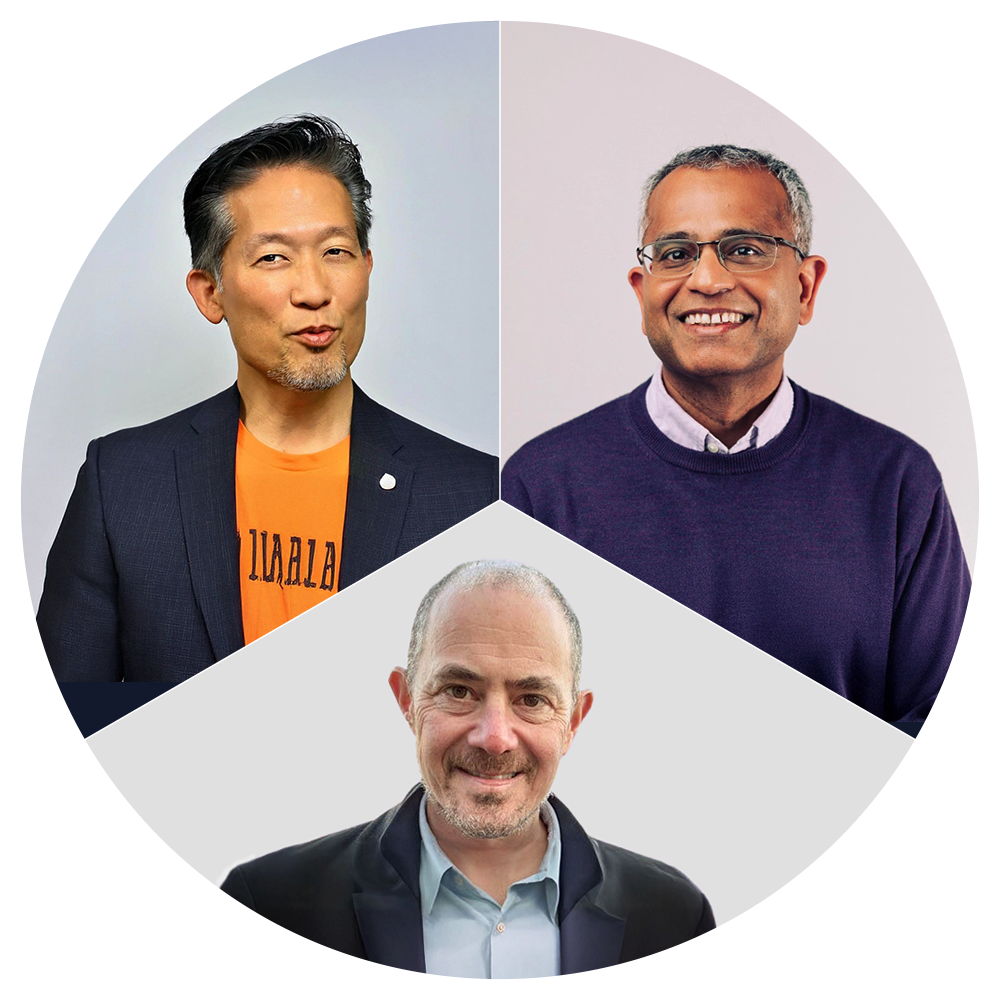
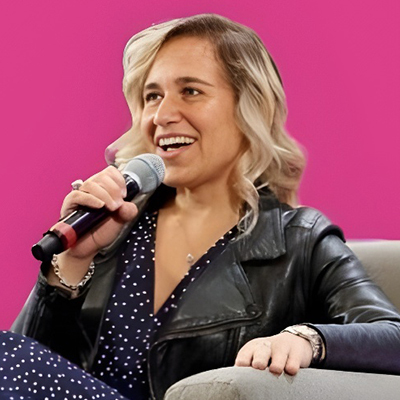
And what you're going to find is they both respect both sides of things and they blend a lot more. So there's that adjustability in them and their willingness to partner with sales. That's something that I've seen across episodes about how you can make your company perform by literally walking in sales's shoes. And so that's something that both of them talk about quite a bit as part of their way of telling stories with true focus on the right metrics and what drives markets. I think what was also interesting, what you're gonna find interesting, is that there's a lot going on with AI, and they both are extensive users of AI. Of course, Nicole is from an AI company, but they're not ready to cede total autonomy to it. And I think there's a lot of great reasons for them talking about it and exploring that. And then they're both just genuinely fun and interesting people. That is one of the things about being in marketing, is they have these amazing personalities, big personalities, and you'll truly enjoy that. And if you're a budding marketer, I think what you're going to enjoy by these two industry veterans is how much fun they are, how personal they are, how willing they are to just step out and go beyond themselves. And sometimes that's hard because this is going to be public and in front of a lot of folks, but they're willing to express themselves in that way. And I think that tells you a lot about how genuine they are and how genuine you ought to see yourself as. And I think that's really fun about them, and I hope you take a lot from them. Hello and welcome to this special edition of the Spark of Ages podcast. Today we're doing a special roundtable discussion on how marketers are approaching the everlasting challenges of allocating limited resources to building brand while also fueling demand generation with leads and pipeline. We have two amazing guests, Randy Barschak. She's the chief marketing officer at Dusty Robotics, where they are bringing autonomous robot layout technology to the construction industry. As a five-time CMO, she has guided companies through five major exits representing over a billion dollars in value, including acquisitions by IBM, Intel, Apogen, Everbridge, and Adobe. Randy is an expert in category creation across nascent spaces like human-in-the-loop AI and physical robotics. Next, I have Nicole Siegel Fousselier. She's the VP of demand and growth at Salmanova Systems, a company revolutionizing enterprise AI infrastructure and agenteg AI. Proudly calling herself a revenue marketer, Nicole has built and led globally scaled teams through multiple acquisitions and IPOs at companies like Matoport, Magento, and World, while also spending over a decade building customer advocacy systems at Cisco. So, Randy and Nicole, welcome to the Spark of Ages.
SPEAKER_01 4:16
Thanks for having us.
What Great Marketing Looks Like
Rajiv Parikh 4:17
Yeah, like two years ago, we did this where we had our growth marketing summit. And as part of that, we're like, let's just do our podcast here as well. And so we have this amazing opportunity to be in person and live as opposed to just in person over the internet. So so glad to have both of you here. We're gonna get into all kinds of topics about marketing, your areas of expertise. We're gonna get into certain opinions you have about the way things are going, and we have a game. Ooh, ooh, we have a game too. So that'll be fun. All right. Here's for both of you. What does great marketing activity look like in 2026? I have a feeling that you both have similar marketing sounding backgrounds, but your experiences are different, so your answers will be different. So Randy, go ahead, start. I don't want you to start with me.
SPEAKER_01 5:02
I actually think great marketing in 2026 doesn't have a new set of attributes, right? Great marketing, in my opinion, is sort of about the magic when creativity and process come together. So it's great storytelling and creative ideas and thinking that will gain you attention combined with the rigor of revenue marketing and the metrics. What I think is different was the efficiency with which you can do that. So I don't think the core components have changed that much. I still think you have to tell great stories. Well, it's left brain and right brain. And that's what I love about marketing is it's not, you can't pigeonhole us. You people always try, right? Like, what bucket are you in? But a great marketing is inherently diverse and diverse sets of opinions and viewpoints and skill sets. And I think that's still the same. But what's so exciting now is the efficiency. I mean, things that literally took months you can do in minutes. And so great marketers are constantly curious and asking, what if, like what if? That's the magic question. What if I did this? What if we targeted these people? What if we use this message? And so you could accelerate those what ifs exponentially now. I mean, exponential doesn't even cover it. It's it's like crazy. Um, and that's what's different.
unknown 6:27
Yeah.
SPEAKER_02 6:28
I would also add in terms of what's I think is different is the go-to-market alignment. It's getting tighter and tighter and tighter, right? And as we think about like product market fit in this economy, it's really important that you've got the right go-to-market fit and how the product is actually supporting that market. And I think previously there were things that were nice to have that were out there, right? And what's happening? A nice to have would be something that might make, you know, somebody feel really good, but from a profit perspective, it might not actually help drive revenue or it might not actually help drive a business, right? Whereas right now, the aperture where people are willing to spend is things that they need, right? So those pain points that we're solving. So I think what's really changed is things need to be a must-have. And so if you can get that product market fit in something that people need, I think it's getting tighter and tighter.
Rajiv Parikh 7:20
In the need of the product, right? What you're when you're building that product, it can't be like a vitamin. It has to be a true painkiller.
Sales And Marketing As A Marriage
SPEAKER_02 7:27
It has to be a painkiller, right? I think I love how you just said that. And I think what's interesting is marketing's job is really around how do you lean into that. And, you know, we have a great storyteller here in terms of how you can tell that story. And then I'm more of that revenue side of the house where, okay, we've told that story. How do I find those right people? And how do I help bring them into, you know, into our organization?
Rajiv Parikh 7:48
That's great. Randy, you wrote a fantastic piece a while back comparing sales and marketing alignment to a marriage. It talks about the notion of shared vows, uh-huh, right? Uh, to make target accounts succeed. So in today's environment where pipelines sometimes are shrinking. We've talked about for SaaS firms at least, uh, pipelines are shrinking. And I know you're not exactly that, you're a service. How do you prevent that marriage from ending in a messy divorce over attribution credit for post-sale wins?
SPEAKER_01 8:18
Yeah. I and I will say I'm still married, Makwood. The blog post, which was at the height of like account when account-based marketing was just like the thing you need to have on your resume. What I said was like a lot of times marketers will get caught up in what is an MQL or what is an SQL and the definition. And I said, it doesn't matter as long as it's consistent and you both agree on it. I'm like, you want uh the criteria to be A and it was B at my last comment, fine. Like as long as we're consistent and agree. So that's when I likened it to the vowels. Like, as long as you set the rules ahead of time, there's battles you should pick. And so I feel like if I'm working with a sales leader who's got strong opinions, or even a head of uh business development who's got strong opinions, or head of revenue marketing who's got strong opinions, like it doesn't the consistency is so much more important than the definition.
Rajiv Parikh 9:14
So that was so are you guys going in first before you go into the staff meeting or going into the leadership meeting to align yourselves?
SPEAKER_01 9:23
Yeah, I mean, and I also uh I have a strong belief. I'm curious to hear what uh you were to say. I have one for our strong belief that there needs to be a connection between sales and marketing at some level. And in different companies, I've seen that at different places. Sometimes, yeah, like I was at one company where our VP of Demand Gen and our VP, we had a very large SDR team, they were they were so connected that they had like a gen a Benefer type name that we used to call them. And so the head of sales and I didn't need to be talking every day because they were. Sometimes it's it's myself and the head of sales. Like sometimes it's just the two teams are really, you know, and the demand gen table.
Rajiv Parikh 10:04
You were talking about that. Do you want to make sure the individual contributors are actually connecting?
SPEAKER_01 10:09
Yeah, and as long as you've got the alignment, like the definitions don't matter. I'm really, I always tell my team that like, don't get hung up on out-of-the-box definitions. It's just as long as we're consistent, that's what matters. That's great.
Rajiv Parikh 10:21
So, Nicole, you've been very vocal about completely ignoring the MQL and optimizing solely on pipeline metrics, like revenue and true hand raisers. So, for demand gen leaders who are terrified of abandoning this notion of an MQL and their MQL volume targets, what's the first operational step they need to take to successfully transition to your revenue marketing mindset?
SPEAKER_02 10:45
I think it's about knowing what are the things that actually convert into pipeline, like knowing what things are working, right? And how I look at it is marketing's role is to help the company. The marketing's role is for the company to be successful. If sales hits their numbers and marketing hits their numbers, everybody wins. If marketing hits their numbers and sales doesn't, everybody loses, right? And so I what what I think about it is I own a target just like sales. And a couple companies that I worked for, I actually was compensated just like sales, right? And what that did is that brought that alignment to the fact that I was set up and compensated the same way in terms of owning, owning a pipeline.
Rajiv Parikh 11:27
The nice part is you both know that you're in alignment. So there's that increased level of trust.
SPEAKER_02 11:32
And how I feel is that like if let's say she's the CMO and I'm her right hand, my job is to own the relationship with the sales organization, right? And the field team and the sales ops. She and the CMO, CRO obviously have to have a great relationship too. But ultimately, I've got two bosses in this case, right? Where I'm really trying to make sure that I'm helping that marriage. But I also am like, I don't know how you can say that I'm the third wheel, I guess. I don't know. But I counsel marriage counselor. I'm the glue. That's a budget right. Friend. Yeah. But ultimately, my goal is to make sure that sales is successful, like we hit our numbers together and that everybody can look at the pipeline build.
Rajiv Parikh 12:10
So, how do I give up MQLs? I love my I don't even measure. Love my MQL targets. You say, you know, abandon it. Like, what was the first step I would take? Is a person who's very MQL driven and that's their playbook?
SPEAKER_02 12:20
I would look at go go first look at your pipeline, right? Where is that? Where are you seeing the things that are actually converting pipeline? You know, and like for us, we know handraisers are the things that, you know, have people have said, I want to talk to sales, right? If so, if people are coming in inbound and saying, I want to talk to sales, qualify them, right? Qualify and make sure that, and I jokingly call this hot, right? So right now I'm doing the qualification. I'm actually going through myself and making sure that it's actually somebody that I would want my sales teams bending to. I'm not going to send anything. And and my issue with the MQL is even if you guys can come up with a shared agreement, there's still this need for the AE that has to hit a target, right? And if they're not hitting the target fast enough, no matter what agreements that you have in place, and I've ran BDR teams, I've had SDR teams and BDR teams report to me as well. Even with them, my goal is to what I hand over to sales is the best thing it can possibly be.
Rajiv Parikh 13:17
Then you're building confidence.
SPEAKER_02 13:18
Because if I build trust with them, if I send somebody a Slack on my sales team and it says, this one's hot, please follow up. I want them to run and I want them to have confidence that what I've sent them is quality. That's fantastic.
SPEAKER_01 13:32
I can I add something? I'm not, I'm kind of agreeing and disagreeing. So we do use MQLs, and it's it uh actually back to my earlier part. Sometimes I do, sometimes I don't kind of depends on the company. And there's one difference, um, which is we score MQLs based on two criteria. So we think of it very much as like a matrix, and so it's fit and intent. So if you don't hit the threshold on both, you're not considered an MQL.
Rajiv Parikh 13:58
But what I was that's a much higher bar than many people have.
SPEAKER_01 14:01
Yeah, well, it's it's more like like some because sometimes someone's like, look at this, you know, company. And I'm like, they didn't do we you just have their name. Like they have no awareness, no interest. Somebody that's don't waste your time. Like it's tempting, but don't they're well, they were, you know, like it there's even a difference if it's a scan at a booth versus they were on the registration list. Like, you know, but that's that's what I mean by hand raiser.
SPEAKER_02 14:26
Right. I I I personally don't gate anything because to me, somebody who filled out a form because they downloaded a piece of paper, who can't that's not right, yeah. They stopped by our booth and got a leap. It doesn't, those things are it's gotta be they're not showing any real intent to to saying, I want to actually have a conversation.
SPEAKER_01 14:44
But I think what really good marketers do, which is is is what Nicole's saying is I'll you know, sometimes my team will be like, we hit our MQO goal. I'm like, it's not a goal, it's an indicator, it's just an early indicator of if we think we're going to hit our SQO goal, which is by the way, it's a goal, but it's also an sales qualified opportunity. Sales qualified.
Rajiv Parikh 15:07
Which is which is so that has to go through a bunch of gates before it gets.
SPEAKER_01 15:10
Yes, and there's there's very specific, but that even that, even though that's a goal of marketing, that's an indicator as well of if you're gonna hit the bookings number.
SPEAKER_02 15:17
Like it rubber hits the road with bookings. Like, see, I agree, I agree with what you're saying around it being there's there's indicators. I would just go one step further in terms of like even a sales qualified opportunity to me isn't enough. It needs to be at a stage two opportunity, which has has the highest intent of pipeline. What does stage two mean? Stage two in our case means an NDA has been signed. They've they've already confirmed that there's a use case, there's a pain point, uh, the conversations have taken place. And so that there's an NDA sign with an indication they're gonna have further conversations. They've put something into the next step. Most marketing people, and I don't disagree, most marketing people would not agree to that. But if you're in a situation where you've inflated pipeline for years and you're still not making your numbers, you have to find a way to make pipeline, you know, and those targets, you have to have better quality. And that's the only way to do it. It's hard makes it harder for marketing to be successful. Don't get me wrong, it makes it harder for us, but it's the right thing to do for the business.
Rajiv Parikh 16:19
Yeah. But the marketing's not the only one that inflates it. Sales also inflates it, right? So you have to get those definitions right.
SPEAKER_01 16:24
No, it catches up to you eventually. Because if you let more stuff through the gate, then your win rate goes down. And so then when you recalculate how many you need, then you need more. So I keep saying like it doesn't matter. Like you have to see it all the way through. It it's yeah, you can have and then go back and you can have great win rates and then you need fewer opportunities, or you can let all the opportunities through and then you're gonna have low win rates, and so you need higher coverage multiple. Like it, it you can't cheat it, right?
Rajiv Parikh 16:52
There's like cheating eventually catches up. So, Randy, you've described your marketing philosophy as a medley of hardcore metrics with stunning creative storytelling. So now that you've been a dusty robotics, right, marketing physical AI uh to the construction industry, right? It's a space notorious for being very traditionally minded, not necessarily trusting you fancy uh digital technology. How do you use the narrative and brand storytelling to win over skeptical buyers without losing sight of performance metrics?
SPEAKER_01 17:24
Yeah, there are a couple ways we we do that. And they are very skeptical. In some ways, I've sold to developers before, and in some ways, construction reminds me of developers because like you have to be so authentic. You can't have any marketing, no fluff, no marketing gloss, or they'll see right through it. And I'd love that actually as a marketer. I think that's those are the more challenging and and and more fun. There's two things. One's really interesting in physical AI, and I wish I could say this was my brainchild, but it was not something I inherited. Our robot has eyes. He's very, he, he or she, whatever is very cute. And actually, initially that was because people were kicking the robot when on site. And so we made it in robotics, like there's there's and physical AI in general, there's a lot of thought and intention around how you want to manifest the humanity or the living aspect of that. Because you don't want to be too threatening, you don't want to try to be too human if you're not. We actually don't make the robot talk because we don't want people that then you start to have biases and unions. And to me, that's part of storytelling, right? Is the way people interact with your product, the way you package and manifest it. The other thing is the the industry is no one wants to be first, but also no one wants to be last. So one thing we're really fortunate, we have hundreds of customers that are really, really excited about what we do. And so we're constantly using customer quotes, customer testimonials, customer social. We have a page right right now, it's buried. Um, so it's a problem we're fixing. That's just post after post after post of like people love our robot. Like I remember one post they had Dusty.
Rajiv Parikh 19:06
So Peter was showing love to the robot.
SPEAKER_01 19:08
Yeah, Dusty was parked in employee of the month parking spot. And they love like the videos, and then they're talking more and more about being able to articulate the value. So part of the way we do that storytelling given the audience is framing and shaping the story of customers, but allowing the customers to tell our story versus us.
BDRs Under Marketing And Feedback Loops
Rajiv Parikh 19:30
So trying to take it, enhance it, and drawing it. Nicole, to ensure tight alignment, you actively bring BDR and M MDR teams under your marketing umbrella, right? So rather than having them just report to sales. So how's having inside sales report to marketing change the dynamic of what constitutes pipeline?
SPEAKER_02 19:48
I think what, you know, is as I was talking earlier, I go farther into the funnel, right? But I also say I would take one step back is I think I understood or I thought I understood what marketing needed to do on a pipeline side. And then I managed the BDR team, right? And recognized that how they were motivated was different and how they were successful and handing things off to sales. And I will tell you, that switch of actually managing the BDR team made me a better revenue marketing leader. And it helped me understand the things that they care about, and it helped me understand how the sales teams need it. And the and the dynamic of me actually being compensated like sales, it changed my entire thought process, right? So I jokingly say there was a before and after in terms of how I thought of marketing. And I would say, you know, back, you know, back to your question around, I had I've done it both ways, where it sits in both in organizations.
Rajiv Parikh 20:47
You know, I would say and the studies show that they're both. They're sales.
SPEAKER_02 20:51
They're both marketing, sometimes a mixed. It doesn't matter, kind of like what she was talking about, the marriage, which I have to say, I am gonna go read that blog now. I was excited to read it.
Rajiv Parikh 20:59
She talks about, and I think you've done it, walking 10,000 steps in their shoes.
SPEAKER_02 21:03
Yeah, right. I yeah, and I think and I think that that's it's what helped me understand what their shoes were like. And actually, I jokingly say, like, I did a blitz day with the BDR team where I got on the phone and I made all those calls just like them, and I got hung up on all the time. And when they started hanging up on me, the team would start cheering, be like, yes, because I felt the pain that they felt, right? And I think until you're a marketing person living in their shoes, you don't really understand some of that dynamic. So it again, like I said, it changed the way that I thought about things. But I also I don't, I don't think it has to sit in marketing or sales. It goes back to we need to be aligned on what that is. I will say though, when you're trying to find product market fit and you're trying to figure out what's working, I think it's really beneficial for it to sit in marketing in the beginning. Because if you're wanting me to take a stage two number, I need to have the feedback loops to understand what's working.
Rajiv Parikh 22:00
God lip so you can play with your messaging, you're targeting, your messaging, and I need to know what's working, right?
SPEAKER_02 22:04
And you're asked that in the very and you're getting that feel. And I'm getting that feel, and I'm living in it. Now, once we even know that, and then you're more focused in like helping the sales team grow on that outbound side, then I can understand why you might need to switch. So sometimes it really depends on where you are in that cycle and where you're and what you're trying to accomplish. So I don't mind it either way, but I've got to have the feedback to be able to know what's gonna help drive the numbers.
Vanity Metrics To Cut From Boards
SPEAKER_01 22:35
Also, even from a story perspective, like I always have to like re-remind myself. I'll just like shot color myself because I I'll say it and then I forget. Like you do the deck every year. Like, here's our deck, our big deck, and it's lovely. And then immediately the reps like start changing things on the fly. Then you're like, oh, we're gonna do the deck so they can't change it. We're gonna make it and um, so I always make myself go out and present. I tell my team, like, you have to go present. And what are you doing? You're on the plane changing the deck because you're like, oh, well, I so it's the same thing. Like you cannot be out there enough, or you cannot be on the phone enough. You cannot be talking to prospects enough because you're in the shoes and you realize, like, uh, actually the deck's a little rigid, and right, getting people to Lex O J and adjustments are really important.
Rajiv Parikh 23:25
Okay, so this is for both of you. The average tenure of a CMO is notoriously short, and boards are increasingly impatient for immediate revenue. Based on your collective exits and high growth experiences, what's the one vanity metric marketers need to permanently ban from board decks today? And then conversely, what's the one brand metric they must start fiercely defending to ensure long-term company survival?
unknown 23:49
Wow.
Rajiv Parikh 23:50
That's a good question.
SPEAKER_01 23:52
Oh, this is a tough one. This is a remorried question.
Rajiv Parikh 23:55
So, what's one vanity metric that you should remove?
SPEAKER_01 23:59
Yeah.
Rajiv Parikh 23:59
That that you've seen from others, because you may have already removed it from your analyses. And what's one brand one that you should put in?
SPEAKER_02 24:08
I would put share a voice in because I think the big shift that's happened from my perspective perspective is I used to say, you can read about it, is a few years ago, I would have said 80% of your budget should be more focused on the demand piece and like 20%. But I would say over time that that has completely changed because trust has, you know, really gone down, right? And I really think, and buyers really need to know who you are before you have any sales conversation. And that keeps that keeps growing. So from my perspective, the balance of brand and demand constantly shifts and it goes up and down all the time based on what's happening in your space, in your industry, in the world, right? And I think the thing that's helped me is going in and getting the alignment with the leadership team of what's that percentage that we agree about. And because I've been in plenty of board meetings where people look at the marketing numbers or they look at the marketing budget and they look at you know customer acquisition cost and they blend all of that information. Right.
Rajiv Parikh 25:13
Do it anyways.
SPEAKER_02 25:14
And they do, and when they do that, they're they're they're missing the point that this point, this, this, this bucket of dollars is really supposed to do X. And what that's giving you is different than Y.
Rajiv Parikh 25:25
It's a long-term brand, is more about driving that long-term value, as we've talked about even during our conference, harder to attribute exactly. It's a complex, nonlinear system of how people buy. So you have to look at it differently. And so share a voice is a great way of telling you.
SPEAKER_02 25:39
Well, and also I think John kind of shared yesterday there's John Miller. Yeah, he was kind of sharing yesterday that, you know, just be able to show the type of traction that you're getting around your uh your share of voice and understanding the sentiment around your share of voice and how you rank to your competitors is making sure that you're one of the three people up in discussion. Because that we were saying is that prior to any conversation with sales, if if the feedback is only if sales is only involved in 20% of a buyer's actual journey and 80% of all that is happening way ahead of time, then brand is where they're gonna find out who you are. Content and content, and they're gonna review all of that stuff. And then on top of it. Right. And I and so I guess I guess my point is is that is that you need to split out those two goals and get people aligned on what those goals are.
SPEAKER_01 26:36
Are you any thoughts on that? I think there's such a good thing. So watch Sunny Get Out that you see. I mean, there's so many junky metrics.
Rajiv Parikh 26:44
If I know you're about you're about a few things. I think that's what I read about you, is that you like fewer metrics than many.
SPEAKER_01 26:52
Oh, I don't know if I no, I love I love metrics, but there's some there's metrics that you don't show people. Like they're again like indicators. It's all a Rube Goldberg machine. So you need to know what everything's doing. But but you don't don't need to present all the board does not need to see that. I I mean there's like website traffic and stuff. Oh, yeah, that like you know, garbage.
Rajiv Parikh 27:13
Yeah, I mean, but I know, but I've seen okay, I've seen this in private equity meetings where they'll look at website traffic, search engine keyword-related stuff. Seriously, and then they they'll sit there and they'll and they'll cook talk to us about what's going on. And we're like, look, the world has changed because of AEO and GEO, right? With AI engines. And actually, our strategy has not been to have them come to the front page and you're only using the similar web tool, only going to the front page, you're not looking at all the other metrics. So all the other indicators say you're fine.
SPEAKER_01 27:41
Yeah.
Rajiv Parikh 27:41
Right?
SPEAKER_01 27:42
Because they don't I mean, I like to say there's fat funnels and skinny funnels. And you you you actually you want your funnel to look like a short champagne flute. That's optimum, that's optimization. So you can still have a fat funnel and get to what you need, but it you're gonna those are if they're low cost, great, but if they're high cost, no. So I always like to so there's a lot of nuance, and uh boards are very bright people often, but not necessarily patient. So like don't have that conversation, just put what matters to the business. I think in terms of metrics that I'd like to see, and you touched on it, uh, and actually, Nicole, you touched it with it's it's somewhere around share of voice, but also now it's like it like like one metric I always look at is look at brand searches, right? And then also, you know, if when you're bidding against competitors, I guess I have to say, because that's a strong strategy. Hopefully, my competitors are watching this, but you know, look at how frequently people are searching on competitors versus you, and like so you get a feel. But now with you have to go so far beyond traditional search. And I think with some of the new tools, you can really look at engagement and social, but also start to break that off of what's junk and just you know, people like the cute robot and what's what are actually meaningful. So we're starting to investigate ways we can really look at social engagement because you you know you can get thousands of likes and replies and you want to see how that converts. You want to get a feel for that. Well, it it yeah, it's like it's awareness, but also indicators. Um, so I think those are gonna be some of the more meaningful methods.
AI Predictions And What Humans Must Do
Rajiv Parikh 29:20
Kind of a Serifoise um proxy metric. Yeah. So this is about marketing in the age of AI at agents. So the traditional marketing playbook is being dismantled, and the line between telling a story and managing a technical pipeline has all but vanished in the wake of agentic AI. To put our marketing heavyweights to the test, we're gonna explore whether the future of growth belongs to the storytellers or the system engineers. We've compiled several controversial predictions for 2026 that challenged the very core of the profession, from the total extinction of the CMO role to a world where AI agents, not humans, make the buying decisions. So here we go. In 2026, waiting for a human to approve AI-generated marketing content is a competitive disadvantage. To win, brands must move to autonomous marketing, where AI agents research, create, and deploy campaigns in real time without human intervention. Oh. Nicole?
SPEAKER_02 30:22
No! AI is not ready for that. There's a lot of things that AI can do to automate things. And I you know, I think there's two different types of AI. There's things that you do one-on-one with AAI with AI, and there's things that are more system agent-based that you know flows things through automated paths. But in each of those steps, a human needs to review it, look at the site sourcings, you know, make sure that it actually maps to what you expect it to output. They need to like check that it's actually factual. Like over time, it might get better and better, and I believe it will get better and better. But a human actually needs to think through those processes. Now, what I think it's going to do is going to make it easier for humans to get more things done. It's going to remove a lot of those simple tasks, and it's going to allow, it's going to allow humans to really focus on that strategic work. So I think people who understand systems can help, really help further that along.
SPEAKER_01 31:16
Ready? Yeah. I think I mean there's some low-hanging fruit where it's almost there. Like we have an agent that we've trained to write case studies through multiple, multiple iterations of we want to be more bold, we want to do that, we want to. So it's almost like it's forcing a really beautiful discipline of giving feedback in a very constructive way. So each time, now, now we almost go for straight from interview to first draft. And so probably by next year, like you almost could get there. But I remember I was going through a company where we re we rebranded from the bottom up, we redained the company. And um, we intentionally kept the team really small. It was just three of us that were involved in the process. And um, my CEO at the time was like, if everyone's got an opinion, you're gonna end up with vanilla. Like if you're and and I think AI from a creativity standpoint is still there. You're still gonna get vanilla, like predictable. And great marketing is when you take risks and you're like they don't go to the edge. Yeah, they don't go to it. I've seen that with messaging that you're like, should we do this? I don't know. When are we gonna get in trouble? And like those are the ones where you hit it out of the park. And so I don't think it can do it yet. And okay.
Rajiv Parikh 32:36
I like that. Great answer. Here's another one. Hyperpersonalization is an expensive AI-driven delusion that yields diminishing returns. In 2026, the real winners will stop chasing individual data points and return to universal excellence, relying on the power of a single brilliant category-defining message that resonates without needing a private data profile to work.
SPEAKER_01 33:00
That just makes me giggle. You can just say no and that's it.
SPEAKER_02 33:02
No. The ability that AI has in terms of creating the personalization and making sure as you're thinking about how you reach out or the conversations that you have, that's the brilliance of AI. It's it's it's making you much more rich in terms of how you communicate. So this is one of the best positive things AI can do for us.
SPEAKER_01 33:22
Yeah. It's a little Goldilocks, like you don't want too much personalization, you don't want too much generalization, but but generally I disagree. But like people still buy wanting to like, uh, what's everyone else doing? Like it's partially why I'm here. Like, what are all my fellow marketers doing? How are they like figuring things out in this age of AI, right? So I think there's still like, I want to feel like I'm part of this group and buying, but you have to really understand how do people, how do your buyers identify? Do they identify by industry, by firmographic, by individual, by is their first name, you know, John?
Rajiv Parikh 34:01
So you're saying you have to have an overall strong story before you personalize. Is that is that what you're doing?
SPEAKER_01 34:07
Yeah, you should have like a strong story and then personal, but there's some personalization that's so bad, even though you get it when it's like, hey, I saw you went to Bugnell, you know, like I know someone who went to Bugnell.
Rajiv Parikh 34:18
Yeah, somebody I've had someone write Crimson Rocks. I'm like, oh god.
SPEAKER_02 34:22
Yeah, it and like but that's not that's personalization, that's just goofiness.
SPEAKER_01 34:27
Right, right. And that's so but I don't um that's not quality. But if you if you can understand their challenges and their it, it's likely gonna belong to a group and not be personal like down to you individually. So if you can get smaller, more targeted messaging, it's really it we're we're gonna talk later about ICP, like sure, more bespoke ICP, but I don't think it's like down to the individual level. Right.
Rajiv Parikh 34:53
Okay, next one. Enterprise procurement agents are now programmed to block all unsolicited marketing. The cold outreach era is over. If you aren't pre-approved by a company's internal AI auditor, your marketing will never be seen by a human eye.
SPEAKER_02 35:10
I think it's getting- actually said yes to this one. I actually think it's getting harder and harder to get through people, right? And I think there's actually a lot of, I mean, because everybody is using AI and everybody is, you know, they they talk about the spam, right? They talk about how much email that everybody's getting. And it's it's a bit ridiculous, right? Which goes back to the earlier question about personalization and how important that is. I'm also starting to wonder, though, is there other ways that we're reaching out, like on LinkedIn and on social and like other ways that we could be reaching out that's not email-based that we meet 92P start considering. And I think it also comes back to the source, who's actually doing the reach out. Because I don't think if there's some credibility around the source, people are gonna be like, I don't know this person. Right. So I think we need to start thinking about how we approach and the credibility around the source and the people who you're working with and and how to best reach out. And I think that's evolving.
Rajiv Parikh 36:02
Okay. What do you think about these filters getting stopping you from even getting to them?
SPEAKER_01 36:05
I I think we're yeah, I think I totally agree with Nicole. I think we're gonna start seeing them more and more, certain sectors less so. Like I don't think construction companies are you're running around with filters, but um the CISO chief information security officer probably is putting them up if they if they have one, right? For themselves because yeah, but yeah, I mean we're gonna have to find new ways. That's like market, you know, there was marketing before there was internet, by the way. Really? Before there was email. Yeah, and so it's getting more it's before you were born. Good good marketers kind of are up for the challenge and enjoying it. We're gonna have to find different, better ways. I think social is really interesting, but then also in person and physical still works. Shaking hands still works, it's can be expensive, but it's that channel still works.
Rajiv Parikh 36:55
There's someone here at the conference that still employs door knockers for a remodeling business. Okay, so since AI can generate stunning creative for pennies, great storytelling is no longer a competitive advantage. The only thing that matters in 2026 is managing the infrastructure or the pipes through which the content is delivered.
SPEAKER_02 37:16
This is her bally wag. I'll let her No way.
SPEAKER_01 37:18
It's the execution. I mean, you need maybe you could say the directors are commoditized. Sorry guys, no offense. But the script, I mean, you still need that original script. You can get a, I mean, I could I could push a button and write a Hallmark movie right now, but I know we all know exactly what's gonna happen, right? She goes from the big city to the hometown over the holidays and all the love the lumberjack. But um, if you want something original, no. But but I I did a presentation at a conference uh a couple weeks ago. I was a little last minute with it. So I didn't I like started the presentation at 10 o'clock at night the night before. And I'm like, all right, I'm gonna use AI to generate images, but I'm gonna like tell people I did rather than pretend that I didn't. So once I did that, the floodgates opened and it was like wack-a-doo stuff. And the images were hysterical, and I had so much fun with it. And so I think, like, again, if you're creative out of the box thinker and storyteller, you you don't need an elaborate shoot for something to happen. I did like a team on a construction site celebrating, but I I wanted it like very uh five-year-old girl birthday theme. So they had like pink cupcakes. It was like burly men with pink cupcakes, and I'm like, and just for shits and giggles, put a unicorn in there somewhere. And so there's like a little unicorn poking his head around the corner. And it looked like a professional photo shoot. I mean, it looked completely real. So you can have a ton of fun, but you still need you still need the spark and the trigger.
Rajiv Parikh 38:51
I I I think we put llamas in your videos.
SPEAKER_02 38:54
Yeah, I I think it's it goes back to what she talked about about the edge, right? I don't I think uh it's too generic, it's not gonna push on certain stuff, and I think uh the pushing is gonna come from the people.
Spark Tank Two Truths And A Lie
Rajiv Parikh 39:06
Amazing. Okay. Now comes the game. A little nervous for this one. You should be. It's a hard one. Just kidding. Uh it's not about getting it wrong or right, you'll be fine. Welcome to the Spark Tank. Today we're joined by two marketing titans who specialize in building categories where none ever existed before. First, we have Randy Barschak, the CMO of Dusty Robotics. Next, we have Nicole Fousillier, the VP of demand and growth at Salmonua Systems. Randy and Nicole, your careers are defined by precision, whether it's robotic layout accurate to the millimeter or demand and funnels optimized to the dollar. But today, we're pivoting from the job site and the data center to the legendary boardrooms of history's most disruptive leaders. This is the Architects of Authority Challenge, where we're putting your inference engines to the test with a high-stakes game of two truths and a lie. Wow. We're going deep into the playbooks of icons like Indra Nui, Ginny Romnetti, and Carrie Palin, women who have broken the mold of corporate expectations and rewrote the rules of how to lead. Are you ready to prove that your instincts are as sharp in history as they are in the future of robotics and AI? Not sure, but we'll try. Don't worry, I usually lose these games. Okay, I'm gonna give you three, and one of them is a lie, and then at the end, I'm gonna go three, two, one, and then you're gonna give me a one, two, or three physically.
SPEAKER_01 40:42
Of what the lie is.
Rajiv Parikh 40:43
Of the lie. Okay. Okay. Because then you can't cheat. Okay. Okay.
SPEAKER_02 40:47
I was hoping we could do it together.
Rajiv Parikh 40:50
And you may, we may go to that. We're gonna start with Indra Nui, the game changer, CEO of PepsiCo, right? The first woman to run a Fortune 100 company. Early in her career, Indra Nui turned down a major promotion at Motorola because she refused to relocate her young daughters and extended family to the new city, later citing the incident as the moment she realized you can't have it all at once. So that's number one. Number two, she, Indra, once personally wrote letters to the parents of her top executives, thanking them for raising leaders as part of her philosophy that work and family are inseparable in how people show up. Or number three, as CEO of PepsiCo, Indra pushed a performance with purpose agenda, tying growth targets to goals like reducing sugar in products and improving the company's environmental impact. Okay, so ready? First one is she turned on to promotion early in her career at Motorola because of family. Number two is she wrote to the parents of the top executives, thanking them for how they raise leaders. And number three, part of her performance with purpose agenda was in addition to growth targets, there's goals like reducing you know sugar and products and being healthier and environmentally safer. So ready? Three, two, one. All right, we have a we have some differences. Okay, Nicole, why'd you pick three as the false answer?
SPEAKER_02 42:17
Because while I believe that she obviously cares about the environmental issues, my understanding is that came later, right? And that wasn't earlier kind of in her career. And I think it was somebody else that came in and kind of instituted somebody.
Rajiv Parikh 42:33
Why'd you pick two?
SPEAKER_01 42:34
I actually wanted one and two. I I liked one and two the most, but I was thinking just because she was a woman that it wouldn't have been, it wouldn't have looked great to have the more kind of business-oriented one be the lie.
Rajiv Parikh 42:49
So really okay. So you said two is the lie. I said two, writing to the parents.
SPEAKER_01 42:57
I was just thinking maybe like uh sorry. That's two touching. No, no, no, no. I loved it. And I was hoping actually one and two were the true ones, but I was thinking maybe the leaders were so old that their parents might not have been around. So like maybe let like just that might okay.
Rajiv Parikh 43:15
What if I told you the answer was one, the false answer?
SPEAKER_01 43:20
Wow.
Rajiv Parikh 43:21
Okay, that's a little that's a yeah.
SPEAKER_02 43:24
So you both got it.
Rajiv Parikh 43:26
Yeah. So basically number two, she did write letters to parents. I love that.
SPEAKER_01 43:31
Yeah, I do.
Rajiv Parikh 43:31
She's famous for visiting and writing the parents of senior PepsiCo executives, telling them that how much their children were contributing. She framed it as honoring invisible emotional labor and refining leadership as deeply relational, not just corporate. That's cool. Number three was actually true performance with purpose, which you'd be surprised about, right? They're selling sugar water. She was explicitly linking uh financial performance with healthier products, lighter environmental impact, and better treatment of. People in the value chain. It was a deliberate move away from purely short-term shareholder-only models. And number one, while she's famous for her 2014 Aspen Ideas Festival, quote, I don't think women can have it all. I just don't think so. She never turned down a major promotion early in her career to avoid relocating away from her extended family. In fact, her career trajectory was defined by the opposite. Moving from India to the US to attend Yale, moving for roles at BCG, Motorola, ABB before joining PipsiCo. She often speaks about the guilt of moving and working rather than the refusal to do so. So these are tough.
SPEAKER_01 44:39
There's a lot of guilt. I think it's hard. Guilt's a thing. It's hard.
Rajiv Parikh 44:43
Now we're gonna go to Ginny Romnetti, the CEO of IBM. Number one, Ginny Romnetti championed the idea of new collar jobs at IBM, pushing the company to hire workers without four-year degrees into high-skill roles in areas like cloud and cybersecurity. Number two, as CEO, she publicly argued that leaders should practice good power, defining it as using influence to drive broad social progress, like expanding access to skills rather than just maximizing shareholder returns. Number three, early in her career, Romnetti abolished performance reviews for senior executives, replacing them with anonymous peer voting on who had the most natural leadership each year. So which one's a lie? New collar jobs, not just making, you know, not just college degrees, but you can do high school or whatever for all these shots. Number two, good power, influence about good social progress. And then number three, a natural leadership poll. So which one's a lie? Three, two, one. Okay. Two, Randy. Why'd you pick two?
SPEAKER_01 45:53
I think I meant to pick one. Sorry. Sorry, maybe you need to cut this. Um I picked two. Can I change it to one? I think I've been with I think I think I was like confusing them. Um I feel like that's more of a thing now, but maybe back then it wasn't. Back then it wasn't so much. Um and that two in some ways was leading up to that. It's more looking at the skills. And three, uh three I liked, but I I feel like it might not have flung well. But I'm very bad at this game.
SPEAKER_02 46:28
Okay, it's all go. I chose three. I just don't think it would have flowed. I don't think it would have flown it flown well. I can't imagine the board being like, sure, do that.
Rajiv Parikh 46:36
Yeah. All right. So the winner of this one is Yikole. Woohoo! There you go. Okay, the one new collar jobs that actually was true. She was the pioneer. Interesting. Ginny was the pioneer. Romnetti pushed the term new collar jobs to describe roles that rely on specific technical skills rather than traditional university pedigree, and drove IBM to build apprenticeship and training programs to people from non-elite backgrounds who could enter high-value B2B tech work. Number two, good power philosophies. Actually, true. In speeches and later writings, she framed leadership as good power, using a big platform and corporate scale to open up education, reinvent worker skills, address societal gaps, not just hit quarterly returns. It was a deliberate contrast to the more old-schooled, hard-edged image of enterprise tech bosses. And why number three is a lie? While Jinny did blow up the old school annual review and replaced it with a real-time feedback system called Checkpoint, she was still a traditionalist at heart when it came to accountability. She believed in good power, but she wasn't necessarily ready to turn IBM into an episode of Survivor. It's another fun one. Okay, here's number three. So you're in the lead. Woohoo! Randy, you have a chance to catch up. Here we go. Round three. And the last question for this section. Carrie Palin, it's a C-suite B2B marketer who's led global marketing at major enterprise tech companies like Dell, Splunk, and Cisco. At a time when competitors like Workday were doubling down on celebrity-led Super Bowl spots, Carrie Palin became the first CMO in Dell's history to refuse a big game ad buy, arguing the budget was better spent on bottom-of-the-funnel field events and in-person education. Number two, at Splunk, Carrie fundamentally rebranded the marketing department as a growth engine, reportedly banning any internal discussion of marketing at a cost center. She famously told her team that if they couldn't demonstrate a direct data-backed MQL to closed one journey, they had no business asking for a seat at the budget table. Or number three, Carrie Palin famously dismantled the vanity dashboard at Splunk and shifted her team to a unit economic model of marketing. She reportedly tracked a high-stakes internal metric, a pipeline created per marketing dollar, effectively forcing every team to justify their headcount and budget through the lens of a sales equivalent quota. So, which one's a lie? Ready? Three, two, one. All right.
SPEAKER_02 49:15
Why'd you say two? Because I believe number three is true. And if number three is true, then number two is not.
Rajiv Parikh 49:23
That's good logic. All right, Randy Man. Why'd you pick number one? Stick by your answer.
SPEAKER_01 49:29
Um I picked one. It was more of a gut feel. So just felt right. Yeah.
Rajiv Parikh 49:37
That you wouldn't abandon big sports themed events. Yes. Okay. Well, guess what? Recall. Number one is the lie.
SPEAKER_02 49:45
Oh, that's twice that we we both picked the wrong one. That's what it's.
Rajiv Parikh 49:49
So it's a tie.
SPEAKER_02 49:51
Oh, yay. Okay.
Rapid Fire Personal Questions
Rajiv Parikh 49:53
Congratulations to both of you. Yeah, so number two was the truth. In her B2B roles, Palin was associated with revenue-led marketing model, where marketing is accountable for pipeline creation and contribution, not just impressions or rewards. That no more fluffy marketing stance is part of why she's seen as a moderate enterprise CMO. Number three, while the exact label here is stylized for the game, Palin is representative of B2B leaders who collapse sprawling dashboards into a small set of hard metrics, especially revenue influence and sales alignment, rather than obsessing over a dozen softer KPIs. It reflects her broader approach, fewer, more commercial success measures. And why number one is the lie? B2B tech brands sometimes do big sports placements, but there isn't a standout documented story where Palin personally killed a planned Super Bowl ad and redirected the entire budget solely to field events and in-product education. Okay, now we're gonna go to this fun part personal closures. I'll ask you a quick question. Just answer whatever pops up the top of your head. There's just like before, no right answer. Randy, if you had to pick a super power pace purely on making life more convenient, not saving the world, what would it be?
SPEAKER_01 51:05
I think it would be not needing sleep. Because I love to sleep, but I always there's so much I want to do. So I would love not to need sleep.
Rajiv Parikh 51:18
Find yourself just staying up later and later to do extra things?
SPEAKER_01 51:21
No, I fall asleep because I'm I get tired and I'm like, oh I'll just get up early in the morning. And I I wish I didn't love sleep. I mean, or I could like split myself in half and sleep and then stay up. Severance. Severance for sleep. Yeah, like more hours in the day. If I I mean you said superpower, so we can like think big. Yeah. So like getting an hour of sleep and feeling like I got 12 hours of sleep. That would be the superpower. I like that.
Rajiv Parikh 51:48
Okay, Nicole, what's something you're embarrassingly competitive at that doesn't matter at all?
SPEAKER_02 51:55
So it's kind of silly, but I met my husband analyzing the NBA by statistical analysis, right? Very exciting, sexy story. But I pride myself on being really good at sports and understanding sports. And so I will, I will debate and comp you know and compete stuff with my husband on certain stuff. And nine out of the 10, he knows it a lot better than I do, but I still have to win and try to, you know, try to so which sport statistic do you it changes from either hockey or or the NBA? It usually is in the is usually in there. But you know, right now we're heavily into the sharks and what's going on there, right? But Macklin. Yeah, right, yeah. Yeah.
Rajiv Parikh 52:34
Awesome. Randy, what's something you wish you could experience again for the first time? It's like that foreigner song feels like. Yeah.
SPEAKER_01 52:40
Yeah. It's got to be PG rated, right? No. Um, no. I love you. I love you so much. I have to say, I think uh having my baby, like I think I'd want to go back there. Yeah. Had the process of delivery of no, yeah, not that, but um, I mean, it could be. Maybe. My wife was like, could be I didn't really remember it. Yeah, there were a lot of drugs involved and stuff. So I I maybe like go back. And we we were trying to be all like, we're too good to have a camera and take, you know, we're we're above that. And I'm like, why didn't we have a camera so I could go back and relive it? Yeah, I think I like going back and being a mom for some. Yeah.
Rajiv Parikh 53:28
Uh so Nicole, if you could swap lives with someone for just one week to see what it's really like, who would you choose?
SPEAKER_02 53:35
It's gonna sound really silly, but I probably would be either Barbara Streisand or Dolly Parton. And the reason is my mother was an opera singer. And my mom used to always jokingly say, it's interesting how musical talent skips a generation. And my son is is really enjoyed music. So, you know, it's kind of fun to so I I'd love to have that passion. And the reason why I choose Barbara Streisand or Dolly Parton is there are two people that my mom really admired, right? And and so I think I would I'd love to put myself in something where I could see it from her perspective.
Rajiv Parikh 54:13
That's fantastic. Okay, for both of you, what's a sound, smell, or sensation that instantly transports you to a specific memory or feeling? Lemons. Lemons? And what is it? What do you feel?
SPEAKER_02 54:26
I feel Italy, Sorrento. Um, and you think about lemoncello, and you think about it's a wonderful trip that I did with my boys. My father, uh, who was 81, um, my husband and my son was just me and my three boys.
Rajiv Parikh 54:41
That's amazing.
SPEAKER_02 54:42
That's sweet. Ready?
SPEAKER_01 54:44
Sound, what did you say? Sound, scent?
Rajiv Parikh 54:45
Sound, smell, sensation that instantly transports you back to a specific memory or feeling.
SPEAKER_01 54:53
I think I'll go with this the scent like Nicole did, and I think the scent of tatami mats, because I I lived to tatami mats, which are Japanese uh houses have tatami rooms. I used to be all tatami, and I lived in Japan several times, actually, for total of about five years. And so there's something about that smell that like brings you back to Japan and then how cool what it was like being there. And yeah, so I think that's great.
Rajiv Parikh 55:21
That evocative feeling.
SPEAKER_01 55:23
Yeah.
Rajiv Parikh 55:23
Well, thank you both for joining us today. An amazing conference. Great to spend a lot of time with you and get to know you both. So thank you for really fantastic insights. Thanks for having me. Marketing, business, demand, playing our game, and telling the world a little more about yourself.
SPEAKER_01 55:40
Thank you for having me. So happy.
Rajiv Parikh 55:47
All right, thanks for listening. If you enjoyed the pod, please take a moment to rate it and comment. You can find us on Apple, Spotify, YouTube, and everywhere podcasts can be found. The show is produced by Anand Shah, production assistants by Taryn Tali, and edited by Laura Ballant. I'm your host, Rajiv Parik from Position Squared, an AI enabled, AI powered growth marketing agency based in Silicon Valley. You can find us at Position2.com. This has been an F Funny production, and we'll catch you next time. Be ever curious.