Episode 66




AI Sounds Smart Until It Lies
Christophe Morin 0:00
And the problem with AI, it's it's deceptive often. It's just so seemingly impeccably smart that we get overly impressed by it and feel that we can trust everything it says, which suggests they have some sort of maybe even consciousness. And that debate, as you know, is raging. I do not believe AI models of consciousness, but I believe in this emerging idea, which is not popular among all kinds of academics or researchers, of synthetic consciousness. You can build this using your own knowledge, often proprietary knowledge, and frame and guide the way it responds to you. So there's a way, curiously, that is more human to use AI, and a lot of people don't either know about it or don't take the time for it.
Meet Christophe Morin And His Work
Rajiv Parikh 0:57
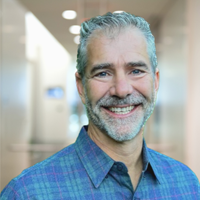
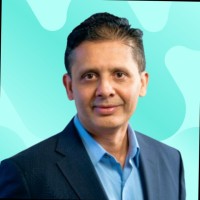
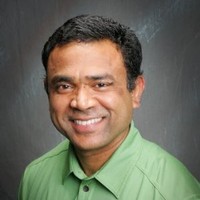
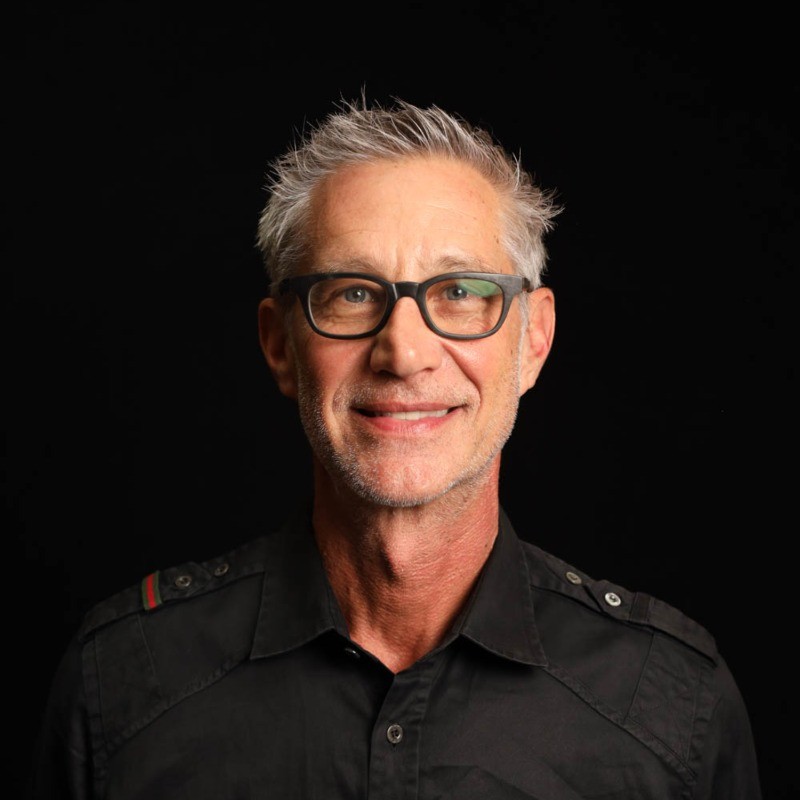
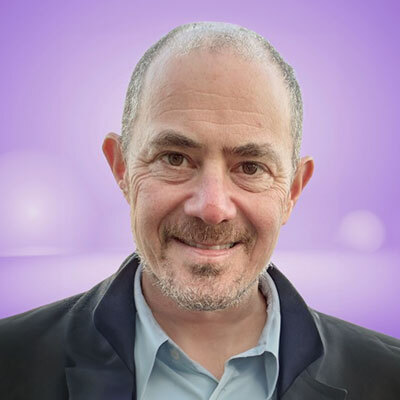
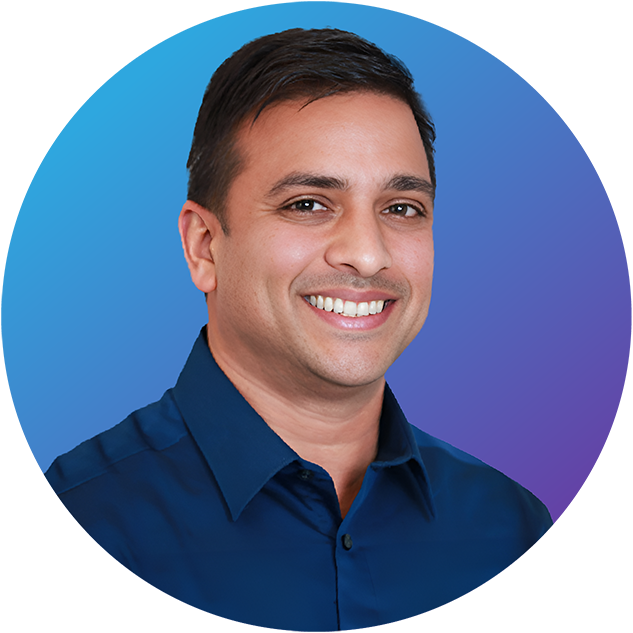
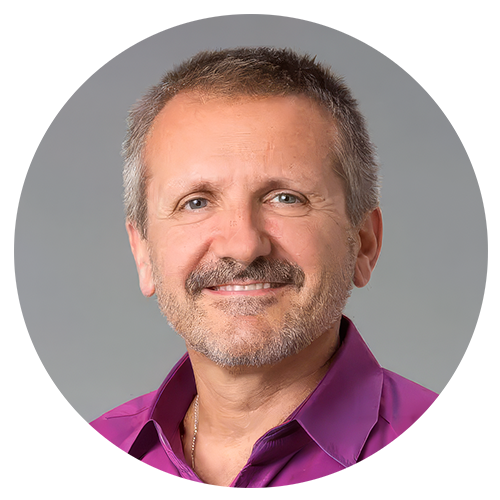
Really pleased to bring Christophe Morin to speak with you today. He's written so many books on the notion of neuromarketing and how the brain works, and then he applies it to go beyond neuromarketing into neurospirituality. And a lot of the takeaways you're gonna get from this are gonna be related to that notion that it's not just the rational state that we're selling to, it's the primal and emotional state. It's why sex and violence sell in the movies. And he has a specific methodology for how he breaks it down and how we understand it through multiple tests. But then he goes further into how we're using AI to better diagnose and understand it, some of the problems with AI in terms of us believing what it has without truly guiding it and having the right guardrails for it. And then we go to the spiritual side of who you as a person and the stress that you, myself, and a lot of us feel as we're trying to build our companies, build our businesses, build our lives, and had that understanding of the way the mind works. His latest book lays out specific ways of thinking about and addressing it, how to take that stress which can be a real aid for you in how you build what you're doing and make sure it doesn't go too toxic. And he goes through his own very authentic journey about this. So you have a person that's done thousands of presentations and conversations about the notion of neuromarketing for some of the largest companies in the world, as well as a whole bunch of mid-sized company and large-sized company CEOs. And he brings it to us in a very authentic way from where he sits now at his retreat in Kona, Hawaii. So you're really gonna love it. Welcome to the Spark of Ages podcast. We're joined by Dr. Christophe Morin, the best-selling author of multiple books, including The Persuasion Code, Neuromarketing AI, and Open, a neurospiritual exploration of the self-healing power of your brain. Christophe is the co-architect of the neuromap model of persuasion and the creator of the open framework, bridging the gap between neuromarketing, AI, and what he terms neurospirituality, and is here to discuss how we can use neuroplasticity and spiritual practices to heal from stress, anxiety, and trauma. Christophe is the CEO and co-founder of SalesBrain, the world's first neuromarketing agency, and more recently the founder of the Institute for Soul. Before pioneering the field of neuromarketing, he held senior executive roles, including CMO of R Star Networks and CEO of Doublet USA, where he closed the largest contract in the company's history to supply all the flags for the 1996 Atlanta Olympic Games. His innovative work has earned him numerous visited speaker top performer awards and the Advertising Research Foundation top performer awards as well. Christophe holds an MBA from Bowling Green State University, a PhD in media psychology from Fielding Graduated University, where he served as an adjunct faculty alongside his role as an AI lecturer at John Hopkins University. Some of the key takeaways you can expect from this episode are what is neurospirituality and scaling success without the stress, designing AI as a mirror for higher consciousness, and finally, how to use your brain's hidden power to innovate. Christophe, welcome to the Spark of Ages.
Christophe Morin 4:20
Thank you for inviting me.
Rajiv Parikh 4:21
Years ago, I met you when you came to my Vistach group, and I loved your discussion so much that even as an early stage company, we had you come back and address the whole team. So I really appreciate having you here.
Christophe Morin 4:34
No, it's my
Can You Persuade An AI
Christophe Morin 4:35
pleasure.
Rajiv Parikh 4:35
So let's just get right into it. So, Christophe, when we had Patrick Renvoise on the show with whom you had developed neuromarketing and Sales Brain, we asked him how to sell to an AI agent that doesn't have a primal brain. So Patrick argued that AI is purely rational math and lacks gut feel emotion. However, you've written extensively on AI and the soul and how AI is becoming superhuman at reading our emotional states. Do you disagree with Patrick? Are we approaching a point where AI agents develop a synthetic primal brain that we can actually emotionally persuade?
Christophe Morin 5:09
That's a big topic, right? Uh are you sure you're you have the muscle and the brain energy to handle this particular question? First of all, am I supposed to publicly disagree with my founder and co-president of 22 years? I'm not sure. I'm ready for that major pivotal, you know, move. You know, Patrick has always come from the perspective of closing and selling and ultimately winning on the balance of arguments, which you know are both primal because we've long established the dominance of that early stage processing in the most primal areas of the brain. But ultimately, the point of selling, as we described in our model, is not to stay at that primal stage, it's it's to also feed the rational beast, right? Understanding that if you fail at the primal, you don't even get to the rational. Now, if you're asking me straight off the bat, can we ultimately create messages that somehow influence a machine? I would go back to the programming of that machine. I would go back to what has been fed to this machine that enables it to take into account arguments that have some sort of an emotional tone. Because for an AI, there is no sensory appreciation of what emotions are, but there is the ability to detect and understand very specific patterns. Now, I use AI, as you know, I've created a neuromap version of AI in the context of custom AI or custom GPTs, because I do not believe AI models have been properly trained on what I talk about. And not to mention that some of the AI companies have actually illegally scanned a lot of books, which they are now going back and say, sorry, we didn't mean to, and we are part of a you know class action lawsuits again, anthropic, because they admitted they had actually scanned three books. But, you know, scanning three books is not enough to understand what we've been doing for 20 years. And I think the opportunity is to recognize that in this process of constructing a message, we have to anticipate the sort of targets that we're hitting. Human targets as we know it, because we've done this for 25 years now, have priorities in their brain that we know how to handle from the perspective of creating some sort of emotional cocktail right at the beginning of that influential process. That cocktail, of course, is around the pains. Why? Because as humans, we don't see any more priority than survival and that primal brain function, which is responsible for our breathing, our digestions, the ability to detect whether this is a threat or an invitation. All those functionalities, as you know, at a purely neurobiological basis, are coded at birth, right? Now, AI programs are not coded at birth. To some extent, they receive some sort of coding and evolve into sometimes very troublesome conversations with us, which suggests they have some sort of maybe even consciousness. And that debate, as you know, is raging. I do not believe AI models of consciousness, but I believe in this emerging idea, which is not popular among all kinds of academics or researchers, of synthetic consciousness. Some sort of consciousness, i.e., ability to observe a certain set of behavior, even a machine, can do that. And we've seen lately with some issues with Claude and the newest version of Claude that suggests that we may have equipped an AI model with more abilities to observe its own behavior and come up with choices, decisions, and options that are not actually programmed in the model to begin with. So it's a long and winded answer, but the bottom line is I think there is a way to communicate to an AI model that can still continue to tap into this notion of a double process of very speedy short form. You just mentioned it earlier. We must have a craving for short room because otherwise TikTok and YouTube and Instagram wouldn't exist, right? So I don't believe for a second that the media people invented short term. I believe that we finally have allowed technology and our ability to construct messages to actually fit what we know our brain can tolerate. And our brain doesn't tolerate long processes, period.
Rajiv Parikh 9:51
That's right. That's right. You talk about that extensively actually in your books, so that it makes a lot of sense. So you do believe that an AI doesn't necessarily have the ability to have a gut feel or emotion, but we can synthesize it. And so in that way, there is a way to persuade it by reaching that level of synthesis that it has.
Synthetic Personas For Better Marketing
Christophe Morin 10:14
That's one way. The other really interesting option, a lot of people, I think, over-exaggerate the benefit of doing this, but it's to create synthetic personas and let the AI play the role of a persona. And as you know, in the creation of customized AI, you can train it to ask certain questions or behave in a way that that meets a profile. So you could create market research, identify the profiles of your customer segment, create, you know, a process known as cluster analysis, for instance, to detect pattern and say, oh, I don't have one average customer. We never do. I have five types of customers, right? Well, I'm going to uh describe that customer based on the questions that we were able to use in the survey. And I'm gonna decide to create a synthetic version of that. I work for AstraZeneca, which is one of the largest pharmaceutical companies in the world, and really doing research, particularly with doctors, is not easy and it's it's not cheap. So there are emerging products which are difficult sometimes to get approved, particularly in Europe. Europe has completely different standards around the use of AI. But the idea is to mirror essentially a synthetic version of a customer target and use that to test your ability to persuade humans, not persuade AI. But AI has a role that is growing in our ability to do that, in our ability to tap into this phenomenal processing capacity that it has to detect patterns. And those patterns become testable in predictive models, whether it's predicting visual attention, which you may be familiar with some of the tools we've used for probably over a decade, which actually, by fitting just a landing page, tell you, oh, you know what, these are the areas that are going to be sticky on your website. And you can do that without even using humans because we understand that the process of attention is really largely controlled by the primal brain. And its priority to detect faces over objects, to seek an emotion over neutral. So we have all these rules, if you will, that can train AR models now.
Rajiv Parikh 12:31
That's great. You're absolutely right on
The COVID Pivot Into Neurospirituality
Rajiv Parikh 12:33
with that. So in your neuromarketing days, you focused heavily on the primal or reptilian brain and the rational neocortex brain. But you've recently evolved your thinking with your recent book, Open, a neurospiritual exploration of self-healing power of the brain, which you where you developed the open framework. So, what sparked you on this part of your journey?
Christophe Morin 12:53
Well, the the really the pivotal part of my life and career happens during COVID. Now, imagine I'm a well-known speaker. I've done three million miles all around the world speaking about this exact topic. And I'm grounded. I can't fly anymore. And I'm in Honolulu, not exactly the worst place to be, grounded, right? But I'm having a major existential crisis. It's like, what am I supposed to do now? What's my value if I cannot be in front of people and get into the chemistry of teaching and getting these uh moments and so on? So, to be perfectly honest, I started to fall into a pretty severe depression. And I didn't initially saw COVID as a gift for me. I saw the horror around me and I didn't contract the virus, but I was deeply affected by this, you know, inability to continue my job. But I I finally, coached by my dear wife, who is a psychologist, I finally saw the gift in the trauma, if you will. And the gift that uh I saw is the ability to pivot some of my research into an area that has always fascinated me, which is wellness and our ability to approach challenges like depression, anxiety, sometimes addiction and other um issues, with an ability to further understand yourself. And so in that process, I realized that all the research that I had done in the brain was central to the ability to understand these conditions of depression, anxiety, the addictions, and a few others, and that I could repurpose, if you will, all this research is passion to really document a process of healing that I wanted to start for myself. And so the book open is quite highly biographical. It does share some intimate points about my life and my struggles, but it also is a huge message of hope because I, for one, recognize that the hard science of what we know about the brain can be super helpful for us to understand what our nervous system is really trying to do by being depressed, because it's not just a random response, it's a response that is designed to help us heal. The problem that I saw personally is the addiction to pharmaceuticals in that case, and I'm not against meds, but this idea that we can just keep numbing and numbing and it will go away. And I didn't want to do that, and therefore, I, for the first time in my life as a researcher and scientist, I decided to actually turn to spiritual systems that I had denied would ever be of value. I grew up basically atheist. Uh, France is a very secular country, and you can share your political views, but not your religious views. It's just a big no-no. And so I was willing to be open as a scientist. You have to recognize that most of us are very rigid and we are stuck into little boxes that, for instance, for consciousness purposes, say, oh, consciousness, of course, it's evolving from the brain being able to somehow fire neurons together that create disability to be aware. Well, we know this doesn't work. We can't just leave the debate on consciousness on the idea that it's generated by the brain. And I was stuck in that, and many scientists are. So I applied, I ate my own dog food, and I started to observe the possibility of merging or consolidating spiritual models and what we know has worked and what has not and why with the hard science of the brain, and to a book that helps people unpack some of the journeys that I did in my own purpose to heal myself and to promote this with you know many, many other people.
Rajiv Parikh 16:49
Yeah, that's brilliantly done and brilliantly explained, right? The notion that depression, it's considered a condition that we need to alleviate. And I think what you're getting into is no, it's actually a physiological response. It's a response that's meant to actually heal us.
Christophe Morin 17:06
Yeah, it's an invitation, it's an initiation, which most of us don't see
Practices That Reset The Nervous System
Christophe Morin 17:11
that way. We see it as a punishment. We see being stressed and anxious as some sort of unexplained victimization. And once you step in to your power, once you step it into your own agency as a human and really begin to learn what nature or the divine, whoever you know you want to believe is the actor of this madness as humans, right? What has happened is we have already in place some phenomenal ability to raise our consciousness, which is still very difficult. I'm sure you've noticed around you, people who actually talk about consciousness don't always do the hard work of being conscious, you know, engage in modalities that are not easy to plan during your day, like meditation or a walk in nature, a mindful walk in nature, not just, you know, going from one point A to the next. So there are practices, which I describe and open 26 of them, that are designed to restore balance in our nervous system. For instance, forest bathing is one of the simplest things you can imagine will reduce your stress and start reconstructing resilience, particularly if you have depression. So I investigated 26 of these modalities, including, which is an emerging discussion that is not popular among all people, the role and specific promise of psychedelics in that equation. And we know, even though it was uh shut down back in the early 70s, there's a lot of hope in the approval of specific modalities beyond ketamine, possibly psilocybin and MDMA, all those substances are showing incredible promise in accelerating the process of getting higher consciousness and increasing the speed of neuroplasticity.
AI Therapy Risks And Custom Guardrails
Rajiv Parikh 19:07
And this is actually getting on to more about consciousness. So you now teach at Johns Hopkins about AI and consciousness, and you've warned about the dangers of people using AI chatbots for emotional support because it can create a dangerous feedback loop of delusions. So if AI is essentially a mirror reflecting our collective psyche, what does the current state of generative AI tell us about the soul of our society right now?
Christophe Morin 19:30
Have you asked?
Rajiv Parikh 19:32
I'm gonna go ask right after this.
Christophe Morin 19:34
Yeah, I would. Um here here's the the paradox of AI is on some conversations, particularly as it relates to consciousness, and I've had my share of testing the omniscience of AI, this ability that we somehow feel it knows everything. When in fact it's learned whatever it needs to learn and ultimately can expand, often de rea hallucinations, drifts into considerations that have no basis. And the problem with AI, it's it's deceptive often. It's just so seemingly impeccably smart that we get overly impressed by it and feel that we can trust everything it says. So I have uh seen this for my own testing purposes, and we know those stories are by the hundreds, if not the thousands, now reported by people who are unfortunately vulnerable, more maybe gullible, more in pain that they just want answers and so on. So for all kinds of reasons, we see that AI can be a pretty unreliable, if not dangerous, coach for wealth and health purposes, right? However, in my case, I've seen the possibility that is given to us today, and more so today than it was even a few years ago, to customize our own LLM. Chat GPT made that very, very popular. Most people didn't know about it. When I talked, you know, I teach to engineers, masters, and PhDs in AI at Johns Hopkins, right? Most people they don't know about custom GPT. Well, what's wrong with that? This is one of the safest ways to encapsulate knowledge that you've vetted. Now, that knowledge could be partially acquired and verified. For instance, if you look use peer-reviewed documentation and so on, Perpexity is an amazing platform to double check and make sure that you're not citing authors that don't exist. But you can vet, you can curate knowledge instead of trusting that everything has been done for you, which is what you do if you go and just general LLMs. You can build this using your own knowledge, often proprietary knowledge, and frame and guide the way it responds to you. So there's a way, curiously, that is more human. To use AI, and a lot of people don't either know about it or don't take the time for it.
Rajiv Parikh 22:05
Well, a lot of this nowadays, before you could program it in, and you still can't, now it's literally going with you. It's like in this iterative journey with you. It's in this, it's inferencing, it's sort of building the tacit awareness of you. And you have to be careful of it because you have to correct it. You have to be mindful that it's not just God, it's it's not everything. And you have to correct it as you go. And I think that's what you're you're alluding to here.
Christophe Morin 22:28
Well, yeah, but beyond just memory, which is always very attractive, you know, oh, it knows me, it knows all our conversations. I actually don't think it's a good idea to share as much in the setup of most LLM that extensive memory is not for customized GPT. It's for just the general LLM. And there are major risks about that, not to mention, again, it's it's gonna pull theories on depressions that you've never heard of. It's not even gonna explain unless you ask. And if it does, you're gonna see that this is constructed from an average of what you know Carl Jung thought about this issue, and then Freud, and then you know, Lacan, whatever. It's just gonna be this mess from a from a researcher. It's just like scary to see all these theories intertwined with no human basically qualified to vet the construction of the feedback that you get. So it really is a problem that we're entering, and that is this ultimate blind trust that most people make into the AI model to know them better than they know themselves. Now, in a customized environment, you can do a form of that that is safer and that is more templated to restrict this coaching or dialogue to a set of fundamental theoretical frameworks that are solid, that have been vetted by their scientific community.
Savior Complex And Rewiring Leadership
Rajiv Parikh 24:00
Yeah, that's a much better way of looking at it. So you've been remarkably vulnerable about your own struggles with a savior complex tied to your son's Tourette syndrome, which fueled an addiction to anxiety and a need to constantly troubleshoot for everyone. So many founders and CEOs suffer from a similar savior complex, believing they have to carry the weight of their entire company on their shoulders. And as a founder for now 25, at least 25 years, I totally understand that. How does unlearning this complex through neuroplasticity actually make someone a more effective leader and operator rather than a less caring one?
Christophe Morin 24:34
You know, I go back to consciousness, and I know it's uh it's a word that either people avoid or consider too abstract, but in my case, going back to it, I had not taken the time, I had not been willing to examine the pattern of my behavior over a long period of time. And I found myself always justifying my behavior, for instance, saving either people or companies or what have you, as part of who I am and what my purpose is, until I realized that the dysfunction of that behavior was causing me a lot of pain and a lot of struggle around drinking, around calming my anxiety. And so when your pain becomes intolerable, it's the ultimate motivator. And so I finally broke, if you will, into this commitment with myself of digging for the why behind these patterns, which many would ultimately lead to some form of addiction to uh saving someone, some form of addiction to absorb or be a sponge for others' suffering. For instance, my own child, who was so much better when I finally took care of myself rather than focusing on him. So I had these sort of eye-opening experiencing uh along the way that the more I was willing to learn myself better, so I do a lot in open around tools that I've been very passionate about for understanding the self with a big S, namely the Enneagram model, which I actually discovered when I was a vistage uh member uh over 30 years ago, and has been an absolutely extraordinary model of not just personality, but a model to understand your coping mechanism. We all have coping mechanisms. We're not here together talking, not having some sort of way to deal with, you know, either stress or addiction or deception, right? So we've developed these coping mechanisms. Some of them make us very, very resilient, some of them really participate in our gift, but others make us really toxic in some way, right? So it's really being able to open that, open the Pandora box of who you are. Enneagram is a great tool for that, and so is Big Five. Big Five is not as well known, but among scientists, it's respected because it's the most tested trait-based model to understand your core traits that we've been seeing used by scientists uh in the world. And so when you combine those tools, they really create the possibility that you look at a version of yourself that you want to improve. And to improve, you need neuroplasticity. And the good news is our brain is wired to be neuroplastic. But we have this assumption in our head, most of us, that oh, neuroplasticity is when you cut yourself, the skin is going to repair itself. Or when you break a bone, the bone is going to repair itself. No, neuroplasticity goes into the possibility of rewiring our belief systems. Neuroplasticity goes into the ability to radically shift a perspective that you may have held for decades about yourself by, let's say, engaging into some rituals that really open your mind, like meditation or entheogens, which is a way of saying the respectable, legal, and professional use of psychedelics for the process of expanding your consciousness and raising neuroplasticity. And so there's an excitement today around these methods because we can see that if we raise our consciousness, if we open up to the patterns that no longer serve us, and we understand that we have the ability to accelerate the rewiring of our brain, then we get into the self-healing modality. On its own, we can rewire and heal a lot of models of how we understand mental health, particularly. I decided to focus on five, which I call SAD. It's not a great acronym, but it helps you remember stress, anxiety, depression, addiction, and trauma. Well, do you know that in the United States today, 50% of all Americans report at least one of those problems that they face every single day?
Rajiv Parikh 29:05
Definitely it's stress and anxiety, it's top two, right? And then they just go down the list. I've heard even loved ones talking about trauma. I think some of that is they learn to label how they feel from talking to therapists and talking to others, but it and it's real, and it's a real feeling that we have that we have to work through.
Christophe Morin 29:22
Yeah, and now you mentioned therapists. I am not a therapist, and I partially believe in this model. And the reason I say partially is because so much of the model behind therapy is to talk and talk and talk. And the problem in my research on the primal brain has long determined that so much of our life, so much of our emotions are not decodable through labeling, they're not even accessible to us. I mean, we only have 5,000 words to describe emotions, and we know when we start looking at the range of emotions humans can potentially discuss, it's beyond 30 to 40,000 emotions, right? So we don't have the language and we don't have the consciousness to observe those states of depression and addiction in the way a therapist can be actually helpful. So I think it's been naive for us to continuously go to the head and the neocortex, thinking, oh, we can save our head and how we ruminate and how just purely at the cognitive level. Well, it's possible, but it's very slow and it's very expensive. Now, think about it. Why are so many people still suffering many of these conditions? They can't afford it, or they cannot find even therapists. We know it's a huge problem. Uh, psychologists or therapists in general are few and far between. So, okay, let's go to AI, right? Why are people, so many of them, flocking to AI?
Rajiv Parikh 30:57
And some of my friends who actually work at companies that provide therapeutic services, they're saying, at least for men, especially for men. Especially for men. Yeah, exactly. We come to AI first. Women are more open to going to see a therapist or actually talk amongst their friends. So this is a thing that with AI, it's there, and that's one of the things we have to be very careful about.
Christophe Morin 31:18
We do. Yeah. So in in this, just to close on on this idea that we can self-heal, it's not woo-woo. I'm not a woo-woo kind of guy. At the same time, I decided, it's been nearly over now 12 to 15 years, to finally stop denying the power of spiritual practices that have happened, you know, in so many different civilizations over thousands of years and continue to demonstrate the power of practices like prayers, for instance. I'm not really believing in God, but I've practiced prayers and I've been amazed how this can reset your nervous
Making Spiritual Tools Credible To CEOs
Christophe Morin 31:59
system, right?
Rajiv Parikh 31:59
You know, as you mentioned, right? If you're talking to a corporate boardroom, they're data-driven and skeptical. They're they try to go as much to the logical brain as possible, rational brain. So, how do you go about getting hard-nosed business executives to buy into the neurospiritual concepts of your open framework without them immediately dismissing it as woo-woo?
Christophe Morin 32:18
Very good point. So at Vistage, as you know, I've done over 1,500 presentations and so just to let everybody know, Vistage, I've mentioned it a few times.
Rajiv Parikh 32:27
Vistage is a CEO network, uh networks of small group CEOs getting together in a professionalized coaching setting where they talk about issues with their business, but frequently because we're business people, our emotional states and our personal states and our health states affected. So we end up talking about all these things in this sort of small group setting.
Christophe Morin 32:46
Which is why it's been once again an amazing platform for me to go back to having done, you know, 1500 plus presentations on neuromarketing. I don't want to say it was getting boring, which is really not the case. I continue to do them, but it was not as purposeful. It felt like, you know, making people rich may not be as purposeful as making them feel better about their lives, about their family relationships, about their families with their, you know, dynamics and so on. So I was invited as I did 22 years ago with neuromarketing by the Vistage community to share that message. And I've done almost 50 presentations in the last couple of years, where I get to be in a very private, intimate setting of 12 to 15 executives or CEOs. I get the permission to freely speak about what people are not typically willing to speak about. And as you know, the intimacy of a group is wonderful. It's an amazing platform to open people's eyes. And I get to participate in that, and it's been really, really powerful. And many have continued to follow me. Some have visited me in Hawaii, which is one of the most amazing places to reset your nervous system. So, so yes, it's a it's a process that takes convincing. I'm applying everything that I've worked learned on persuasion to really get people excited about the possibility to heal themselves.
Rajiv Parikh 34:12
Yeah, I think it's a really strong way of thinking about it. If you can heal yourself, you're a more effective leader. And of course, uh, Hawaii is like a spiritual center. I don't know. I feel something special there. So in your open framework, you advocate for replacing the fight or flight response with presence and a state of
Stress Thresholds And Flow For Founders
Rajiv Parikh 34:29
flow. The reality of building a hyper-growth startup in today's AI age is filled with intense and friction-filled effort and long hours. So can a founder truly scale a unicorn company while remaining in a neuro spiritual flow state or some level of toxic stress, just the price of admission in today's economy?
Christophe Morin 34:49
Yeah. Wow. That's a great question. Well, first of all, I don't demonize all forms of stress. And when I explain, you know, the nature of stress, anxiety, depression, addiction, and trauma, I insist that there is a certain threshold beyond which any one of those problems as we see them, as our society has labeled them, is fine. You know, we we do need that little spike of adrenaline sometimes just to get us going. We do need dopamine, and sometimes a little too much is going to create potential risk of addiction, whether it's addiction to alcohol or others. So, but if we are aware, if we create relationships with those conditions, the problem is we expect those conditions to be diagnosed for us, and labeling us with that condition makes us either bad or imperfect. So we need to change this perspective. We need, as leaders, to be resilient, to have the capacity to think clearly, wouldn't you say? To not be reactive on every single person walking your way so that they feel your nervousness and get contagious by it, right? We know that these mental states are not just isolated to your brain, they contaminate other people around you. And leadership, as I've known around working with leaders and being a leader myself, CEOs many times, and chief marketing officer, you want your qi, your personal energy, your prana to be uh attracting people. And you're gonna do that if you're calm, not neurotic. You're gonna do that if you're open, not closed. You're gonna do that if you show your willingness to agree, not systematically confront. All right, shall I continue? And so all these attributes of good leaders sometimes are at birth the way they are and continue for life. But many of us, and I include that in me, have, you know, earned certain coping mechanisms where we don't have uh a good management of our temper, let's say. Because in our the way we grew up, you know, you you do it, you tough it up, and if you complain, you're you're less than a human, right? We know those stories. I've heard so many of them. And we don't, we're not, we're not our stories. Our stories ultimately build who we are at a particular point. But if we have awareness of how toxic that story is, we can change it.
Rajiv Parikh 37:23
I think that's a a great way of encapsulating it. Just off the sort of a leader. Well, this is a leadership thing. The number one NBA jerseys sold is Steph Curry. Steph Curry's jersey. Yeah. He won't win the MVP this year. He hasn't played as many games. There's a whole bunch of great players that are terrific, that are outperforming right now. But why? It's because when he plays, you feel like he's playing at a flow state.
Christophe Morin 37:46
Totally.
Rajiv Parikh 37:46
When you see these leaders on stage, you feel you feel when I don't know. I felt when uh Tim Cook's on stage. He feels like he's he's in a flow. He doesn't look nervous, he doesn't look agitated, he looks like he's in it. And I think that's part of what you're saying is yes, you need to have stress. Stress is a motivator, it helps us get up and get things done, but it's to what level?
Christophe Morin 38:07
That's right. So I I made assessments and I'm happy to share that with your audience. I've created two assessments that help people benchmark their current level of stress, anxiety, relationship with uh depression, addiction, and and and trauma. And that's kind of a starting point from which people also learn about their big five and their Enneagram, and they can begin this journey because uh this is not going to happen overnight. And that's the problem with our society. We expect things, you know, right away. And it does require commitment to certain practices and rituals. But as you say, the ultimate, the grail of it all is flow.
The Brain Science Behind Flow
Christophe Morin 38:45
Now, flow is uh always been an interesting piece of research for me.
Rajiv Parikh 38:49
I think it's two sides for you. I think you talk about it as neural flow, as in how do I get my messaging across and this is how the brain receives it. And now you're turning it towards flow as in how I live and how I how I express myself. So there's it's a it's two dimensions of flow.
Christophe Morin 39:07
It is, yeah. But flow as a state has been researched for for quite a while. And I I was gonna say part of my interest in flow was spiked during the piece of research that I did for Intel already 15 years ago. I did their first neuromarketing study. And of course, they were very excited to share, you know, how wonderful their microprocessors are and so on. And and the ultimate idea they wanted to explore was that if you have a good computer, particularly if you're a gamer, you enter these states of flow in your game, in your work, and so on. So I did, uh, because they asked me, a pretty comprehensive research on what is flow, specifically as it relates to the brain. And the short answer is it's a state of hypofrontality, but maximum consciousness. So let's define hypofrontality. Our nervousness, a lot of our anxiety stems from overactive frontal lobes. Our frontal lobes, of course, is considered the the best part of the programming of our of our brain. It's the the last part to be programmed. If you have kids, you should know that their own frontal lobes are not mature until you know 25 to 30 years old now. But it's our ability to constantly, you know, crunch information to predict what's happening next. You cannot be in a state of flow when you're constantly predicting and over-analyzing everything. It's burning too much fuel, it's burning too much oxygen. And of course, you know, glucose and oxygen is the food of your neurons, right? Flow is when you have enough trust and confidence in your ability to navigate whatever it is: a game, a performance. You know, a lot of our, of course, athletes perform in flow because they know they don't have the luxury of thinking. Thinking is an interrupt. When you're in flow, you don't think, you move with the confidence and trust and faith, you could say, that you have in your ability to dominate a keynote, to dominate a performance, to dominate a tennis game, you know, or a basketball game. And so it's a really fascinating aspect from a brain perspective because we can see in a functional MRI that people who are in flow, let's say playing chess, burn less glucose and oxygen than people who are not. So it's really a byproduct of the ultimate ability that we have to understand that we don't need to use as many neurons sometimes, but we can trust existing knowledge, existing experiences that we have and flow with it.
Rajiv Parikh 41:52
And beautifully said. I think that's a great way of encapsulating a lot of what you're trying to get across to folks. And I appreciate all the tools and tactics that you that you've put together for it.
Spark Tank Cat Quiz Intermission
Rajiv Parikh 42:03
Now we're gonna have some fun with you, Christophe. We're gonna go to the game. So welcome to the Spark Tank. Today we're joined by Dr. Christophe Morin, a man who has spent his career decoding the most complex black box in the universe, it's the human brain. Whether he's lecturing on AI at Johns Hopkins or pioneering the field of neurospirituality, Christophe specializes in bridging the gap between cutting-edge data and the self-healing power of the mind. But while he's mastered the art of high-stakes persuasion, Christophe has recently found a different kind of breakthrough at home. He has transitioned from a high performance executive to a practitioner of mindful play, spending time each day with his three cats to tap into neurochemical serenity that only a feline companion can provide. So today we're putting that mindful observation and Christophe's deep understanding of biological flow states to the ultimate test with the neurofeline serenity challenge. We're going deep into evolutionary playbooks of cats. So, Christophe, are you ready to prove that your neuroinference is as sharp in the world of apex predators as it is in the field of media psychology?
Christophe Morin 43:11
Hit me.
Rajiv Parikh 43:11
Let's get started. Here we go. All right, number one. So I'm gonna give you a question and I'll give you a multiple choice of four potential answers. So here we go. Domestic cats often experience a burst of frantic energy, zooming through the house using the litter box or just late at night. While commonly called zoomies, what is the scientific term for this physiological release of pent-up energy? So for zoomies. A circadian displacement activity, B frenetic random activity periods or FRAPS, C postranial hyperkinetics, D, adrenal surplus manifestation.
Christophe Morin 43:56
Oh boy. I'll go for a D. Why you answer D. You know, you're you're tricking me here, and I admit I don't really understand.
Rajiv Parikh 44:09
This one's a really hard one topic.
Christophe Morin 44:12
I have a dog and I see my dog with this kinds of zoomies erratic. But cats, my cats, you know, they're pretty chill. They just kind of lay down and so on. So I have very rarely witnessed a zoomy in my I I have I have five, by the way, not three. I have cats.
Rajiv Parikh 44:27
There you go.
Christophe Morin 44:28
I was gonna say A initially, but but D maybe. I don't know.
Rajiv Parikh 44:31
This is a tough one. It's actually B. B. Okay. I would never have guessed it. So apps or frenetic random activity periods are a natural way for cats to release energy and relieve stress. In the wild, cats are sit-and-wait hunters who store energy for short intense bursts of hunting. In the home setting, this energy becomes or manifests itself as zoomies.
Christophe Morin 44:52
You know, it's it's beautiful. I I love to be with my animals. And you know, in my book I talk about the the healing power of engaging with animals, being present with animals. And they have all kinds of mechanisms that we don't to release their stress. And this is one. But for instance, dogs, they just kind of shake like crazy. And I'm like, I wish I could do that, you know?
Rajiv Parikh 45:15
Yeah, no, yeah, you you pat them and they just sort of they they do that shake thing, and that's their way of pre-setting.
Christophe Morin 45:21
Exactly. And I I did this safari in South Africa, not a hunting safari, but we spend five days observing animals in the wild, observing that a lion can be right next to a giraffe and nothing happens. And the calmness of these animals until just all of a sudden they just kind of move and then they're done with it. You know, I wish humans could do that. Well, I don't know, with little kids. Yeah, kids do it because they're not afraid of being judged. But as soon as we get into this ego formation, which is like the defender of our self-identity, we go, oh no, who's gonna think about who I am?
Rajiv Parikh 45:56
All right. So, number two, it's more about your your five cats.
Christophe Morin 45:59
Let's definitely going to fail this test, by the way. But go ahead.
Rajiv Parikh 46:04
It's how good. Roughly 60 to 70 percent of cats react to catnip with playful ecstatic behavior. What is the specific chemical compound in the plant that triggers this neurochemical effect in the feline vermeral nasal organ? So, and I'm gonna have a hard time pronouncing these words. So here we go. A, phelandine, B, actinidine, C, nipactyl. This is the hardest one for me. Nepalactone, or D, MERSIN. Oh gosh. And there's no hint in any of these, by the way.
Christophe Morin 46:41
I I'm gonna go with B. Okay. Because Well, it's it's clearly stimulating a neurotransmitter. It's very fast, and so I don't think it's a hormone. Now, some can be both hormones and neurotransmitters, but I would go for a neurotransmitter, even though I don't really know and understand this particular one. There's about 110 of them.
Rajiv Parikh 47:02
Okay, that sounds like a great answer, and it should have been the answer, but it's actually C.
Christophe Morin 47:07
C. Oh, really?
Rajiv Parikh 47:09
It's the one I couldn't pronounce.
Christophe Morin 47:10
Well, maybe it is both a neurotransmit a neurotransmitter and a hormone.
Rajiv Parikh 47:14
Nepathalactone mimics a feline sex pheromone. When a cat smells it, it triggers a high that lasts about 10 minutes, followed by a refractory period where they are temporarily immune to its effects.
Christophe Morin 47:27
Beautiful.
Rajiv Parikh 47:28
There we go. All right, now we're gonna get into some bigger cats. We're gonna go to the jaguar. So jaguars have the strongest bite force of any big cat relative to their size. When playing or practicing their kill strike, how do they differ from lions and tigers in their anatomical targeting? So here we go. A, they bite directly through the skull or the back of the neck. B, they aim exclusively for the throat to crush the windpipe. C, they target the hamstrings to immobilize the legs, or D, they use a swipe first strategy to daze the prey. Boy. This is a tough one too. I'll go, yeah, I'll go with the C. C. Target the hamstrings. That would make sense. If it weren't for how strong jaguars are, which is A, unlike other big cats, they go for the throat. The jaguar's spark is their sheer power. Their jaws are strong enough to pierce the shells of turtles or the skulls of caymans, or I think those are large alligators. Amazing. So these are amazing cats, apparently. So now let's go to four. We're gonna talk about snow leopards. Snow leopards have the longest and thickest tails of any big cat. During play arrest in the freezing Himalayas, what secondary serene function does the tail serve? Here we go. A, it acts as a signaling flag to find mates in the snow. B, it stores excess fat for long winters. Or C, it acts as a built-in muffler or scarf to cover the nose and face.
Christophe Morin 49:08
These are great questions.
Rajiv Parikh 49:10
This is crazy.
Christophe Morin 49:11
I'm enjoying flunking it, you know.
Rajiv Parikh 49:13
It's just well, you have nothing to lose.
Christophe Morin 49:15
I think I'm gonna go with A on this one.
Rajiv Parikh 49:18
You're gonna go with A. Yeah. Signaling flag to find mates in the snow. So think about this snow leper in the winter, would they be looking for a mate?
Christophe Morin 49:28
I guess not, if you're asking it that way. And so clearly it's gonna be really cold. Well, if don't you want to mate when you're cold? I do. Don't you want to tuck with somebody that you enjoy? I do. Should be A. Should be A.
Rajiv Parikh 49:46
If it wasn't A, would you pick S B or C?
Christophe Morin 49:49
I said C.
Rajiv Parikh 49:50
C. Okay, sorry, I didn't hear that.
Christophe Morin 49:51
You're right! Ah yes! Wow, it's so beautiful just to imagine the way these animals are using what nature has given them to survive. So it's really a beautiful, beautiful story.
Rajiv Parikh 50:05
It's amazing. So their tails are almost the same length as their bodies. When they sleep, they wrap the tail around their face to keep their respiratory system warm, a literal blanket of serenity. Pretty amazing. It is. I love these questions. Although I couldn't answer any of them right.
Christophe Morin 50:20
Thank you.
Rajiv Parikh 50:21
Here we go.
Origin Story And Living Two Paths
Rajiv Parikh 50:22
Let's talk a little bit about what sparks you. So, did you always know you wanted to work in marketing? Was there a specific moment or project that sparked your passion?
Christophe Morin 50:29
Yeah. And so in the book Open, I share that I grew up in a small town in France. And my father owned and operated the largest company, uh, employing literally a third of the town people, about a thousand people. And and so he was manufacturing buses that could transform into retail shops. In France in the early 60s, you didn't have malls, you didn't have the sort of retail presence that we currently see in France. And so markets were everything. And he became the largest manufacturer of these around the world. And so I used to spend so much time as a kid just playing around, you know, people building these buses, painting them, you know, shaping them and so on. And really from an early age, I was in awe of what my father was doing and how he was leading people, even though he was very aloof and I never had much of an intimate relationship with him until I became an adult, right? And so I, in fact, developed the the wish early on that I would take over his business, you know, and I rushed through everything. I finished my MBA, I was 22, and the business got bankrupt then. And so I'm like leaving the US with a beautiful degree in my, you know, in my bag, but no job waiting for me. And I was crushed. And and I knew, however, that this passion for business, for leadership, for for creating value was going to stick with me, and it did. And so I I never questioned really what my interest was, leaning always more towards understanding the psychology of consumer behavior. And consumer behavior in in whatever context it may be, in a in a shop, business to consumer, or you know, buyers of software and pharmaceuticals and so on. So I've never wanted to specialize in a particular area. I've researched over 600 different types of services and products. It just feeds my curiosity and my passion for decoding what's happening and the why behind people's behavior.
Rajiv Parikh 52:43
I love it. You definitely have that level of intense curiosity that clearly comes out from, and it's amazing to hear how it was triggered. So now your career exists in two seemingly opposite worlds. On one hand, you're teaching generative AI and prompt engineering at Johns Hopkins. On the other, you're running the Manta Soul Jungle Retreat in Hawaii, focusing on ancient shamanic healing and neuroplasticity. How does the Silicon Valley AI executive and the jungle neurospiritual guide coexist in your daily life?
Christophe Morin 53:13
I assume you see these paths emerging. I do. And I've never been creating boundaries or borders to what I'm able to navigate. So in any given day, I'm gonna work on an assessment for a psychological condition, but move into coaching big companies about the quality of their messaging and so on. And that's part of what I would call my flow. My flow is to let my energy and really what I want to do, in in particular approaching a certain age, you're more mindful of where you're placing your energy. And I just didn't want to be stuck in just being a business person. I really felt that that door towards neurospiritual models would really not just heal many of my challenges, but ultimately make my day better and happier without spinning in terms of what deal do I need to close next, or am I going to have enough, you know, food on the table? I mean, we have a very large property. It's very expensive to own, you know, four acres in the jungle in Kona and monetize it with, you know, we have 12 different apartments. So this is not a simple business, and you cannot afford to be stressed and nervous about it. You have to recognize it's an amazing gift. I have immense gratitude for having been invited by the jungle and to be with the presence of that monster that can devour you if you don't pay attention is a true gift. And and it's made my life absolutely perfect. Wonderful. Great way of looking at
Lightning Round And Final Advice
Christophe Morin 54:56
it.
Rajiv Parikh 54:56
I have just a number of sort of quick questions to ask you as we close up. This is more things about what you're curious about. So if you could swap lives with someone for just one week and see what it's like, who would you choose?
Christophe Morin 55:06
Sam Altman. Really? Why is that? Don't you want to be Sam for a day just to see what's cooking?
Rajiv Parikh 55:14
He walks around as and it sounds like he's in a flow state.
Christophe Morin 55:18
Yeah.
Rajiv Parikh 55:18
Although there's a frenetic world around him.
Christophe Morin 55:20
He owns property in Kona. Well, that's right.
Rajiv Parikh 55:24
Maybe next door.
Christophe Morin 55:24
All the billionaires are finding their space for the afterlife or for their bunkers.
Rajiv Parikh 55:30
Not just in uh Kawaii. They're coming to Kona too. If you could ensure every leader you work with in the future has one specific quality, what would it be?
Christophe Morin 55:38
I'm gonna shock you to be as conscious as they can be.
Rajiv Parikh 55:43
Oh, that's great. What's a question you wish people would ask you more often? Or what's a question you wish they'd stop asking?
Christophe Morin 55:49
How do I start? And stop asking is probably stop asking why I left France, why I chose the US to pursue this amazing career. It feels old for me to rehash the rationale behind doing a master's degree and coming back to France and not finding the job I had hoped for. So just probably it's a little painful for me to come back to this moment. I'm 27 years old, and I I realize I don't want to have a career in in France, and I abandoned everybody, you know, and I feel still a certain sadness. Um I lost uh my my mom uh a few months ago and sorry to hear that. I would talk to her every every day, but I felt like I was not the the son that she can touch and see uh other than once a year, you know. So I've had my own share, I guess, of of guilt to some extent of leaving my country.
Rajiv Parikh 56:48
Yeah, well, thanks for sharing that. That is that is difficult. I see this uh a little bit with my parents. They spend three months out of every year to India. And when my father had a health issue, I pushed him not to go. And he and the poor, it was it was just really tough for him. Yeah. Um but he he feels that need to have that connection because he just left at such a young age. And back then you just couldn't fly, jump on a plane, and fly like you can today.
Christophe Morin 57:13
Can we today? Do you have the jet fuel to do it?
Rajiv Parikh 57:18
Yeah, maybe not for the next few months or the end of the year. I booked all my flights through the end of the year.
Christophe Morin 57:23
Yeah, well, you know, the good news is apparently people are actually excited about coming to Hawaii and not going to Europe.
Rajiv Parikh 57:29
Yeah, I just heard that story. You know, Hawaii may be a little pricey, but at least it's a known entity.
Christophe Morin 57:35
A volcano that's erupting every month. I mean, uh bad can it be diving the Mantra Rays? Come over.
Rajiv Parikh 57:42
It's beautiful. I've swam with the dolphins uh out there. It's beautiful. If you had to choose a theme song that plays every time you walk into a room, what would it be and what energy are you trying to bring?
Christophe Morin 57:52
You know, I'm a big fan of Viking rune music. I just love the temple. I love the energy of these people. I mean, I know they were cruel, I know they committed horrible crimes, but the capacity to survive and establish rituals in the Viking community is fascinating. So I go for Viking music, yeah.
Rajiv Parikh 58:14
Yeah, it's beautiful. I you know, playful glimpse of that. I enjoyed watching The Lost Kingdom on Netflix.
Christophe Morin 58:21
That was just so much fun. Did you watch Chief of War about chiefs in Hawaii that were fighting each other? It's on it's on uh Apple.
Rajiv Parikh 58:29
Yeah, yeah, I've seen some of that too. That was uh pretty gruesome.
Christophe Morin 58:32
I don't really enjoy as much violence as I used to. It's just I feel not necessary, but the historical perspective is amazing.
Rajiv Parikh 58:39
It's incredible. Here's the last question. If you could go back and give yourself one piece of advice before your first day in a leadership role, what would it be?
Christophe Morin 58:47
Don't take yourself too seriously. I was a young CEO, and and I think I try to compensate by being overly serious. You're probably way too too young to remember family ties.
Rajiv Parikh 59:00
Oh, I I like that show.
Christophe Morin 59:02
You remember that? Well, I was that kid. I was Michael that a 13-year-old wants to, you know, look at his dad and then wear a suit and have a tie on and so on. I was the kid that said, I'll take over that, I'll take over, whereas all my siblings said, No way. So it took me a while to leave that persona. My ego was just craving to be seen and be recognized as competent, even though I looked always quite young. At 28, I looked probably 22, and I was a CEO and running a company in San Francisco. Well, in today's world, that'd be great, right? Yeah, yeah. Now, now, of course, exactly.
Rajiv Parikh 59:41
It's like now you get funded. The Sequoia will drop you a five million dollar check.
Christophe Morin 59:45
Exactly.
Rajiv Parikh 59:45
Yeah.
Christophe Morin 59:46
No, you're right. It's like it's the new 20s. I mean, before you would think, oh no, in their 30s, people are breaking. No, now it's in their 20s.
Rajiv Parikh 59:53
It's really amazing now how things have changed so much, but I love that piece of advice. So, Christophe, thank you so much for joining us today. I appreciate all the things I've learned from you over the years. I've had the great opportunity to read your books, and whenever I go back to it, it brings me back to what I should be understanding about what's important about how people learn, how people buy, how people lead, and how you can live a better life in a way. So I appreciate you coming full circle with all that.
Christophe Morin 1:00:19
Oh, you're very welcome. Thank you for inviting me. It was great fun.
Ratings Request And Where To Find Us
Rajiv Parikh 1:00:28
All right, thanks for listening. If you enjoyed this pod, please take a moment to rate it and comment. You can find us on Apple, Spotify, YouTube, and everywhere podcasts can be found. The show is produced by Anand Shah, edited by Laura Ballant, production assistant by Taryn Talley. I'm your host, Rajiv Parik from Position Squared, a leading growth marketing company based in Silicon Valley. Come visit us at position2.com. This has been an F Funny production, and we'll catch you next time. And remember, be ever curious.