Episode 59







Why The SaaS Pocalypse Matters
SPEAKER_02 0:00
You just asked the biggest problem that every one of us is facing today, whether it's VC or the operators or the CXOs and the companies.
SPEAKER_01 0:09
The SaaS apocalypse is really driven by buyers understanding their environment and understanding cloud and understanding what they've historically purchased.
SPEAKER_02 0:20
Especially if you're going to take the biggest of the oil and gas industries like the Halliburtons or the Sklumberjays or get into the manufacturing perspective, Airbus. They are not focused on building their own products.
Meet Flywheel And Foster Ventures
Rajiv Parikh 0:52
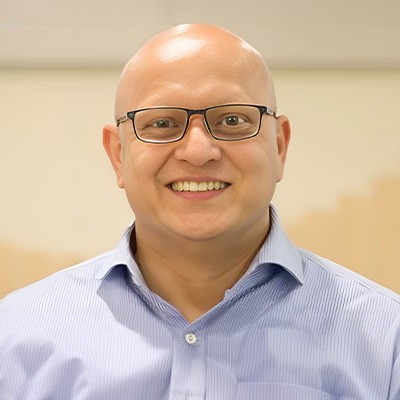
In less than a couple of years. And what motivated him to go start it. And I find it striking that what really motivates him is seeing the buyer pain. He's created a multi-sided marketplace, because that's what he specialized in over the last 15 years. And it's that buyer pain that really motivates him, and that helps him build a much better environment, a better understanding by understanding that main customer, how then to put together a system that in today's AI-driven world helps to put people's arms around some of the unpredictability that's occurring. So we're going to talk a lot about this notion of SaaSpocalypse and how because with AI you're able to build your own software using these AI tools, and you won't need traditional software or traditional cloud capabilities like you did in the past. And what's actually happening is it might actually accelerate the adoption because now you have multiple ways of going and multiple ways of putting things together. It's all happening in the cloud. So what's going to be striking today in today's discussion is maybe the SaaSpocalypse isn't what it seems. And that will drive a lot of what we're going to be seeing in the next year. And then when we get into this whole discussion of very large venture capital rounds and how all these monies are being pushed into a few companies and potentially crowding out others, how are you going to listen to two folks, one an investor and one an entrepreneur, that's saying we're just going to go about our business and get stuff done and drive growth. And that alone is going to drive things, as opposed to worrying about how one is crowding out the other. But it does pretend a potential situation where we could be in another 2021 where SaaS companies exploded and then dropped, or it could be like 2008 or 2001. And that's some of the things to be concerned about. So lots of great stuff today, plus learning more about who these amazing people are. So really excited to bring you Ankor Briya. Hello and welcome to the Spark of Ages podcast. Today we're doing a special roundtable discussion on the power of cloud marketplaces, the so-called SaaS Pocalypse, and the new rules of venture capital and AI unit economics. Our guest today, Uncor Srivastava, the CEO and founder of Flywheel, the world's first cloud meta marketplace, transforming how enterprises buy and sell software across AWS, Azure, and Google Cloud. Previously, he was an elite sales leader at Amazon Web Services or AWS, where he spent five years as the head of field and customer business development for the AWS marketplace. Now he's building What's Next? A platform to simplify the broken enterprise procurement playbook and help companies maximize their existing cloud commitments. Priya Ramachandran, Priya is the founder and managing partner at Foster Ventures, an early stage VC firm she built from the ground up to act as the startup of the VC world. She is an operator-turned investor with significant experience building and scaling products at companies like Coupa Software, BetterCloud, and Intel. She focuses on pre-seen and series A investments in P2B tech and supply chain and continues to passionately foster the US India startup corridor with her work with SaaS Boomi. Ancore Priya, welcome to the Spark of Ages.
SPEAKER_01 4:06
Thank you, Rajiv.
What Flywheel Actually Does
Rajiv Parikh 4:08
Thank you, Rajiv. So what is Flywheel? Flywheel operates as the world's first cloud meta marketplace designed to unify and simplify how enterprises buy and sell software across the major hyperscaler cloud providers. That's Amazon Web Services or AWS, Google Cloud, and Microsoft Azure. Rather than acting as a traditional software vendor, Flywheel's business model relies on serving a two-sided ecosystem comprised of enterprise buyers like procurement or finance teams and software sellers like ISVs or independent software vendors. So, Ancor, other than meeting me, what sparked you to start Flywheel?
SPEAKER_01 4:44
First of all, thanks again for having me, Raji. It's so good to be here and to be actually be able to talk about Flywheel openly. I know in our last podcast, it was in stealth mode. It was a secret. We couldn't talk about it, but I'm super excited to be chatting about it. What sparked it really was the buyer pain. What we saw was that our procurement buyers, our folks in finance and even people using technology or cloud provider marketplaces, were really trying to optimize the ability to leverage them in a succinct way to A, mechanicalize cloud commitments that they were making, leverage cloud marketplaces in a way where it added less friction and more benefits. And then to be able to drive really what were the savings that they were going to be able to experience by leveraging both of these solutions and then package it all back together, back to the business and say, this is what we're able to achieve by stacking all this together. And it was really buyer empathy that drove our creation of Flywheel.
Rajiv Parikh 5:45
That's pretty cool. So I mean, you saw it while you were at AWS, right? I mean, you were there at AWS working with all these large software firms, helping them market themselves in the way that they were set up. And then you saw how that came together.
Why FinOps Breaks With AI
SPEAKER_01 5:58
I did. Priya's a legend herself in terms of how much she's experienced the ecosystem from a procurement perspective. And so when we originally came together and talked about the journey, it was a natural fit to say the matching of this two is the missing link in what we think is the entire cloud procurement journey for these buyers. And within AWS, who has partnered with us really well, and I have a lot of gratitude for how much access AWS affords us and how they work with us today, they are also ensuring that we can go back to those buyers and reveal to them this ease of transaction that we've now afforded them through the marketplace, but also tying it back to the cloud commitments has been just a massive opportunity to work with. So yeah, AWS was where I got to understand the problem when I was there. And now working at Flywheel, I get to stand next to AWS and our buyers and sellers, and now really build uh the next wave of the opportunities that we see over here in this market.
Rajiv Parikh 6:55
Thanks for that. And this is for both of you. So and Priya, you can start first. We're currently witnessing what can be called a paradox for FinOps, where cloud efficiency rates, which are you know percentages of revenue consumed by cloud costs, are dropping. And even as formal cloud and AI cost management programs are expanding, so from a marketplace procurement perspective, and I know you have a lot of this, and as a venture capitalist, why are traditional FinOps practices failing to rein in the unique complexities of AI costs?
SPEAKER_02 7:26
Uh thank you, Rajev, for having us here. And what a wonderful Friday morning to do this session. This is a beautiful question that you asked, right? Traditionally, FinOps are designed for very predictable and either actually license-based costing or user-based costing, or even actually like infrastructure-based, right? Even with respect to the cloud cost, it used to be static relatively, right? Usage perspective. But with AI, today the whole thing is changed. What we are thinking about is the inference costs. Inference costs have not been predictable at all. And so in today's world, FinOps are really in this key spot where they have to move from being reactive to being proactive, which is the problem in my two sense that I see. Because AI is really introducing a very volatile and very high dynamic consumption, which is making sure that we are unable to map any of these spend or spending to real tangible value kind of a perspective. And so that is where we are moving away from very structured vendor management approach, which has been like so far good and easier, to the wild west of how can even these FinOps, the procurement team, can work with actually the vendors in a very different perspective, right? Because it's a totally wild west in today's world, too. And so it's all completely changing, which is where the problem is with respect to FinOps. And so what that's why we also invested in Flywheel, because which is bringing in the core problem of FinOps procurement and the real usage together, in my two sense, when we are going to put it together. Because purchasing in the past had been like much easier because we were able to, even when our Ankor was with AWS, of course, people used to talk about the cloud-based pricing to be like unpredictable, dynamic. But when we think about it, even still, that was like way more predictable. We were able to get like volume discounts, we were able to go out and have like much more stronger discussions around like how to price, how to predict, and things like that. But that's not the case today. The whole purchasing is changed because no one knows as to what the inference cost is going to be. How much money needs to be like spent to solve a particular ticket is not actually like decided or cannot be even like planned as of today. Volume discounts as in cloud providers is not well defined or done today.
Rajiv Parikh 10:26
The whole game has changed, right? Or it was much more predictable. I get so many seats, I get some or some usage equation, those whole usage equations have been thrown off, right? I mean, is that what you're seeing, Uncle Ruben?
SPEAKER_01 10:36
Actually, I just to kind of augment Priya's comment, Priya nailed it, right? So a couple of things. We've been in existence since July 2024. And since then, we've been maniacally focused on equipping our procurement leaders to make better decisions. That's the first piece. Our flywheels centerpiece is the buyer. We have a very strong buyer empathy. We're obsessed with making the buyer successful. And Priya laid out a couple of points. First of all, we need to make sure that these buyers understand across the board how the CFOs are making the cloud commitment and how are they tracking towards those cloud commitments. Today you get these cost cloud users reporters or cost users reports from each one of the hyperscalers. That's an indication, right, to Priya's point that you could track what the utility-based pricing looks like or utilization looks like in the cloud. But if you think about what happens with marketplace, it's now shifting the purchase model for all these individual components from the cloud providers or in their marketplace. Well, if that's the case, then these solution sets probably have some level of consumption data that's being made available. And that historically, just for everybody that's watching this thing, is been what's called FinOps, right? What we're now finding is when you break integrate it into the procurement process itself, that transaction isn't a line item that sits in a procurement system like a Coupa or Ariba. It's actually a living, breathing asset. I was actually with a buyer and they said, now you're introducing the concept of a transaction lifecycle. What that means is that transaction has happened, it's closed, and now we got to monitor it. It has a pulse. And that is what we're now bringing to the table. So within Flywheel, we're actually about to make an announcement with one of the largest ISVs on AWS's marketplace, who's integrating within us, and we will be able to give buyers the ability to track exactly how they're tracking for that usage. And a simple example is this let's say they buy something for$120K, that means$10,000 a month, and all of a sudden they see tick usage within the first month to be$20,000, the second month$20,000, the third month$20,000. Now they're basically going to be 200% of what they're paid. Well, we will alert them within the first and the second month that their usage is high and actually work with them to say, hey, by the second and third month, you should probably renegotiate that contract. Right. So buyer empathy has to be, we have to save the buyers money.
Rajiv Parikh 12:48
Right. Because now they're consolidating all this, all their spend across not just the marketplace, but across multiple marketplaces. That's right. So now you can bring that whole in set of information to them and help them predict, yeah, it's time to renegotiate. Maybe it's time to change, time to shift maybe to a different alternative. There's all sorts of choices you can make.
SPEAKER_01 13:04
Well, no, we would this by doing so, we're actually protecting that ISV or that uh seller even more so. Because one of the biggest things that happens is people get all the way to the end of the contract and they go, wait a minute, this was 200% than what I paid. By alerting them earlier, they can right-size that contract and they can maintain a healthy relationship between both parties.
Rajiv Parikh 13:21
Both sides.
SPEAKER_01 13:22
Yeah.
Rajiv Parikh 13:22
Both sides may.
SPEAKER_02 13:23
That's right. It becomes like, you know, proactive versus being reactive, right? FinOps should be like moving towards not just looking at the MRRs, right? Or the monthly recording revenue kind of a perspective, to actually real-time consumption-based tracking. That should be the key thing which needs to be focused on. Otherwise, it's going to be like a big, you know, uptick with respect to spend. And that becomes a big problem, especially to the office of the FinOps and the office of the CFO.
Usage Alerts And Contract Right Sizing
Rajiv Parikh 13:51
Right, it makes it more predictable. Yeah. How can they forecast? So along that line, Priya, like top performers in the AI space are actively shifting from legacy subscription models and moving towards pricing based on outcomes or consumption. Some are outcomes, some are consumptions, charging per case closed or per ticket resolved, or just usage units. From your view as a venture capitalist, what has been the internal operational hurdles companies face when they're trying to tie their massive underlying compute spend to these highly specific outcome-based customer transactions?
SPEAKER_02 14:21
Oh, you just asked the biggest problem that every one of us is facing today, whether it's VC or the operators or the CXOs in the companies. Because when we are talking about outcome, we have to know that the cost to produce an outcome, it's not static. This is something I briefly said before, also, is that one ticket might be actually, especially with AI today, we call something called as token, tokenized pricing or token-based costing. One of the tickets might be actually like solved by using actually like two tokens versus something else might be like spending like 3,000 to 4,000 tokens.
Rajiv Parikh 14:59
If you do something agentic, you could be using like 20 tokens that you didn't even realize because it's not a single action. It's hitting so many systems at once.
SPEAKER_02 15:06
Yes, that's true. And so when we are thinking about it, outcome-based pricing is something which is still in progress in my two sense for anyone to be saying that we have nailed as to how we can do it. This is still work in progress because what happens is the token usage can be, we don't even need to wait for a month. It can be up even in a single day or in a couple of hours. And forget about the procurement team. No one would even know that this has happened until something stops. In case if there is going to be like a breakpoint saying that this is the maximum allowed, no one is even going to know until the whole thing comes into place.
Rajiv Parikh 15:50
Otherwise, yeah, you get all these simple little bills. I've seen it with my team. They're getting alerted as they go. Yeah. And then all of a sudden, like, holy crap, we didn't realize we're spending this.
SPEAKER_01 16:00
So I'm very data-driven, and you know, I come back with buyer facts. And we were just in a meeting recently with a buyer that basically said, people forget, people have the short-term memories. Remember when SaaS first came out and people were swiping cards and using it and bringing it in, and people thought that was just a great gateway to letting SaaS seep into an organization to have this technology sprawl. And that was great until you all of a sudden hit 200 users on a credit card and you were paying$10,000. And then procurement came in and said, uh-uh, that's not gonna happen. We're gonna curb this and it has to go through it. And everybody's super excited with this whole tokenization, and they believe that, yep, we're gonna just slip right into these enterprises and exist, and we can have massive billings. What will happen is procurement teams are now catching up. The one thing that the cloud has done has modernized their thinking from the traditional perpetual licensing model to cloud-based model, to SaaS-based model, to consumption. So you're dealing with a much more savvier procurement organization. And now they're tracking all of this. So they're aware of how SaaS came in and blew up within their organization and they put all those controls in place. And Flywheel is now positioning itself to become that gateway that will allow AI companies to actually enter enterprises in a secure fashion where they can be expedited in their observation and the procurement teams are on board with that experience as well. Because we can already tell you that any type of AI sprawl, they're curbing.
Rajiv Parikh 17:26
Right. So this is bill panic prevention, right? Or bill panic optimization. So definitely.
SPEAKER_02 17:32
That is also the exact reason as to why even Foster Ventures ended up partnering with Flywheel in this particular journey, also. Because when we are talking about even the outcome-based pricing, another most important thing that we need to think about is revenue recognition, even from the overall company's perspective. When the buyers are buying a particular product, they have to be also like thinking about the ROI as an aspect perspective, their own RevRec kind of a perspective. And whether it's the buyer or the seller, they have to be like tracking on how it's being done. And with outcome-based pricing, this also is another one of the biggest topics that we need to be like dealing with separately on how are we going to be tracking the ref wreck for both from the buyer side perspective and the seller side perspective, especially for us. Because this is basically done post the action is completed. This is becoming more like the services revenue kind of a perspective, because services revenue is recognized only after the services is performed and the value is delivered, which is very different from the subscription term and stuff like that, too. And so, in my two sense, the uncertainty in revenue is going to be a key thing. Again, that ties back into the beautiful thing of what we spoke earlier, is from the perspective of getting into consumption-based forecasting, right? Consumption-based, reality.
Rajiv Parikh 19:01
That's a whole different game. Yeah.
SPEAKER_02 19:03
Exactly. You know, for the outcome-based price rising perspective, too. How can products like Flywheel be a real-time actually consumption-based actually forecasting provider, not just working with the office of the chief procurement officers, but also working with the office of the CFOs? That is how we should be thinking about creating that sweet synergy by using the cloud marketplaces, how to be like using products like Flywheel and driving the outcome-based pricing as like a great value, or even proposing and bringing that up in the future too.
Outcome Pricing Meets RevRec Reality
Rajiv Parikh 19:42
Thank you for that. That's really great. Let's think about one of my favorite areas to talk about is go to market. And this is this is a big change across multiple functions. So this is for both of you and Umpriya, maybe touch on it and then Uncle or jump in. We are rapidly approaching an agentic economy where AI agents will take over functions across sales, marketing, procurement. It's communicating directly with other AI buying agents. So if the cloud marketplace becomes a space where algorithms negotiate with other algorithms based purely on token-metered economics, what happens to the art of go-to-market? Brand affinity, human connection that you both have built your careers on. Stuff that both of you are great at.
SPEAKER_02 20:21
Rajay, ultimately, people sell to people and people buy from people. You know, we can be using a product or AI to be talking on our behalf. But empathy, which all of the greatest leaders in the industry have been like talking about, whether we take actually Jensen or you take even our greatest actually Warren Buffett of the world, one of the key things that is going to be needed is empathy, which is not going to be like brought in by an AI agent kind of perspective. And so the key thing I would love to again stress here is people is buying from people, people are selling to people. And so it's going to be like we using actually a dishwasher or a washing machine in the past. That was a great revolution that happened. And before that, for sure, back in India, my parents or my grandparents used to have like, you know, people coming home, helping them out with washing the clothes or like the dishes and things like that. But they were given the job of actually putting the same clothes in the washing machine and taking it out and keeping out of the dishwasher and giving them like different kinds of jobs, kind of perspective, too. I would love to bring the same kind of simple analogy to the world here, is it is the empathy that is going to be like bringing out the whole branding perspective that you brought up too. A brand cannot be developed for a Patagonia with an agent. A Patagonia's brand is developed with people and the empathy that we drive around it. And so I'm not worried. And indeed, I would say that with AI agents. The great GTM leaders will have more time to be actually creating and working on much more empathetic and great selling perspective and spending more time in actually like generating the same kind of value in their next generation of next gen coming out of colleges and things like that too. That's my two cents.
SPEAKER_01 22:23
So, no, I don't think agents are going to take over fully automated buying. I think maybe for tactical stuff that is repeatable, it can happen. Flywheel is digging into this data very vastly. And what we're seeing is let me just talk about purely from a mechanical perspective, be able to talk to each other and say, you want to buy this SKU or you want to renew this SKU, let me go ahead and start the process. The problem that exists is there's a data problem. And the data problem is massive. People who have gone into the procurement system and have entered something like Red Hat have entered it in multiple variations. They've entered it as, you know, one word, two words, incorporate it, ink, dot, comma. There is a lot of FD up data out there. We realized that and we eventually extrapolated that data and we started converting it. And today Flywheel owns a patent on something called FUID. It sounds exactly what it is. We took all the FD up data, we pulled it into our LLF.
Rajiv Parikh 23:16
Is that what you call it? Let's go through the FU IDs. Yeah.
SPEAKER_01 23:19
Now and we assign it for the first time ever a product catalog ID that is owned for every software product that's transacting. And you could generate a product SKU yourself. And the output of it is something called Flywheel Universal ID. So we take all the F-dub data, we clean it up, we assign an ID, and we assign a record kind of like an ISBN number, and now it becomes transactible across all the cloud marketplaces everywhere. That record is retained. Why is that important? When we initially started even looking at the matching, it was so interpretive that one particular SKU within a customer environment could not match a skew in a hyperscaler and didn't even match what was in the actual vendor location. So if we're talking about buying at scale, matching has to be the one thing that has to take place initially to be able to say, I want to buy this thing. And I could tell you today that the world has so much mess sitting in its data, you know? I like to jokingly say you got to clean up your data, your data warehouse. And that's the initial task that we're taking on. So there's always going to be a human in the middle. Why? Because that human in the middle has to interpret and teach these LLMs and these AI models what they're actually looking for and decipher its accuracy.
Rajiv Parikh 24:26
So maybe more of the art, yeah, maybe more of the art is not in all this time arguing over all these interesting potential discrepancies. It's in the art of actually making the deal in the first place and providing the value in the first place.
Agentic Buying Versus Human Empathy
SPEAKER_01 24:39
That's right. You're looking for relationships to Prius Point. You're looking for people who have expertise. You have people that are like checkboxing. So what you want to become is an SME that has a good hold of the systems and B is able to then do their job at a massive scale. And has empathy and relationships.
Rajiv Parikh 24:56
So now encore, now that we talked about AI coding agents, we have AI coding agents and we're automating complex workflows. There's been a lot of speculations of the SaaS Pocalypse where the value of traditional software is being fundamentally questioned. So as you build flywheel to transform how enterprises buy cloud software, how do meta marketplaces need to adapt when the buyer and the user might increasingly be an autonomous AI agent rather than a human with a credit card?
SPEAKER_01 25:24
I still can't say it. I just say SaaS apocalypse because I can't blend it. Every time I say I screw it up. So I'm glad that you were able to do it. You know, we're watching our buyers buy, right? And I think where a buying agent is an AI solution, I don't know if we're there yet for that because of the fact that, you know, somebody's not going to be like, here's a$10 million renewal. Let's go ahead and have you renew it through, you know, an AI agent. There's a lot of terms and conditions that have to happen. I think, Reggie, what we'll see, and Flywheel is becoming at the heart of this, is we will see sort of a stepping stone evolution. The SaaS apocalypse is really driven by buyers understanding their environment and understanding cloud and understanding what they've historically purchased. They understand nuances that if a seller is selling, if an ISV is selling them a solution and it's available in the cloud, that means their infrastructure dependency has become more optimized by using cloud solutions. Hence, that traditional cost should adjust. And the buyers are right sizing their environment based on data that they have today, and their data set will become even better. For example, the buyers are tracking usage data, right? As we talked about the FinOps use case. The buyers are tracking benchmarking data. They're looking at compare and contrast and saying if we see that there's 10 customers paying$100 and I'm paying$130, that needs to be right sized to the$100 value. So they are asking for those adjustments. What this isn't is a complete annihilation of software. It's a right sizing of bad deals that have historically taken place and the buyers deserve it. At the end of the day, if they're doing the right things, they should be able to get the savings back right into organization. And that's what we're seeing.
Rajiv Parikh 27:01
Talking about the notion of SaaS apocalypse, just in general, I know we talked about the marketplaces, but just give me a quick opinion of this. Are you seeing, since you're seeing both sides, are you seeing a downturn from folks procuring SaaS or enterprise SaaS versus them building it themselves with AI using AI systems and AI agents?
Cleaning Messy Procurement Data With FUID
SPEAKER_01 27:21
I'm not seeing a downturn. We are sitting on today$2.5 billion worth of spend, and we're telling you that like buyers are going to be mechanicalizing that spend. And we're getting more and more spend ingested from the buyer. Priya, I'll invite you for your opinion on it.
SPEAKER_02 27:33
I completely second Ancora in that. They are not focused on building their own products, especially when it's going to be with respect to direct spend supply chain. They've got bigger problems to deal with from the supply chain angle in today's world, especially. And this is the last thing that they're going to be thinking about. Because one small little screw that Airbus need to procure, if it is delayed by even a week, it can delay the whole flight manufacturing by three to five years. No one is going to be like taking that kind of a change at this particular point. But Raji, what is happening is AI is a great technology. And so there needs to be actually a lot of upgrade that needs to be happening, even from the mid-range systems of AS400 kind of perspective, or the olden days of, you know, actually like well-established mainframes kind of perspective. There are like many industries in the world today where they are still sitting on products which are like 30, 40 years old. You know, even actually, I'm going to give an example of Tot AI, where Storm Ventures and Foster Ventures have invested together. They're basically replacing 30, 40 years old convenience tour software, which has not been touched at all.
Rajiv Parikh 28:58
Yeah, so there's so much more to do. It's funny. Yeah, it's funny you bring up AS400, but there's so much more to do. Yeah, that this is actually enabling it.
SPEAKER_02 29:06
My two sense is we are bringing in the power of AI to be revolutionizing this great vertical software, or thinking about the direct spend software, which has not been done greatly by any of the players today in the world, existing greatest players in the procurement, too. And procurement, or like actually like direct spend management for a manufacturing industry, say for example, in actually like a pharma industry is way different from a CPG industry. It is way different from an auto industry.
Rajiv Parikh 29:39
Yeah, there's still a lot more to do. Exactly.
SPEAKER_02 29:41
There's a lot more to do. And so I personally, and I second Ankor in that we are not going to be like killing all of these big products and things like that. Everyone has got their own problems to solve, own things to work on. It is now the time for great companies to think about how can we go ahead and build great products using the power of AI.
SPEAKER_01 30:06
Can I just add one thing to that comment? This is a very short statement, and it's a very important one. What we're experiencing is the industrial revolution of our time. We're redefining the lanes that the new data set will travel on. And then on top of that, will exist the foundation of all this AI stuff that we're seeing that's going to be more enterprise grade, approved, and governed and compliant, right? So that's the journey that we see happening in the next two to three years. The good news is it's accelerated drastically.
Rajiv Parikh 30:32
That's awesome. Let's talk about the opinions of today's 2026 venture capital environment, funding environment. So I'm going to ask for some opinions in this area. So the venture capital model in the last decade is facing a reckoning. And the growth at all costs playbook is being rewritten by massive capital concentration and the rise of AI native efficiency. So to put our guests to the test, we are looking at the structural health of the startup world and how mega rounds are fundamentally shifting the landscape for everyone else. We've compiled several controversial opinions on the 2026 VC ecosystem, from the death of mid-sized funds to the rise of Egypt startups that barely need capital at all. So here we go. Here's number one quick opinions on this. Because I have a game to take you guys to. So the crowding out effect has narrowed the VC lens so much that 90% of profitable high-growth B2B SaaS companies are no longer investable by top-tier standards. Unless you have a path to a$10 plus billion dollar exit, you are invisible to the ecosystem regardless of your unit economics.
SaaS Demand Versus Building With AI
SPEAKER_01 31:35
I'm an entrepreneur and I'm always raising as well, right? So you know, so are you asking me if it's true or not? I I hope it's not true.
Rajiv Parikh 31:43
What's your opinion? When you hear that, how does it feel to you when it hits you?
SPEAKER_01 31:46
It makes sense. However, I think there are VCs or folks in the venture community that understand that there are certain stepping stones that have to take place before they just go full bang. Like you have to have that approach. And I think every company today needs to demonstrate a clear path to agentic workflows, AI utilization, and that, you know, that$10 billion revenue path. I think that makes sense. In what we're doing, there has to be a stepping process. The reason why we are fortunate enough to be invested in by storm ventures, foster ventures is because they see the journey that's ahead for our buyers. And so I would say it's absolutely possible, it's probably accurate, but those folks need to understand very clearly that there is a path forward to that, right? So that's my opinion on it.
SPEAKER_02 32:30
But Rajiv, that's a beautiful question, but I also like to disagree. In today's world, I think we are looking at more of MRR when we are going out and calling them as like a true revenue kind of perspective. Which is way different from what actually is going to be the recurring revenue for next year, too. And this comes back to the same point of hey, this year we are spending like, you know, 10 different tickets with like 20,000 tokens each. Will the same thing going to be like repeating next year? That is where the revenue is coming from. Ultimately, the public market thinks way differently from what the private market and V VCs invest in. And so we need to be like investing in companies which can be like very nimble enough to adapt and change to the new technologies that's coming in. But at the same time, they should be thinking always about the usage and the true recurring revenue perspective. That is when we can build like a$10 billion revenue generating company and not just actually a value market value.
Rajiv Parikh 33:38
Yeah.
SPEAKER_02 33:39
Yes.
Rajiv Parikh 33:39
Okay, here's the next opinion. The 51% spike in average funding round size, which is the average size of a startup funding round, has shot up 51% in 2025 from the previous year. It's a sign of extreme VC laziness, not market health. This isn't because startups suddenly have better business plans. It's because massive funds are under immense pressure to deploy their dry powder into fewer overvalued companies.
SPEAKER_02 34:04
This is a repetition of 2021 and 2020, and that is all. And we did see the impact of that in 2023, 2024. I can just say that it's just a repetition.
Rajiv Parikh 34:17
Great. Angkor, you have a thought on this? Nope. You just get your next round. That's what it is.
SPEAKER_02 34:23
But good companies should always get rounds done.
Rajiv Parikh 34:26
Let's talk about that. So, how about this opinion? An agentic startup run by AI agents and a tiny human team can reach$10 million ARR on$1 million of capital. The fact that VC fund sizes are still growing proves that the ecosystem is misaligned with the technology. VCs are crowding out efficiency to justify their own management fees. Oh, I'm going to use that for the next discussion of my VC friends.
SPEAKER_02 34:50
I know I'm a small fund and so I don't care about the management fee. I'm here looking for the caddy.
Rajiv Parikh 35:03
Any thoughts about that though? When you see just on the thought of there are folks who are now raising today, and they're all they hear is these stories of a small team growing to$10 million AR in no time.
The 2026 VC Landscape And Mega Rounds
SPEAKER_02 35:14
And so, you know, again, it comes back to the same thing what I mentioned before, right? Out of this$10 million, how many of those$10 million are going to be like recording to the next year? That is the key thing. You know, I'm gonna give like two examples here quickly. One is we in my family, we had like three different licenses for one of these wonderful AI tools, one for my husband, one for me, and one for my daughter. And my husband decided one of these weekends and he just asked, how what percentage of the time each one of us uses? Why are we paying for three different licenses? And we just cut short that from three licenses to one for our family. And who is tracking this$10 million in revenue from the usage perspective and the adoption perspective, right? And so that's the key thing. That is where the main difference comes in. When actually the bottoms-up buying is also like approved by the top-down buying, with the help of great products like Flywheel, we can get that kind of a visibility with respect to predicting what is going to be happening. And the second example that I can give is when actually a Super Bowl weekend is happening, of course, Uber Eats and all of the other DoorDash and uh Ubers, they are going to have like a big spike in Santa Clara or in a certain city. But we cannot use that one time as a predictability. Okay, this particular month in February, we had actually this kind of actually the proud. So every single month we are going to be like expecting the same kind of stuff. So when V VZs are also like looking at investing and startups are raising their own money too, they should be thinking about hey, what is going to be actually like time-based revenue, or what is going to be like a true repeatable revenue kind of a perspective, Raji?
Rajiv Parikh 36:58
That's a great perspective. I'll give you this opinion. The AI IPO pipeline is a bailout mechanism for bloated VCs, not a growth engine. The venture market has grown dangerously illiquid, leaving many companies trapped because AI startups demand such substantial capital, public markets are becoming a compelling solution.
SPEAKER_02 37:18
Raji, yeah, both of us know, and all of us know the number of companies that has gone IPO and the market over the past three years. And so only the companies which are doing well can really get out on the market and survive today. And so if the companies which are going public cannot prove that it is going to be actually a very big failure, because the public market does know and they look at actually a couple of different kinds of metrics. And so they also love the public market loves actually AI, the changes that happen and things like that. But numbers like the basic income statement, the gross margin, the profitability, and actually the EPS and all of those things actually, like the growth year over year, matters the most. And so, of course, VBCs need to have an exit out because we are trusting, we are investing. There is nothing wrong in having good exits. And that is how even the market survives too. Otherwise, now the whole industry is like lacking good companies getting IPO'd. We should have great innovation happening, and those great innovations becoming public, and we should have more of Google's alphabets, Nvidia's and Palantirs or coupas of the world coming into the public world. That is how the ecosystem grows. And there are going to be like a couple of bad ones, which is natural, which happened 50 years ago, which happened 20 years ago, which happened 10 years ago too. And the same will continue. But this is like a cycle. We cannot say that, okay, this is just like VCs or this is just like AI. We need to have all of these things happening, is my two cents at Achieve.
Rajiv Parikh 39:04
We need to get them out there. I gotta tell you, as an investor in both of these funds, we need to get these companies out there. Yes.
SPEAKER_01 39:10
100%.
Recurring Revenue Versus One Time Spikes
Rajiv Parikh 39:11
All right, let's go to the game. I want to welcome you to the Spark Tang. Today we're joined by two Titans of the enterprise and investment world who specialize in scaling complex systems and fighting the signal and the noise. First, we have Ankor Srivastava, the founder and CEO of Flywheel. Next, we have Priya Ramachandran, the founder and managing partner at Foster Ventures. Ankor and Priya, your careers are defined by high stakes, decision making, and distinguishing between vaporware and valuable tech. But today, we are shifting the focus from cloud commitments and cap tables to the rich layered history of Indian palette. This is the SPICE protocol, two truths and a lie. The rules are simple. I will read you three statements about Indian culinary history, from ancient royal banquets to AI-powered kitchens and space age snacks. Two of these are verifiable facts. One is a complete fabrication, a bug in the system designed to trip you up. I'll count down three, two, one, and you'll reveal your answer at the same time. You have to show me your fingers. No procuring your answer from the opponent. Are you ready to see who has the best inference engine for Indian food history?
SPEAKER_01 40:15
Yeah, bring this on. Let's go.
Rajiv Parikh 40:17
Let's go. Bring on the food. Okay, I'm gonna read you three statements. You're gonna tell me which one is a lie when I count down, okay? Number one, black pepper from South India was such a coveted commodity that it was once called black gold and used as currency in Rome. Number two, the first recorded restaurant menu in India dates back to the kingdom of Maghara, where travelers were charged by the weight of food consumed. Or number three, the ancient Indian text Mara Solasa from the 12th century describes over 300 recipes, including stuffed eggplant, milk sweets, and spiced rice. Okay, which one of these threes are lie? Black pepper, food consumed by weight, or this 300 recipes from the ancient text? Okay? Three, two, one. Alright, we got some disagreement. Quick Briya, why do you say three is false?
SPEAKER_02 41:07
Because I don't think we had that much of milk sweets which came into the world until later the Persians came down to India.
Rajiv Parikh 41:15
Oh, I like that answer. All right, go ahead, uh, Uncor.
SPEAKER_01 41:18
I think it's very hard to weigh how much you consume by weight. I mean, if you've been to India and stayed at one of the hotels and just visited the buffet, like I don't think that's a possibility to have at all. So I stick with number two, but Korea threw me off a little bit, but I'm gonna stick to number two.
Rajiv Parikh 41:36
And the winner of this one is Ankor. Number two is a lie. Magadan food wing. While ancient India had Dhanam shalas and caravanashalas offering food to travelers, there's no historical record of menus or weight-based meal pricing. Pepper's currency, that is true, Roman merchants prized Indian pepper above gold. Pliny the Elder wrote complaints about Rome's draining trade with India because of the spice, giving pepper the nickname Black Gold. And then Mana Solasa text. It is true, attributed to King Someshvada III of the Western Chalukya dynasty. The Mana Solasa is one of the oldest recorded encyclopedias detailing royal cuisine, including recipes still recognizable today, like Vada and flavored milk tricks. So there you go. Get one from Amazon to your Kindle. Okay, I'm gonna read you three statements. One is false. Here's the next one. A Bangalore-based startup recently developed a samosa printer. It's a 3D food printer that can print and fry filled pastries automatically. That's number one. Number two, Indian pizza first appeared in Chennai in the 1970s, replacing tomato sauce with spicy chutney to fill local palates. Number three, in 2018, Indian Railways tested AI-powered cameras in kitchens to detect hygiene lapses before dispatching passenger meals. Okay, so samoso printer, Indian pizza, AI powered cameras for hygiene lapses. Ready? Three, two, one! Ooh, dissonance again, so we have a shot here. Okay, Encore Y1 is false.
SPEAKER_01 43:14
You know, I think in order for you to have an AI product, you have to have repeatability. And uh, if I've seen anything once again from the buffets, as you can tell, I hit up the Indian buffets a lot, is that every Indian has a different palette for the same dish. And I think it's very hard to make a samosa recipe repeatable. So, in fundamental notion, since it requires repeatability, I negate that one.
SPEAKER_02 43:39
All right. But it's Indian founders, they can go out and build anything. You see that, Ancore, you know?
SPEAKER_01 43:47
I believe that they built it, but I just think it's gonna only address a very small group of audience. And come on, you know, they'd say tail up, right?
SPEAKER_02 43:57
They can build it up, but is it in use? Do they get That's the question.
SPEAKER_01 44:01
By the way, you want that Taylor, you know, the street cart on the thing making your samosa and eating it. Unless there's robots on the street cooking it, I don't think people want that samosa.
Spice Protocol Game Break
SPEAKER_02 44:11
No, we don't want. For sure, you and I won't eat that samosa. But I chose number three, is mainly because I eat actually. AI is a term which has been just using recently. And so for sure they might have had the CCTV back in 2018. If you tell that, yeah, they've done in 2022, 2023, for sure.
Rajiv Parikh 44:30
Right. You don't believe it because of the timing. Yes. Okay. I'll give you the answer. It actually is number one is false. I'm going to win again.
SPEAKER_02 44:39
Man, I've invested in a good guy's company. Now I'm feeling more proud of investing in Fly Peel. Better to be lucky than good.
SPEAKER_01 44:46
By the way, I don't know how I feel about losing against Priya. She's my investor. So, you know, I know she's telling me that I'm legit trying to go the opposite direction.
SPEAKER_02 44:53
You should feel happy. I'm just taking so much pride in investing in you.
SPEAKER_01 44:58
I'm a very analytical person. So come on. There you go.
Rajiv Parikh 45:01
Okay, three, of course, three for samosa printers a lie. While 3D food printing technology exists for pizzas and chocolate, no startup has unveiled a fully automated Somosa printer yet, though it feels unlyvitable. I hope it never happens. So number two, that is true. Indianized pizza gained traction in urban centers during the 1970s and 80s. Before local chains arrived, local fast food joints experimented with chili, paneer, masala toppings, and chutney bases. I could tell you, within like five miles of me, I think there's like seven places that are just Indian pizza places. And then number three, it's actually true, and I'm surprised.
SPEAKER_01 45:50
And fun fact for you, that was driven by the fact that more Western travel was taking place and they were getting ready for the bullet trains.
Rajiv Parikh 45:57
That's right. They they have to protect the tourists. You used the term 2018. That was the thing. That was a good catch, too. And I would have probably said the same thing. Okay, round three. So here's what I'm gonna do. To give Priya a shot, I'm gonna give this question three points. All right, so this is your chance to knock out Angkor. Here we go. Everything on this. The triple point score. All right, number one, which one's fault? Medieval Indian royal banquets sometimes featured perfume rice, where cooked rice was scented with rose water and sprinkled with edible silver leaf. Number two, one of the earliest written references to bidiani by name appears in 16th century Mughal text describing a layered rice and meat dish cooked in a sealed pot. Or number three, a fourth century BC Jain text describes a strict ban on all root vegetables, but explicitly allows onions and garlic as festival foods. Which one is the lie? Ready? Three, two, one! Oh, this is the one. Ankor says two, Priya says three. What's your why?
SPEAKER_01 47:06
I think Brianni was probably earlier than that. So, and I I think it would be probably written in another culture, so I don't know if that was the That was your winner. Okay. Yeah, that was my false one for sure.
SPEAKER_02 47:17
Okay, Priya. You know, anything that's underground, it's a no-no for Jane's. And I don't think that was given as an exclusion.
Leadership Lessons And Personal Closers
Rajiv Parikh 47:25
Well, there you go. So, Uncle, you want to change your answer? No. Well, guess what? Priya comes away with the victory on this one. It's been a great journey. All right, let us jump right to personal closers. Because the other two, of course, are true. And actually, the earliest they've heard of Bidiati was in the 1600s. And then perfumed rife with silver, of course, both of you thought that was true. That makes sense. So it's a thing we see in foods today. Let's go to Priya. Quick answers to this. If you were putting together a team for something important, what's the one quality you prioritize over skill or experience? Attitude. Why?
SPEAKER_02 48:01
Because then they can take the failures and just move fast. And even when they're doing something very successfully too, that's not gonna be like making them just fly high. Just the positive at is the key thing.
Rajiv Parikh 48:13
Awesome. Ancore, what's a belief about leadership you held early on that you've since completely abandoned?
SPEAKER_01 48:19
The one thing that I'm learning, and you know, it's interesting because when you become a a startup leader, you you are evolving as an individual, is that you have to be able to let people ramp up in accordance to their comfort level. You can have very talented people that may take a little bit more time to ramp up, and not everybody's gonna catch up at the velocity that you may operate on. And so what I've learned is patience. Patience has become quite an important asset in the journey that we're in. Because once people actually adopt your view and understand it fully and internalize it, they can then accelerate their journey as well. So patience has become an important asset at this point.
Rajiv Parikh 48:54
Sometimes the the one who adopts a little later is truly in with you in a way that you probably didn't anticipate.
SPEAKER_01 49:01
My mental model is velocity plus quality plus timely delivery divided by cost equals achievement. And at some point, velocity will be slow, quality will be there, and their timely delivery will be short. But over time, as they become more honed in and comfortable, they'll become better and accelerate all three areas. And all three should be projecting to the right very quickly. That becomes a great way to then have them match you on your achievement as well.
Rajiv Parikh 49:27
Love it. Priya, what's something you wish you could experience again for the first time?
SPEAKER_02 49:32
Driving in the US, because I totally sucked. But yeah, today I I'll do it, I'll do it much better. I'm seriously telling you, Rajin. And this is like a fun discussion, and that's why I gave you this example.
unknown 49:46
Okay.
Rajiv Parikh 49:47
Driving for the first time in the US versus driving in India?
SPEAKER_02 49:50
Oh, I never drove in India.
Rajiv Parikh 49:52
That's why. Okay.
SPEAKER_02 49:53
No, no. When I drove in India, oh my god, my driver uncle, that's how I call him, he just told me, Priya, it's okay, Ma. I'll drive you anywhere. Give me a call. Please don't put anyone in trouble, and that's it.
Rajiv Parikh 50:05
I've been going back and forth for 20 years and I still won't drive. Umkor, what's something you collect, save, or hold on to that other people would probably throw away?
SPEAKER_01 50:13
One of the things that I collect a lot are when you have something really complex uh that you're trying to solve for and you're able to solve, solve it at that moment. I'll typically collect an asset that was there at that time of solving that problem. For example, I I wear bracelets on my hand and I wear them typically to illustrate that I was able to colle uh complete a journey with something. And so those bracelets are something that I collect, I maintain, and if any of them break, I will actually go back and get a new thread and put them back together because they're very meaningful. So I've got quite a pile of them and they are very meaningful to me from you know different things that I've been through in my life. And I collect them because they're a great reminder of how I was able to get through it and effectively still be standing here today. So those are some things that I hold on to very closely.
Rajiv Parikh 51:06
I love that. That's great. Here's something quick for both of you. If you have a 30-minute conversation with any version of yourself from the past, which age would you pick and what would you discuss?
SPEAKER_02 51:17
I think I've just enjoyed every one of my years since I've known, since I've been like 18 or so. But one of the key things I would say is when I was 29 and I had duty, my first child, that is actually the age, the first time ever I became a mom. After two miscarriages, it was a very, very, very special thing. She's the one who taught me for the first time as to what truly patience is, you know, as Ankur was mentioning from the startup world perspective. And you know how we can forget certain pains very fast as soon as, you know, and it just gave me like a true meaning of life.
SPEAKER_01 51:57
I would pick two versions of me to have dinner with, and one would be the 21-year-old me, and then the second one would be the 75-year-old me. And the reason why I would want to sit down and have that conversation is the 21-year-old, I would tell him not to change a single thing that he does in his life because it will all work out. And even though there are gonna be peaks and valleys, those valleys are important because the peaks will be higher after that. So I would just reassure him to say that there's that confidence that you need to hold on to. And I'm hoping that the 75-year-old can look at the 45-year-old me and give me that same assurance as well that life will be just fine. And and honestly, just cheers to the opportunity to be here. And that's really what I would do with that.
Rajiv Parikh 52:45
Amazing. Well, I want to thank both of you for coming on the show today. I think you both offer a really interesting perspective on what's happening in today's world, in the technology world, and the entrepreneurial world, what's happening with AI, and what's happening with all of our lives as we go through this amazing journey of innovation and discovery. So thank you both for joining us today.
SPEAKER_02 53:06
Thank you, Rajiv. But Rajiv, I'm not going to leave you until you also give your opinion on the final question. What are the two years? What is one age that you would go back to?
Rajiv Parikh 53:15
I would go back to when I was 18 and I would say to myself, you went on this journey towards engineering. And instead of just taking it as a class, I want you to just live every minute of it. So I was into, I would do the work for a large a different objective later. And I wish I had just bathed in it more than getting the work done and getting a good grade. It's just like live it, eat it, touch it, make it all part of your world, as opposed to looking for ways to do other things that I really enjoy. And I think that was that journey towards discovery of who I was during that time, right? Where I was going through something that I knew I felt I needed later as opposed to just living it. And then later on I learned as I'm doing companies and all the things I do, I'm really doing what I love to do. Well, thank you both. Thank you.
SPEAKER_01 54:04
Thank you so much.
Rajiv Parikh 54:10
All right, thanks for listening. If you enjoyed the pod, please take a moment to rate it and comment. You can find us on Apple, Spotify, YouTube, and everywhere podcasts can be found. The show is produced by Anand Shah, production assistants by Taryn Talley, and edited by Laura Ballant. I'm your host, Rajiv Parik from Position Squared, a leading growth marketing company based in Silicon Valley. Come visit us at Position2.com. This has been an F Funny production. We'll catch you next time. And remember, folks, be ever curious.