Episode 57







Speaker: 0:00
When you think about it, human beings, we make our decisions on emotions and we don't know why. That just means you need to use more your neocortex. In other words, you have to question every stimulus that reaches you, and you have to ask yourself, can I trust the source? And if that source is not trustable, what do I need to do to investigate to verify to which degree what they told me is right? So you're absolutely right. This is we're living interesting times. And I said if Kahneman is not completely wrong, we have to completely rethink everything we do in sales and marketing to appeal to the primal brand.
Rajiv Parikh: 0:40
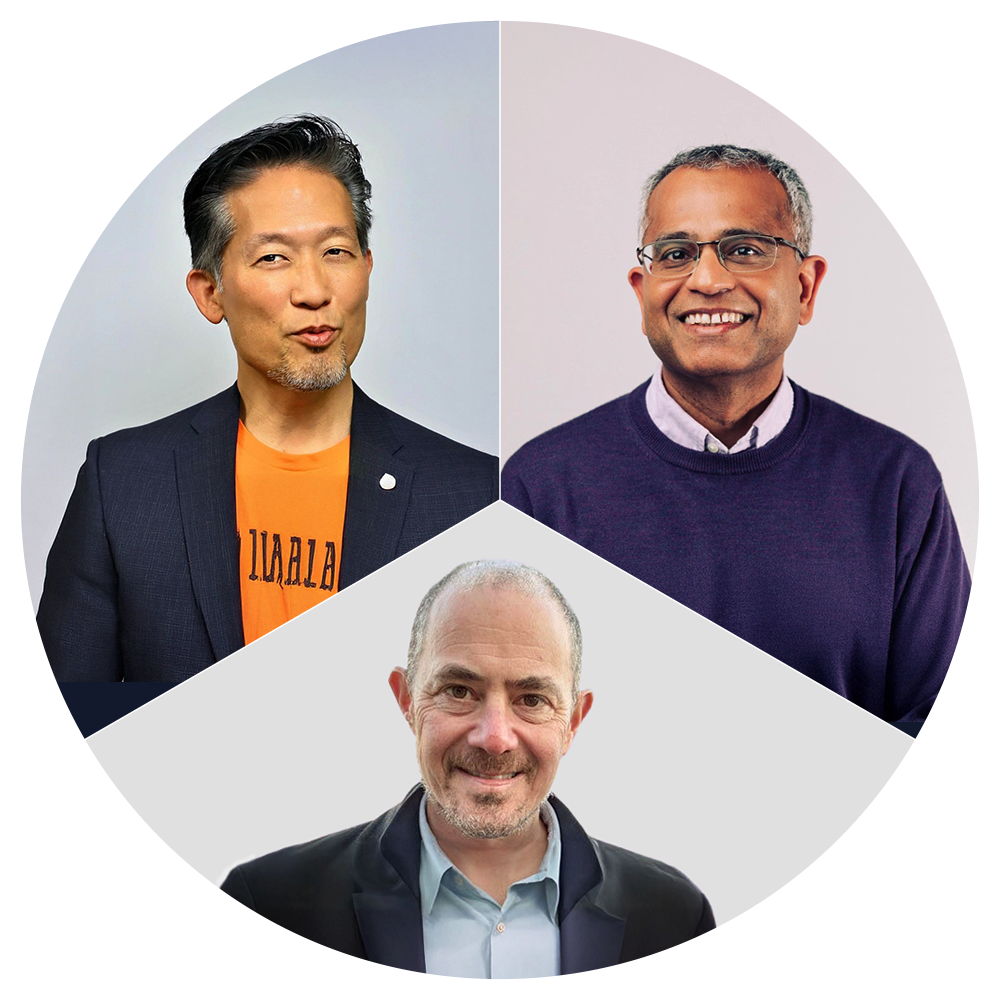
This is a great episode for anyone who is in marketing and sales. I think part of what you're doing is when you're building your product, when you're trying to understand what gets people to buy about your product, the natural thing is to basically think that you are satisfying the stated needs of a person or individual or company. And really what Patrick brings out in neuromarketing is that you are actually moving to their reptilian or emotional needs. And he successfully demonstrates the difference between the rationality that we frame everything by, which is like when you take your value prop and then you attach it to a set of logic, which is your neocortex, but really your brain is making decisions based on its emotions and its primal fears and its desires. And so he goes through it in significant detail, the notion of strategic, financial, personal interests, the aspects of the brain, and then a great four-step methodology of how you, as a firm or as a person, diagnose the pain, differentiate the claim, demonstrate the gain, and deliver to that primal brain. So he takes you through it. It's a lot of information and it's really useful. And I think it's important when you're putting together what you have, how you market it, and then how you sell it person to person. So there's a lot of wonderful instances that I really would encourage you to get their book called Persuasion Code, where it breaks it all down and shows multiple frames to get there. And I found that enjoyable. But even more than that, it's the person, right? Our show is about the person and what motivated him to really dig in and be able to answer all these questions. He's truly motivated by how we are who we are, what makes us conscious, what makes us who we are, and how we convey that information in groups. He really believes that if we use our rational brain more, there'll be fewer wars. And that would be a great thing. So please watch, please listen. I think you'll find it really valuable. Welcome to the Spark of Ages podcast. Today we're joined by Patrick Renvoise, the co-founder and chief neuromarketing officer of SalesBrain, the world's first neuromarketing agency. Having trained over 200,000 executives worldwide, Patrick helps companies scientifically capture, convince, and close more business by targeting the true decision maker, the brain. Patrick is the architect of the Neuromap, an award-winning model of persuasion based on the primal brain or system one thinking discovered by Nobel laureate Daniel Kahneman. While the world obsesses over AI logic, Patrick is uniquely positioned to discuss the biological buy button inside our heads and how the agentic economy must adapt to human survival instincts. Before pioneering the field of neuromarketing, Patrick managed multi-million dollar supercomputer transactions at Silicon Graphics and Linuxcare, closing complex deals in excess of $100 million. His innovative work has earned him the Vistage Above and Beyond Speaker Award and the American Marketing Association's next big thing in marketing award. Patrick holds a master's in computer science from the National Institute of Applied Sciences in Leon and currently resides in San Francisco. Some of the key takeaways you can expect from this episode. What is neuromarketing? Neuromarketing in the agentic era and finally accessing the brain's buy button. Patrick, welcome to the Spark of Ages.
Speaker: 4:03
Hey, good morning, Rajiv, and nice to meet you again.
Rajiv Parikh: 4:05
Yeah, so great to meet you. You and I met about 10 years ago at my CEO group, the Vista Session, and you did, you know, a fantastic job. So much so that I had you and your partner, Christoph Moran, come to talk to my early group at Position Squared. So this is a real thrill. I've read your books, I reference them all the time. I'm such a fan. So it took me till my 50 plus episode to bring you on because I want it to be truly good for you.
Speaker: 4:33
Patience is a virtue.
Rajiv Parikh: 4:35
So great to have you on. And you know, Patrick, let's just jump right into it. To help our listeners get a basic understanding of neuromarketing and your concept of the buy button that exists in the brain, can you briefly explain the stimuli that activate the button by going through the six ways a reptilian brain can be accessed? So that's from your book, personal, contrastable, tangible, memorable, visual, emotional.
Speaker: 4:57
So human beings have evolved from that very simple concept that whenever we're stimulated, our brain goes, Do I want to get closer to it? Is it something I want, like an apple? Or is it something I want to avoid, like a snake? So if your stimulus is not personal, in other words, if your stimulus is not directly addressing the survival instinct of your customers, they will ignore it. So the second stimulus is contrast. And just to you know make a jump into the issue of sales and marketing, what does contract mean in sales and marketing? Well, think about it. 99% of all websites start with the same sentence. You know what it is? What is it? We are one of the leading providers of. Everybody claims they are a leading provider of. And if you think about it, most companies start that way. So from the brain of the visitor, they go, Oh, they are a leading provider off. This is another leading provider off. They don't see enough contrast. So everybody is just a bigger red apple, and it confuses people because their brain cannot see the difference. Typically, the value propositions of most companies today are not differentiated enough.
Rajiv Parikh: 6:04
So, is that why? I mean, when you go into it, when you go into these meetings, that's why you want to have a visual with you. I think one of the things you talked about a lot is that have a prop, right? That's the way to get people's attention. Some of the masters in selling, you have something visual as a way of highlighting what you're saying. That's why we have a deck, and in the deck, we don't put too many things on it. Your prop can be in a Zoom meeting, the prop is your deck, right? But in the face-to-face meeting, the prop could be some physical thing or some demo that you have.
Speaker: 6:32
Right. In fact, and that's a great segue into the third stimulus. So, again, the first stimulus is personal, contrastable, and the third stimulus is tangible. Remember again that the brain that decides is 500 million years old. So it's a brain that does not even understand language. The expert called it the pre-verbal brain, because it's a brain that existed way before we started to use language as a way to communicate, you know. But what we know is that the primal brain does not even understand words. Why? Because words are not tangible enough. You cannot touch a word. So that's why if you can find a way to express your value proposition using a prop which becomes a symbolic representation highly tangible of your value proposition, then you help the brain of your customer understand what it's all about. So the third stimulus is tangible. Then the fourth stimulus is memorable. Remember that it is not what you communicate to your customer at any point of time that is important. It's what will they remember at the moment they will make the decision.
Rajiv Parikh: 7:30
Right. I mean, I think one of the things I remember about our conversation way back was that you would talk about people remember the beginning of the movie and the end of the movie. Make sure those two parts are really memorable. Make sure they're really strong. In the middle, you can go through a lot as long as you end strong from a nice, a great beginning.
Speaker: 7:46
Right. So because that brain does not have a response in memory which is linear, you know, it's a U shape like this, you have to build your pitches, you have to build your website, you have to build your PowerPoints, your brochure, your podcasts, everything based on the fact that people will remember things at the beginning, at the end, and they will forget everything in between. So that's the notion of how do you make then your message more memorable? And you have to combine some of these techniques if you want people to remember the right stuff about you and what you can do for them.
Rajiv Parikh: 8:16
So that's four, and then next is visual.
Speaker: 8:19
Visual, absolutely.
Rajiv Parikh: 8:20
And we are mostly visual beings, right?
Speaker: 8:23
Correct. The primal brain understands images. Why? And why is visual so important? Because the sense of sight is the most important sense for survival. So we have a huge bias towards the visual stimulus, but I am asking you how many companies are communicating their value proposition today using visuals? I would argue that most visuals that we see are about the what of the solution, but not the why you should buy. You want to find a symbolic representation of your value proposition. So when it comes to communicating the value proposition visually, I found that very, very few people do it. Instead, they stick to words and they stick to the oh, we are one of the leading providers of and we offer our end user, blah blah blah blah blah blah. Yeah, bottom line is the primal brain doesn't see or understand any of that because again, it's not tangible enough, it's not visual enough. And then the last stimulus is emotional. Emotional, what does that mean? Well, I had a chance to meet the top two neuroscientists in the world. One of them is called Antonio Damasio, the other one is called Joseph Ledoux. I asked them, so how does the brain work and what is it about emotion? Damasio said, we are not thinking machines that feel, we are feeling machines that think once in a while. So it's not like emotions are optional. No. Emotion is the basic fuel that helps us make decisions. In other words, without emotion, we could not decide. Remember again that we evolve from that notion of approach or withdraw. So if I don't feel a positive emotion towards your product, I'm not gonna buy it. And then I may use complicated and somewhat rational reasons of why I'm doing it, but the bottom line is it was my primal brain and the way it processes emotion that told me, you know what? I don't know if I really should buy this. Now, the bottom line is there are at least 22 different scientific models of emotion, of various complexity, of various people that have, you know, come up with it, etc. And the bottom line is it's important for everybody, including you and I, to understand that the decision, the ultimate decision, will be made by that emotional brain. Now, of course, if the emotional brain or the primal brain is in agreement with the rational brain, they agree they quickly make a decision. If they are not, then people struggle, and most of the time the primal brain wins. So, of course, the difficult part is what kind of emotion does my customer need to experience to help him make the decision as quickly, as effectively as possible. What makes people buy is what we call the positive emotional uplift. You know, you're gonna take your customer from a painful situation, something that creates anxiety, discomfort, etc. And if they buy your solution, you will bring them to a higher plane. It's that's your value proposition. And they need to experience that delta of the negative emotion first, because it's really negative, and the positive emotion of the relief of the pain. So the whole difficulty, and that's the true reason why people buy, is you need to find a process or a mechanism that will help them experience that positive emotion, that positive uplift.
Rajiv Parikh: 11:37
This is where you talk about diagnosing the pain and understanding what that pain point is. That's where you take them through that four-step process.
Speaker: 11:44
Correct. So from those six stimuli, again, which are personal, contrastable, tangible, memorable, visual, and emotional, we have translated that into four steps. And each step has a specific impact at least on one of the six stimuli. So diagnose the pain, differentiate your claims, demonstrate the gain, and deliver to the primal brain. And why do you need to diagnose the pain? Well, you need to diagnose the pain because the primal brain of your audience doesn't even know what they want. In other words, they don't know their pain. But most people jump into selling before they have properly diagnosed the pain. So that's why those two words are really important. Diagnose the pain. And you need to do that because the primal brain is selfish. It doesn't care about anything else, it only cares about me, me, me. The diagnostic is 80% of the persuasion is just done when you only ask questions to your customer. You ask the right question. Of course, it takes an expert, right, in one particular field to do a proper diagnostic. And then you listen carefully to them. And at the end, you wrap up your diagnostic by saying, Because you said this and that and this, I believe that you have this problem. Do you agree? And then they go yes, and you go, oh my God, it is must be so painful. You know, this is where I show the empathy, right? I go, Oh, yes, I understand, and you are in a terrible situation. And that's the end of step one in our process, which is called diagnostic of the pain. But once you've done that, you need to jump into step two. And step two is differentiate your claims. In other words, instead of saying we are one of the leading providers of, you have to say we are the only provider of, and then you need to finish that sentence. So it's the how do you differentiate at all costs? And there are many different ways you can do it, even if you're selling a complete commodity. But that's the second step. And then you need to jump in the third step, and the third step is demonstrate the gain. So, in the demonstration of the gain, what you need to do is you need to take your claims and you need to quantify the value. And what we found is that whenever somebody buys something from somebody else, the value that they derive can only be one of three types of value. The first bucket is the financial bucket, anything where your customer can either make more money or save money because of your solution. The second type of value is strategic. It's anything which is strategic to the customer, but without being easily translated into a dollar sign.
Rajiv Parikh: 14:07
It has to be like a survival thing, right? It could be a security solution where if I don't implement this, it could be loss of business, it could be a large number of lawsuits, it could be a whole bunch of things that are strategic, or it could be company survival. If I don't go for AI today, like so many companies are software companies and others are saying they have an AI-oriented solution, they'll be left out. People won't buy from them because they're missing some key thing that people feel is what will enable you to survive and potentially thrive.
Speaker: 14:33
That's right. So the three values again are financial, strategic, and the last one that you've started to talk about is personal. It's how the personal lives of all of the decision influencers can be impacted, like becoming the hero, spending more time with your kid, being less stressed, having more personal job enjoyment. The idea is at any price point of what you sell, you need to maximize the amount of financial, strategic, and personal value that you present to the customer. Because down the road, what they will do in their brain is this they will compare your value prop with your cost. So at a given cost, the more value you can show, the less critical the price will become. So you need to maximize those three values, but that is not enough. You need to also strengthen the proof that you give them about those values. Let me give you an example, uh Rajiv. So imagine I'm trying to sell you my book. And imagine I say, you know, Rajiv, you should buy my book. If you do, you will increase revenues by at least 15% next year. Are you gonna believe me? So that's a financial value, right? Because if you can increase your revenues by 15%, and I know your revenues, I can put a dollar sign to that. So maybe it's $15 million more if you increase this. And I'm gonna compare the $15 million with the cost of the book, which is $15. So of course the value prop would be incredibly good because on one hand you only pay $15, on the other hand, you get $15 million of additional revenue. But your brain is pretty smart and it's going, Patrick, I cannot trust you because I know you have a guy who wrote that book, right? So the $15 million of additional revenue is just a projection on the future, but I'm not sure it's gonna happen. However, I am sure that I will have to pay $15 right now to get your book, right? And your primal brain goes, I don't want to spend $15 right now because I have limited resources. And if I need to pay my rent at the end of the month, those $15 might become handy. I don't want to be homeless. Therefore, it could jeopardize our survival. So your brain, at the end of the day, when it compares value props, it always will look at the value versus the cost. And it will do that for all the vendors available. And remember that it will do that evaluation more on the emotional side of things than on the rational side of things.
Rajiv Parikh: 16:50
But at least if you want to satisfy the neocortex, you've done the rational analysis, you show them that, but that's not enough, right? Because there's so many other things that are hitting them that may be helping them with that.
Speaker: 17:01
Right. Again, I describe three sorts of value: financial, strategic, and personal. And then we realize that there are only four ways you can prove your value proposition. And the four ways uh I'm gonna describe them in decreasing order of strength. So the best way you can prove a value is by using a customer case. So, Rajiv, imagine I'm still trying to sell you my book, right? But instead of me saying buy my book for 15 bucks, you will make 15 million dollars more next year. I could have one of your friends who is also a CEO, also running a company, and he bought my book and he increases revenue by 15%. Now you understand that it's gonna be a lot easier for your brain to believe that customer testimonial than it is to believe me, right?
Rajiv Parikh: 17:41
It's why like Amazon has become so powerful, right? Because they're using recommendations as a way of doing it, or every company tries to do case studies for companies like them. And the best thing you can do is motivate other people to refer, but you want people who are as much like them as that person in that situation.
Speaker: 17:58
The closer the customers you're using for your demonstration, the better. So the first best proof of value is a customer case, the second best proof of value is a demonstration. Demonstration as in using logic to show how you could get something. So I'll give you another example. Imagine your dominoes. So the claim of dominoes is 30 minutes or less, or it's free. And the or it's free becomes a demonstration of the value prop. They demonstrate the gain, is they just didn't say 30 minutes or less because, well, then how do you prove it? They added the or it's free, and then suddenly that addition makes the demonstration of the gain very, very tangible.
Rajiv Parikh: 18:39
It's a very risk-free thing, right? So that's why software companies will say free trial, they'll have a free level. It's why companies will give you the ability to return. So all these things to help reduce the potential loss for trying something.
Speaker: 18:52
Best proof of value customer case, second best demonstration, third best is data. Data as in statistical or marketing data. Now, as you can imagine, data is not such a good proof why.
Rajiv Parikh: 19:06
That's neocortex level.
Speaker: 19:07
A, it's neocortex, b, you have to believe in it, right? Because you know statisticians will make you believe in anything.
Rajiv Parikh: 19:13
If you're in B2B, you have to sell it to your CFO or in your home, you have to sell it to your spouse.
Speaker: 19:17
That's right. So the primal brain does not like data. You know, the primal brain might be able to do two plus two, but the primal brain cannot do two plus three. That becomes too complicated. The problem with data is that it's always open to interpretation, and your customers do not want to interpret the data the way you'd like them to interpret it. And then there's still the fourth way you can prove the value is by using your vision. It's actually when you have no proof, but you tell your customer, trust me, Rajiv, if you buy my book, you will increase your revenue by 15% next year. I don't have any proofs, but I'm gonna tell you long stories, I'm gonna show you PowerPoints, I'm gonna take you out to dinner to build a rapport so that you believe me. So just like there are three kinds of values, there are four kinds of proof. So we can organize the value under the form of a matrix. And the question becomes this every time you tell something to your customer, you have to ask yourself, is there any value for them? In other words, is that gonna help with some of their pain? And is that gonna help financially, strategically, or personally? And can I quantify it? So I wanna show you another example here, how you can make a statement more tangible. Imagine I tell you, Rajiv, if you buy my solution, you will save on your manufacturing cost. So no proof. But now I'm just gonna quantify this and imagine I say, Rajiv, if you buy my solution, you will save 2.3% on your manufacturing cost. Do you realize that just quantifying a stimulus, it becomes more believable to the primal brain? Why? Because it is more tangible. If I say 2.3, it's a lot better than to say you will save money. No quantification.
Rajiv Parikh: 20:52
Right. So I've quantified it, I've showed a straightforward way of doing it. So a lot of times I see this where people say instead of saving 50%, which people have a hard time doing the math, they say you'll increase your game by 2x, right? They've almost inverted the math equation. People remember 1, 2, 5, 10x. They don't seem to remember or do well with 10%, 20%, 30%, less. They want to invert the formula.
Speaker: 21:15
Right. But when you say 10%, to get to the number, your brain has to do a multiplication. It has to multiply by 0.1 when it's 10%, right? The primal brain knows that saving a million dollars is not as good as saving two million dollars. That a primal brain can understand as a concept. But instead of saying one or two million, if I say you will save 10% of your manufacturing cost, and your manufacturing cost is 20 million, your brain gets confused because it has to do all the mathematics, and that's a neocortex exercise, right? So the bottom line is this well, think about it. What you need to do is, regardless of how complicated your value proposition is, you need to get to the bottom of that quantification so that at the end of the day, your customer is Only going to compare one number, which is your cost, and of course, they will always try to get the lowest cost, but you need to compare that with the value. And if you want to help them make the decision, tell them, oh, my solution costs ten dollars, but you will save a hundred dollars. Because if you do that, boom go. It's easy said, but it's not that easy to do. Because quantifying the value prop, depending on how complex your solution is, that becomes very, very difficult. So that's the third step. You need to demonstrate the gain beyond reasonable doubt. And that gain needs to be really focused on your claims. In other words, it needs to be focused on what makes you unique, right? Because again, remember, if you're not selling something unique, you're selling as much for your competitors as you're selling for yourself.
Rajiv Parikh: 22:44
This is where you then go to the next level, right? Which is you're as part of this, you're delivering to the primal brain.
Speaker: 22:49
So after you've diagnosed the pain, after you've differentiated your claims, and after you've demonstrated the gain, if people were deciding with their neocortex, that would be done. Why? Because your customer would always buy from the vendor who offers the highest gain. But unfortunately, they decide with a brain that is more emotional than rational. And you know, I marketed supercomputers. The value pop was very, very complicated. And it took days and sometimes months to explain.
Rajiv Parikh: 23:17
So primal brain is because of the imagery, because of the simplicity of your argument, right? Because of the emotional safety that you're building for someone.
Speaker: 23:25
What you need to do is you need to find a way then to communicate your value proposition as a story. This is where the notion of, you know, very often people in marketing ask, so what's your story? Well, the story should be like this it's once upon a time, there was a customer, you, who was in really deep pain. And they had all these problems and all these things, they were losing money, they were working overtime, they were stressed, they didn't have any vacation, their competitors were eating their lunch, blah blah blah. And they had tried everything. So I'm making the suspense even more, right? They had tried everything, they had tried to solve it by using this solution and this solution. None of it worked at the end of the day, they were still in pay. Oh, but and now I'm I'm making you know the solution slightly appear. Maybe there was one way they could do it, and that was that low company, right? And then bingo, yes, they decided to buy, and then their life was better, happy ever after. They got married and they had a lot of kids. But how do you do that? How do you build that story? Well, you build that story on your claims, in other words, what makes you unique. You find ways to communicate the value prop or the gain in seven seconds, not in seven minutes, not in seven months, right? But in seven seconds.
Rajiv Parikh: 24:35
Patrick, this is really interesting. Now you talk about delivering to the primal brain after you've done all these top three elements. You deliver the right story.
Speaker: 24:41
Yeah, so after that, you have to learn how to build a story and communicate that story. And that story is gonna be what conveys that emotional uplift, right? Because good stories start with a problem and then they end up with everybody's happy and they got married ever after. But good stories don't say like, yeah, they were happy and they got married, and no, it doesn't work that way, right? You want to create that emotional roller coaster that which ends with the positive.
Rajiv Parikh: 25:08
What are your favorite company stories of delivering that primal brand?
Speaker: 25:12
There are millions of stories. I mean, I can tell you the story of Apple. You know, 35 years ago, there was only one reason why people were buying Apple. At the time, they were only manufacturing computers, they didn't have phone yet, right? But their story was very simple. Your life on a PC is miserable. Why? Because PCs are difficult to use, they are not easy to use, and they keep on crashing. And guess what? The solution of Apple back then, our story is we will make your life easier. So for 25 years, the story of Apple is it's a lot easier with Apple. Even the name of the company, right? They had chosen a name which was very simple. It's Apple. Everybody understands what an Apple is, right? So that was the story of Apple 25 years ago. And then, as all computers became easier to use, they had to slightly change their story. And you know how they changed it? Well, they went to cool. Cool, exactly. Cool to use. So suddenly Apple became the cool to use story.
Rajiv Parikh: 26:08
It's a lifestyle brand.
Speaker: 26:09
Right. And right now, the problem that they have is it's a lot harder to tell the story of cool when everybody is cool because half of the population owns an Apple.
Rajiv Parikh: 26:18
If I look at some of the Google Pixel phones, they look pretty cool. If I look at the Samsung thing where I have the full screen thing, it looks pretty cool. So you have to basically differentiate on cool and easy, right? For them, it's cool and easy, and it's easy to connect to your friends, and you get all these things as part of the ecosystem, and it's all connected and it's hard to believe. So, Patrick, in the world of product-led growth, experts like Bill Masciatis argue that we must ruthless remove cognitive friction and adoption friction because the user wants immediate value. Other leaders like Mike Knee have argued that friction is where brand is created, citing how luxury brands use friction to slow customers down and educate them on history and quality, a lot like a Rolex. It's you can't just buy a Rolex, you have to be almost approved because they don't want people taking them and reselling them. So, from a primal brain perspective, is there danger in being too frictionless? Does the old brain need a moment of resistance or cognitive bump to actually encode a memory and assign value?
Speaker: 27:09
Yeah, it is good to create the friction at the beginning when you're diagnosing the pain, when you're telling them, hey, we've discovered that you have all this pain and this is making your life miserable, it costs you a lot of money, et cetera. So you create that friction, which creates a very strong negative emotion at the beginning. But then as you're delivering your solution to the problem, you make sure that they experience that positive emotion which creates the uplift. So if you put friction, you should put it at the beginning just to remind them of how painful the life is without your solution. Right.
Rajiv Parikh: 27:37
I mean, look, if you climb Mount Everest, you need to work out a lot to get there. You don't feel the impact of the emotional experience unless you go through something. So friction should be at the beginning, not at the end.
Speaker: 27:47
Yeah, I mean, if there is no friction and it's too easy, then it's harder for people to experience a positive emotion.
Rajiv Parikh: 27:53
It's like buying stocks on Amazon, right? It's okay. It's not exciting. So you've taught us a lot about the primal brain, which is the ultimate decision maker, Patrick. So, however, we're entering the agentic economy where AI agents are beginning to make buying decisions on behalf of humans. So now, does an AI buying agent have a primal brain? If we're selling to an algorithm that has no biological survival instinct, how does your neuromap model need to be adapted?
Speaker: 28:19
So, first of all, let's talk about what AI is, right? So AI is artificial intelligence. I know they are trying really hard to build emotional intelligence in those artificial intelligence systems. But first of all, it is still in its infancy. In other words, we know an AI can probably fake its emotional response, right? But fundamentally, they work with transistors, and transistors are zeros and ones, which have no emotion. Whereas our neurons work with the biology of emotion. That's all they do. So until we can simulate these emotions inside a computer, I think we're pretty safe. Now, a lot of people are throwing numbers, right? Some people, like Juval Noharari, you know, he's a very famous intellectual, he said artificial intelligence will never become emotionally intelligent. They can fake it to a certain degree, but they will never be able to. And some other people say it will start to become interesting when we can start to put sensors on various organs like the brain and measure the emotion of people and feed that into the AI, which could take into account your emotional response to give you a response that might be different. And at that time, can we fake compassion? Will those AI systems be? But again, I think we're still several decades away from that.
Rajiv Parikh: 29:41
A lot of times folks are using like there's some programs now that will understand who you are, right? You're feeding all this information into LLM by your conversations with them, and then they're like booking travel for you, or they are filtering out software for you. So they are reading your personality, and then if you're doing a B2B decision, a personality of others, so they won't necessarily have emotion as their glue. Or are they maybe taking your emotion and the emotion of others and turning those into measurements to then apply for what they're filtering?
Speaker: 30:15
Yeah, but when you think about it, human beings, we make our decisions on emotions and we don't know why. Most of the time we don't know why. So, for example, imagine if there were two vendors with almost the same value prop, right? And I may decide to buy this, to buy from this vendor just because of the way he was dressed. Why? Because maybe he dressed very conservatively, and that reminded me of my father, and then therefore I wanted to give him my business, not the other guy. So I do not see how AI will be able to integrate this. How will AI get dressed?
Rajiv Parikh: 30:48
It's interesting, right? But I mean, AI is helping you buy too. Like the other day, I put in information about particular product, and it would help me choose those products. Almost like a search is giving me multiple product listings where I have to just earn it.
Speaker: 31:02
Yeah, the way it's doing it though is with neural networks statistics, right? So it's doing a whole bunch of calculation of probabilities with the key to laws and etc. And at the end of the day, it's making that decision in a purely rational way. It's just mathematical equations, right? So where is the emotion in there? Again, until we can create emotional models that simulates human behavior and to the degree that we could input directly onto the AI your own emotions, then it's gonna take a little while, I think.
Rajiv Parikh: 31:35
It's gonna take a while. So maybe people won't buy, or they'll make their emotional buy based on the information presented, basically. So you've discussed the rubber hand illusion to demonstrate how easy the primal brain is deceived by visual stimuli, right? If you see it, you believe it. In the story, it's the woman puts her hand out, they put a rubber hand next to her, they play with a like a feather on both hands or like a brush on both hands, and eventually they just brush the fake hand or the rubber hand, and she starts to feel it. So, in a world where you have a lot of deep fakes, AI avatars, synthetic content, visual evidence is almost losing some of its credibility. So when seeing is no longer believing, how does the primal brain adapt its criteria for trust? Are we evolving a seventh stimulus for authenticity?
Speaker: 32:20
That just means you need to use more your neocortex. In other words, you have to question every stimulus that reaches you, and you have to ask yourself, can I trust the source? And if that source is not trustable, what do I need to do to investigate to verify to which degree what they told me is right? So you're absolutely right. It this is we're living interesting times.
Rajiv Parikh: 32:42
That's right. It is very interesting times. Like you almost wonder before you could see something, you could believe it. Now people are putting famous people's faces or having people say things in ads where it's completely fake, right? And so we're gonna have to have almost a New York Times version of some of these ads to make sure that what they're doing is safe. Or the folks who are on the media side are gonna have to make sure they clean it out, right? They watermark it appropriately.
Speaker: 33:10
It's gonna take a while for humankind to do this, but what that means is we're gonna have to rely more on our neocortex. So I hope that down the road it's gonna make us less emotional and more rational. Because after you've been burned several times by a source of information which is wrong, then you may not trust that source of information anymore. Right.
Rajiv Parikh: 33:29
And you become a skeptic. And so that is part of that. Like you were talking about the worm, right? You start to feel pain, and we'll have to innovate around that. So, Patrick, next I want to take you to what we love to do, which is called the Spark Tank. Welcome to the Spark Tank. Today we're honored to have Patrick Renoise join us. Patrick is an award-winning author, international speaker, and a true pioneer who essentially wrote the book with his partner, Christophe Moran, quite literally on neuromarketing. We are putting your expertise in human biology and biopsychology to the ultimate test with the Neuromap Master Challenge. So, Patrick, are you ready to prove that your understanding of salesmanship and the human brain is as fast and precise as System One itself?
Speaker: 34:07
I don't want to discourage you.
Rajiv Parikh: 34:09
I don't wanna Patrick, we'll have some fun. I'll learn some things, you'll learn some things. So, okay, in the 1990s, Italian researchers discovered mirror neurons, brain cells that fire both when you perform an action and when you watch someone else perform it. This discovery has major implications for sales and marketing. What did neuroscience research reveal about mirror neurons in sales situations? Three potential answers. Unless you think you have the answer.
Speaker: 34:36
It was discovered at a university in Italy, right? And the idea is that when you see somebody eat an ice cream, you get the same emotion that you eat the ice cream yourself. So this was really the basis of human compassion. In other words, I can experience your own emotion by just looking at them. So if you translate that into the world of sales, this is what we were discussing earlier on, which is when I do the diagnostic of the pain, I want you to believe that I am experiencing the same pain. Because if I can show you that I am experiencing the same pain, you're gonna treat me like a wolf. And since you're a wolf, we're happy to do business between wolves. Whereas if you're a sheep, then I'm gonna respond to you, I'm gonna act like a sheep so that I treat your primal brain as if we belong from the same tribe.
Rajiv Parikh: 35:22
You've already set it up for me, so I don't even have to give you the explanation afterwards. So, A, in this question, salespeople with strong customer orientation show greater mirror neuron activation and empathy processing in their brains compared to those who are more selling oriented. B, mirror neurons only activate during an in-person sales meeting. They don't fire during phone or video calls, making remote selling neurologically inferior. C, successful salespeople can consciously control their mirror neurons to manipulate customer emotions and close more deals. So A, B, or C.
Speaker: 35:55
I will vote for A.
Rajiv Parikh: 35:56
You nailed it. So you already explained it. I don't even have to explain it. So research published in academic journals showed that salespeople with strong customer orientation showed significantly greater activation of their mirror neuron systems and neural processes associated with empathy compared to the salespeople who are very selling oriented. And the research even found, as you were talking about, that genetic markers associated with this customer-oriented trait are linked to dopamine receptor activities. And this explains why authentic belief in your product matters. Your mirror neurons are broadcasting your true feelings to your prospects' mirror neurons, whether you realize it or not. All right, here's number two. Here's the research. Sales professionals often talk about gut feelings when qualifying prospects or sensing when to close. Neuroscience has discovered there's actual biology behind these intuitions. What does research reveal about trusting your gut in sales situations? Three possible answers. A. Gut feelings are just random guesses with no biological basis. Experienced salespeople who trust their gut perform no better than novices. B. The brain is a predictive machine that unconsciously compares current situations against stored experiences, generating intuitive hunches before consciousness awareness kicks in. C. Gut feelings only work for simple decisions. For complex B2B sales, analytical thinking always produces better outcomes and intuition.
Speaker: 37:14
Alright, so I don't want to disappoint you, but I really loved answer B.
Rajiv Parikh: 37:18
You didn't disappoint me. That's the correct answer. Why would you say that?
Speaker: 37:21
We could have a one-hour conversation on this. So the gut actually has many more neurons than what we thought, right? There is a direct connection between your stomach and your brain. That connection is made mostly at the level of the primal brain. And you know, some people have written books on it. There is one that I really like from Malcolm Gladwell, and where he says, we should use our gut decisions because 80% of the time they are right. So statistically, trust your gut. The problem is you still need to figure out what you need to do in that 20% where you're going to be wrong. I tell people, you know, trust your gut, but and there is what do you do for that 20%?
Rajiv Parikh: 38:01
Well, you have to train your gut, right? So as you talked about, neuroscience reveals intuition is a result of unconscious processing in the brain, all the stuff you've talked about earlier. The brain constantly compares incoming sensor information and current experiences against stored knowledge. So when there's a match or mismatch between past patterns and current situation, it generates an intuitive response before this reaches conscious awareness. So research on purchasing managers found that a combination of rational analysis and intuition produce the best outcomes. So the gut connection, as you say, is quite literal. The vagus nerve transmits signals from your digestive system to your brain, which is why you physically feel intuition in your stomach.
Speaker: 38:38
Yes. In fact, very often when people are faced with a very, very difficult decision to make, they get sick in their stomach.
Rajiv Parikh: 38:45
They're tied up in knots, so to speak, right? They're that 20% level.
Speaker: 38:49
Yeah, and so you know, to go back to the AI question, until AI has a gut that can give it that kind of neurofeedback, it's gonna take a while, right? Right.
Rajiv Parikh: 38:57
So you have to build that connection with the AI. Okay, here's question number three. Brain imaging studies during negotiation scenarios, like the ultimatum game, reveal fascinating insights about how emotions and fairness perceptions affect deal making. What did neuroscience discover about human reactions to unfair offers? A, people's brains process unfair business offers the same way whether the offer comes from another human or from a computer algorithm. B, when receiving unfair offers, the brain's emotional centers activate so strongly that people will sacrifice money to punish unfairness, even when it's economically irrational. Or C, experienced business negotiators develop the ability to suppress emotional reactions to unfair offers, allowing purely rational decision making.
Speaker: 39:47
I think we go to B again.
Rajiv Parikh: 39:48
You're gonna go to B. Why would you say B?
Speaker: 39:51
Because I think that's the right answer.
Rajiv Parikh: 39:53
You are correct again. You got three for three, Patrick. So people will sacrifice money to punish unfairness due to strong emotional activation. FMRI studies using the ultimatum game revealed that when people receive unfair offers, their brains show strong activation in areas associated both with cognition and emotion. The emotional response to unfairness is so powerful that people routinely reject offers that would give them free money purely to punish the person making the unfair split. And for sales professionals, this explains why unfairness framing matters so much in pricing and negotiation. Even if your offer is objectively good, if it feels unfair in context, the buyer's insula, that's a part of their brain, I think it's called maybe the fifth lobe, will activate and drive rejection, regardless of rational economic benefit.
Speaker: 40:40
Absolutely agreed.
Rajiv Parikh: 40:41
You will punish the person, but not the computer.
Speaker: 40:43
That's right.
Rajiv Parikh: 40:44
Very interesting.
Speaker: 40:45
So again, that's another field where AI would have a hard time with that because AI would just look at the financial return, and why would AI want to lose some of his own money to punish other people? It doesn't make sense rationally.
Rajiv Parikh: 40:56
True, true. All right. So here's some questions about you. So did you always know you wanted to work in neuromarketing? Was there a moment or project that sparked your passion?
Speaker: 41:05
I came to it almost by accident. I was a nerd. I graduated from a technical university in France, which is a sister university with MIT. So I was really a nerd. I discovered very early that I didn't want to be an engineer. Instead, I jumped into marketing and I marketed very expensive and very complicated stuff. And then one day I woke up and I'm going, I'm not excited anymore now to sell very complicated and expensive things. But what might get me excited is to teach other people how to sell complicated things. Because I'm a nerd, I read a lot and I read all these books about the brain. So one day I said, I want to write a book, and the only thing I can talk about is sales and marketing. And my other passion is the human brain. Can I find a middle way? And I also came in contact with the book of Kahneman, Thinking Fast and Slow, where he demonstrated the role of System One or the Primal Brain. And I said, if Kahneman is not completely wrong, we have to completely rethink everything we do in sales and marketing to appeal to the primal brain. So I found myself in the middle of it. I wrote a book, uh, gave 10 copies of the book to my best friend. It landed on Christoph's desk. And he said, uh, I think you have more than a book, we have a whole business here, and let us start a business based on that. So it was more accidental that I got to do this. But it was always fueled by my unconscious passion for traveling and the brain and explaining complex stuff, right? My very first job is I taught physics at the university for a couple of years.
Rajiv Parikh: 42:25
You were selling, you were closing, you were making money, but you wanted to go further and activate so many others.
Speaker: 42:30
But the funny part is that I was not even aware of it myself, right? If this was the final goal, I only knew that I was making decisions like this, but I didn't know what was the final goal. And I don't know if it's still the final goal, but being able to uh spending my time teaching other people how to sell, I think this was one of my calling. It took me 60 years to discover it. And again, that goes to show that it's all deep inside our subconscious primal brain. Yeah.
Rajiv Parikh: 42:57
We always ask our guests to name a historical event or person or movement that inspires you. And you answered the enlightenment movement from Darwin to Kahneman. What in particular about that journey lights you up?
Speaker: 43:08
Understanding why I make those decisions, you know. Why do people spend $5,000 to buy a Wii Vitone bag? Why do people buy Tesla cars? Why do they take Uber? Why do they make all these decisions? And, you know, as the nerd that I am, at the beginning I thought that it was all rational, you know, that we would think linearly and we would make a decision that maximizes our return on investment or whatever. And then I realized that this is not it, that we are complete emotional machines. And in fact, it's more than this. We're still complete reptiles and we hide it through a thin layer of varnish of rationality. But as soon as you peel that layer, I mean, why do we still have wars today? It doesn't make sense rationally. I mean, we can feed at least 10 billion people on earth, yet we fight for old territory called Gaza, we fight for old territory in Ukraine. It doesn't Makes sense, but if you think about it, it's all about the primal brain of our own managers, of our own politicians, right? Those people are so embedded into their own ambition, and they're so embedded into being trying to be right and etc. that we make primal decisions. So if the world was more aware of our reptilian nature, I think we wouldn't make all those mistakes anymore.
Rajiv Parikh: 44:23
In a way, like, aren't those folks who are, you're right, on the on the face of it, starting a war makes no sense. At the same time, people, because of their emotional nature, need to feel a sense of purpose. And so the war, in a way, supplies that sense of purpose. I'm not saying I like it, I would rather not have it. It makes no sense at all, as you say, but that's what the war does.
Speaker: 44:45
Yeah, and it's a very well-known technique in marketing, which is when you're getting attacked in one angle, you attack towards another angle. So, you know, think about Russia. They were not doing that well. The people in Russia were not really happy, they were not eating enough, they were not they were declining as a population. They were declining, so defocusing their attention on those problems to oh, we need to annex part of Ukraine now, it helps people make that decision. But is it ethical? Is it good for the humanity? The answer is probably no.
Rajiv Parikh: 45:15
So, do you think by exposing more of this that people will have a greater sense of realization? Or is it just gonna keep happening? Is that just the way we are?
Speaker: 45:23
I mean, we change only at the speed of evolution. So the more we become aware of our reptilian nature, the less and less mistakes we will make. By the way, the best way to do all this is through meditation, right? Because meditation is the best way to change ourselves. In other words, it's to change our responses to our own stimulus by observing our own consciousness. But until millions and millions of people understand that, we're not gonna see much result. You know, it's like in the 1400s, we discovered that the earth was rotating around the sun, not vice versa. So Galileo and Copernicus discovered that. But it took hundreds of years for people to really recognize it, right? The news were traveling slowly back then. So today, everybody can watch my TED talk. The end of my TED talk is I'm saying that we could change the world if people understood the reptilian nature. So I'm hoping that it's not gonna take two centuries for people to realize that. And there are many people that are, you know, supporting these ideas.
Rajiv Parikh: 46:21
It's a slow unfolding, but I can go back to when, at least 20, 30 years ago, meditation was a like an upstart movement, right? Like TM, right? Transcendental meditation. That was part of this movement that was being popularized in some circles. Now it's a part of what we do, right? It's how people in sports visualize things. It's taught in schools, it's part of our life, it's uh headspace, right? The company is all about meditation, right? So it's being offered as a benefit for free. If I sign up for Blue Shield, I get free headspace. I wish I would use it, but there's it's there. So, you know, you bring up a great point. Maybe that of evolution is happening.
Speaker: 46:56
I've dedicated the last 25 years of my life to translate those findings about the primal brain to sales and marketing. And now I would like to apply it to other fields, like education, because education is all about transferring knowledge from the head of an expert to the head of a novice. If the expert understands that whoever is learning from him or her is a primate, then we can optimize the data, you know, the knowledge, we can optimize it to be received by the brain, to be memorized and to be understood by the brain. So I would love to spend more time now to educate through the primal brain. There is another guy that just wrote a book on the title of the book, it's called Primal Dating. In other words, knowing that we're primates, what do you need to do today if you want to find the right partner? And these are scientists. I mean, these are written by PhDs, these are not books about simple tips, right? This is a scientific model of the primal brain. So, as a reptile, how can you attract other reptile that are going to be compatible with you so that you don't have to divorce like 50% of the population?
Rajiv Parikh: 47:59
Well, that would be interesting. It's like finding the right person and then keeping them engaged.
Speaker: 48:04
This is the conclusion of my TED Talk that I did about 10 years ago, right? It's we would live in a much better world if everybody understood their own reptilian nature.
Rajiv Parikh: 48:14
Fantastic. All right. I here's some even more personal questions just about yourself or preferences. What's a place you've never been to but feeled like you'd somehow belong there? And what draws you to it?
Speaker: 48:25
So that would be Tibet. I have been to Nepal, I have been to Bhutan, and I'm very attracted by all the people that really study consciousness. So spirituality and consciousness for me are very entangled. I am very attracted by Tibet because this is the birthplace of you know where you have all the Buddhist movements. So I've been studying Buddhism for 35 years, and I wish I could spend even more time studying it. You know, my last trip was the motorcycle trip. I did a trip of Bhutan, and Bhutan, the country itself, is one of the rare countries in the world that's 100% Buddhist. And they don't measure their GDP. You know what they measure instead?
Rajiv Parikh: 49:02
They measure happiness.
Speaker: 49:04
Yeah, the gross happiness factor. And by an incredible coincidence, I was able to meet the king of Bhutan. We had a 10-minute, 15-minute conversation with him, and this is a man who is happy. I mean, I went at my first interaction with him, well, wow, this is a king and he's happy. But he's even more worried about the happiness of his people than he's worried about his own happiness. So I'm going, wow, this is very refreshing. You know, we don't see that very often. So these are the kind of places where I want to spend more time now. That's fantastic.
Rajiv Parikh: 49:34
What's something you're currently learning or trying to get better at that has nothing to do with advancing your career? And frankly, I don't even know if this is a career, this is your passion.
Speaker: 49:42
Yes. Well, one thing I am learning is that I'm getting older. As I'm getting older, my body is reacting to things very differently. So, like most people, I have a harder and harder time to sleep. I don't drink enough water. I am very careful about what I eat. I was an athlete. I played volleyball in college, I played tennis competitively, I do extreme skiing, I motocross, I do a lot of activities. And I'm realizing that as I'm aging, I can do less and less of those. I have to be more and more careful. So I'm very concerned about what I eat. And one of the things that I learned is that I need to eat more fiber. So I want to eat less sugar, less fat, and eat more fiber. So I'm almost becoming a vegetarian. I'm still realizing that there is a lot to learn.
Rajiv Parikh: 50:21
So you're getting into body, health, learning more about what works with you as we age. We feel it more than before. We can't just go out on a bender like we used to. And so I'm with you. I'm into a lot of the longevity writings and learning about what works. And I am becoming more like that too. I'm becoming more vegetarian.
Speaker: 50:39
And in my case, I do not want your immortality, right? I you know, is I don't want to live long. But what I want to do is whatever amount of time I have left, I want to live it well. So I would love to be helpful to help again people realize that they are reptiles. That would be one area. But I also want to help people understand the connection between mind, body, and spirit.
Rajiv Parikh: 50:59
That's right. It's the notion of, I think Peter Tia talks about a health span over lifespan. During the life that you have, how can you live it and truly enjoy it? What's the question you wish people would ask you more often? And what's a question you wish they'd stop asking?
Speaker: 51:13
Well, I wish they were asking me, you know, how can I become a more rational and less emotional? The question I wish they didn't ask me that often is, how can I sell more? You know, what do I need to put on my website to sell more? What's my message? People ask me, so what's the, you know, I present the model and they say, Well, I'm selling this product to these customers, what should I say? And I say, I have a process to help you get to the answer, but don't look at me as a guru. We can come up with the magic answer.
Rajiv Parikh: 51:40
It's not going to just magically appear. There's a process you have to take.
Speaker: 51:43
It's a process. Sadly, you have to use your neocortex to come up with those stories, right?
Rajiv Parikh: 51:47
And they have to decide on it too. Otherwise, they're not bought in. If they're not bought in, their team is not bought in. I find when you do a website, it is as much about what I think, as much as taking them through a journey where they come to an agreement on how they as a company work and move ahead. It's not just make the site prettier. They have to truly buy in.
Speaker: 52:07
Yeah, a lot of people think that having a clean website will help their sales. I think it's only marginal, the benefit they're gonna have. But they always ask me, what is the number one thing that people should see when they land on our website? So I'm gonna quiz you now. What do you think is the answer, the right answer? What is the very first thing they need to see? And they need to see it in less than seven seconds because seven seconds is what's called the immediate experience, and that's the amount of time where your primal brain lives in. The primal brain only lives in the present.
Rajiv Parikh: 52:33
I think there's a sense of imagery that conveys the pain and the benefit all in one image. I think that's what you want to capture your brand in that image, and that's the first thing you want their eyes attracted to.
Speaker: 52:46
Exactly. You've nailed it. The first thing they need to see is the pain, and optionally, possibly the contrast with the relief of the pain. So the idea is if you're selling your products to grow hair, you want to show a bunch of bold guys, and if you can, the next image will be the same guys but with a full hair. If you're selling a program to lose weight, you want to show an overweight guy first and possibly the same guy after he's lost 50 pounds. Now, for those two products, we've seen it a million times, it's super easy. But if you're selling a satellite system or a network security solution that uses AI, to do that visually, it takes a lot of brainstorming.
Rajiv Parikh: 53:25
It's challenging, it's a lot of work. We have a lot of folks in security and complex tech, and you really want to show for them that you're solving a major problem with their technology, right? So there's that combination. Okay, what's something you've convinced other people are pretending to understand or enjoy, but you suspect they're all just going along with it?
Speaker: 53:44
Wow. Well, I'm trying to convince people that they are primates, and I can tell you that it's very difficult. In fact, in my workshops, I spend at least an hour demonstrating that. In other words, I have a whole bunch of tests. Some of them are visual. I, you know, it's kind of a visual effect, right? Where I show people that they cannot trust their eyes. I have stories, I have a lot of things to demonstrate to people that they're primates. I'll give you a very simple example, right? But imagine I tell you, Rajiv, close your eyes and imagine bringing a slice of lemon in your mouth. And that slice of lemon was in the fridge, so it's very cold, and the juice of that lemon reaches the back of your teeth and the tip of your tongue. And you're enjoying the experience because it's a very nice lemon. You have the smell of the zest of that lemon. And what's gonna happen is people salivate, right? So they know their neocortex knows they don't have a lemon in their mouth. But if I tell you the story of the lemon properly, you will start to salivate. Why? Because your primal brain is made to believe that it has to prepare the juices in your mouth for digestion. So you need to salivate. So it's very easy to fool the primal brain around. The good story of a lemon is good enough. The difficulty becomes well, what story do I need to communicate to my customers to sell whatever it is you're selling?
Rajiv Parikh: 55:02
It's amazing, right? It's part of that process to get them there. That's the only way they're gonna understand how they can market and sell more effectively. So, um, what's your personal moonshot?
Speaker: 55:11
I would love to become enlightened, and I'm hoping I can do it without dying first, right? That would be nice. So that would be my ultimate goal. But I think that if I can die in a few years by having even a better understanding of consciousness, what makes us conscious, I think that would be great. I mean, a lot of people talk about consciousness and how important love is, in other words, to be able to accept other people's behavior, etc., to accept ourselves. A lot of people believe that the key to enlightenment is to reach that state of love. And I would like to be able to go deeper into this in my next 10, 20, or whatever I have left.
Rajiv Parikh: 55:46
That's a fantastic goal. Well, Patrick, thank you so much for joining me today. I thought this was a really illuminating session. I've really respected your work over the years. I enjoy it. It's fun to read about it and learn about it and see how you've evolved in that time. And it sounds like you've taken what you've done and taken it to multiple levels. So I really appreciate it. And I really hope you reach your goal. I feel like we have a shared goal in that way. My goal is to connect great souls together. So I believe that this kind of work that we do helps people understand each other better. So maybe they can connect better to each other with their reptilian connections.
Speaker: 56:20
All right.
Rajiv Parikh: 56:21
All right, well, thank you so much, Patrick. All right, thanks for listening. This was something I really wanted to personally convey to all of you because I love marketing, I love what makes people think, and I love what gets people in groups to buy. So if you enjoyed today's pod, please take a moment to rate it and comment. We do listen to it, we do read it. You can find us on Apple, Spotify, YouTube, and everywhere podcasts can be found. You'll of course find clips on LinkedIn. The show is produced by Anand Shah, edited by Laura Ballant, production assistants by Taryn Talley. And I'm your host, Rajiv Parik from Position Squared, a leading AI driven, neuromarketing oriented growth marketing company based in Silicon Valley. Come visit us at position2.com. This has been an F Funny Production, and we'll catch you next time. And remember, folks, be ever curious.