Episode 56







SPEAKER_01: 0:00
There's definitely some baked in psychology. There's reciprocity when you give something that you feel like you need to give back. So that plays a big factor in this. There's also a bit of curiosity in psychology when a box lands on your doorstep or your desk. You know, the open rate of a FedEx box, I'd say, is 100%.
Rajiv Parikh: 0:24
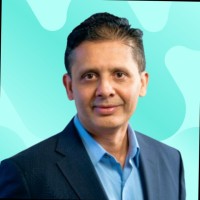
I had a really great discussion with Chris today. One of the reasons I wanted him on the show was what he's talking about, the notion of gifting and building relationships, is actually pretty core to what I've been doing over my time at Position Squared. I love connecting with folks. I think you guys have heard a lot of my purpose in life, which is to connect great souls together. And part of what I like to do is reach out to folks and offer them something that we do together, like a game, or go to dinner together, or go to our go-to-market summit together. These are things that we offer. And so I wanted to understand more about how they do this at scale. And Chris's company enables you to do that. And as I look more into it, it was about these neural connections that we have and how it breaks through the normal clutter. And when we advertise, yes, we're putting our bread in front of you, but because we advertise so much, people sometimes get defensive about an ad, even if it does get through. So that's why people are funny or that's why people are poignant to try to break through that initial defense. And gifting does that as well, especially if done tastefully. And Chris really brought that out about where to be at the beginning of a cycle when you're trying to open things up. And then his insight about as you get into like the stage three or much later, how you his software can help you open the spigots to give people the right sort of thing that's customized. And AI enables that. It takes you from that 15 minutes or 20 minutes that you'd have to think about something to maybe a minute or two, because now you're looking at some good alternatives that connect to a person's personality and character and how your company likes to give at a particular stage in the cycle. He talks about it from a marketing and a programmatic point of view, as well as a sales point of view, and then even a customer success point of view. So lots of interesting insights from him. And then what I really like about him is he's been an entrepreneur, wanting to be an entrepreneur all his life. He started from college, taking shots at building his own software and selling it. He's worked with other great entrepreneurs like Guy Pieri, more in the celebrity chef world. And so he's been influenced by that. And he's taken that plus his Silicon Valley background and turned it into a business where he gets to see people offer joy to folks every single day through his company. So lots of great insights, really worthwhile listening to and truly fun for me. Welcome to the Spark of Ages podcast. Today we're joined by Chris Rudy Grapp, the co-founder and co-CEO of Sendoso, the leading direct mail and gifting platform, which has seen over$250 million spent on its platform globally. They help thousands of companies generate billions in pipeline. A self-described sales CEO who is redefining how B2B companies cut through the digital noise to build authentic relationships. Chris is uniquely positioned to discuss the intersection of human connection and the agentic economy of 2026. Chris has more than two decades of go-to-market expertise. Before founding Sendoso, he was a top-performing account executive at TalkDusk and a founding team member at Picora. Chris is a California native, an alumnus of California State University Chico, and is currently living in the San Francisco Bay Area. Some of the key takeaways you can expect from this episode: how Sendoso has evolved into a definitive intelligent sending platform for the post-AI world, how to open doors and accelerate pipeline by leveraging high-end physical sends to break through saturated inboxes. And finally, how Sendoso prioritizes deep relationships over pure volume to future-proof their own pipeline for 2026. So, Chris, welcome to the Spark of Ages.
SPEAKER_01: 3:59
Thank you. Thank you for having me on. Great intro. I might steal some of that. That was really well said.
Rajiv Parikh: 4:03
You know, we do know how to do those intros. We are a marketing firm. So there you go. Apparently, Chris, you and I share about 225 LinkedIn connections.
SPEAKER_01: 4:13
Wow.
Rajiv Parikh: 4:14
Yet we've never had a beer together.
SPEAKER_01: 4:15
I know. Well, I'm glad we're on the podcast together. This will hopefully spark some more conversations and some beers to come thereafter.
Rajiv Parikh: 4:21
There you go. I love it. I'll just kick it off. Most people think of Sendoso as uh gifting or swag logistics, but gifting actually taps into some pretty deep brain circuitry. How do you think about the neuroscience of gifting? And if you don't, how do you think about your product design?
SPEAKER_01: 4:36
No, there's definitely some baked in psychology. There's reciprocity when you give something that you feel like you need to give back. So that plays a big factor in this. There's also a bit of curiosity in psychology when a box lands on your doorstep or your desk. You know, the open rate of a FedEx box, I'd say is 100%. You're not just gonna let a box sit there unopened, or you're not just gonna trash it, or you can't swipe a box out of your doorstep. So there's the psychology there. And then there's something to the tangible effect of opening something, feeling something that creates more of an emotional connection and rapport, especially if it's personalized to you. And there's some affinity to your interests, to your likes, to anything that makes it more hyper personalized. So all those things really play into gifting being a unique channel, as you described, a very oversaturated digital world we live in today.
Rajiv Parikh: 5:27
Yeah, it kind of breaks through, right? Like if I see an ad, I've seen a million ads, right? And I'm taken aback a little bit because I know it's an ad. Whereas when I'm getting a gift from someone, as long as it doesn't feel falsely given, as long as it feels genuine or even personalized to me, then I feel, well, I'm intrigued and maybe I want to talk to you. It's different in your case, like it's not like sending it like an Amazon card or a Starbucks card. I mean, that's okay. You guys are going much deeper than that.
SPEAKER_01: 5:53
For sure. I think you hit on two one area of like scarcity where you, you know, you don't get that many gifts or mailers so that you are surprised and happy to see it. And then because there's a cost component to it, it prevents oversaturation. I could send, you know, 10,000 more emails to you tomorrow, versus if I tried to send you 10,000 personalized gifts, there would be some extra costs involved to make me think twice. But that being said, you're right. It's much more than just a gift card. It could be a gift card because there's definitely reasons why sending a gift card is nice, or the recipient can choose, hey, I want to swap out this for a gift card. But there's a million more reasons why you want to send something personalized or something on brand or something related to a field event or something related to a bigger, larger campaign you're doing. And so we help facilitate all that globally.
Rajiv Parikh: 6:40
That's cool. In our last episode, John Miller, who you know, made a prediction that AI agents would soon summarize their inboxes, filtering out marketing fluff before a human ever sees it. And this has already come true as Google announced earlier that Gemini can now integrate with Gmail to read and process emails, right? They can summarize, draft replies, find info, and generally organize yourself. So if digital outreach gets summarized away by AI, how do you see direct mail playing a role in human-to-human communication?
SPEAKER_01: 7:08
Yeah, John is a man. I've been a friend of his for a while and he's a legend for marketers. So I totally agree with his predictions and everything else he says. In terms of the, you know, the direct mail and gifting channel, you know, I think that while AI is definitely influencing that, and we can get into how AI is impacting the channel. I think there's some inherent baked-in cost components, as we mentioned, that prevents such an oversaturation. There's also just the psychology of getting something that bakes in some of that saturation. And then, you know, there's also just this surprise and delight component, too, that helps that channel stay preserved, I think indefinitely. So I think there will be a pickup in more direct mill and gifts, but to a lot of people's best interests too. As, you know, if it's personalized, you know, I could always use some more golf balls or some toys trucks for my kid or even another bottle of tequila. Wink wink if listeners are listening.
Rajiv Parikh: 8:02
It's like best way to reach me. Exactly.
SPEAKER_01: 8:07
Oh, I'm sure I'm gonna get a couple of those after. Whenever I'm out and about speaking, I will drop a few of those, you know, best interest things that I'm interested in. Cool thing too, on our platform, we actually launched a feature last year where we're actually use AI and big data to figure some of these things out based on social posts, podcast mentions, other internal first-party data too. So what used to take, you know, maybe 15, 20 minutes to do that research can now be done through AI, which is, I think, a benefit too.
Rajiv Parikh: 8:36
Are you seeing yourself move that way that you're evolving from this like software logistics company into this more of a data company, right? You have a lot of transactions, you now have the ability to understand someone's interest via AI. So does your value proposition shift that way? Or maybe you're seeing that people at certain stages like certain types of gifts, and now with AI you can recommend them more proactively.
SPEAKER_01: 9:00
You are speaking my language right now. You said it really well. So I think you know, we've been around for about a decade. I'd say the first decade was really the infrastructure, the logistics, the global marketplace and supply chain, as well as that SaaS software layer that integrates into your CRM, your market automation system for orchestration. And the last couple of years have really been, you know, the year of data for us. And we've been accelerating with all of the enhancements from these AI and LLMs. And it's fast-tracked our roadmap to be able to provide hyper-personalized suggestions on what to send, who to send to, when to send, and the signals to send to, even triangulating where the person is. So is the best delivery channel to Chris's house, to Chris's office, which office? And so all those make the channel perform better, provide more productivity boosts for maybe a seller who was manually doing some of these things, like looking up addresses, looking up interests. And so as Sindosa evolves over the next few years, I think people will start to look at us as a data company based on the hundreds of millions of data points we have. And that will further drive more results for our customers, as you alluded to.
Rajiv Parikh: 10:06
Yeah, I definitely could see that. I mean, just sending out for us holiday gifts, right? Do I send it to their home? Do I send it to their office? Sending their office used to be an automatic. Then you send them something, you know, like a little gift basket, maybe with wine or with like candy, and then they could share it with everybody, right? And has your name on it and your brand on it. Now, not so much. Right? They're at home. So you got to figure out good gifts for the home that make their family happy.
SPEAKER_01: 10:30
Precisely. Yeah, there's different ways that you can strategize on what's at home, but then that can also build better rapport too if you have a personal touch there and provide something that maybe their kids or their spouse could be interested in. So there's definitely a shift in sending behavior since COVID.
Rajiv Parikh: 10:44
That's cool. So going back to a little bit on the business model. So you've said before that SaaS seat-based pricing is broken and you're leaning towards transaction or usage-based models. So if you were starting Sendoso today, would you launch with no SaaS subscription fees? That means monetizing purely on the physical transaction, like a fintech or logistics company, or is the allure of ARR too strong for your investors? Like they must be saying, Chris, what's my uh what's my NRR?
SPEAKER_01: 11:10
I think ARR, NRR will always be attractive for businesses. Above and beyond that, it's a really nice vanity metric for investors and for valuation. I think it also provides a customer lock-in too, and or some top-of-mind awareness. I kind of think of it similar to like Amazon Prime or the Costco membership. Because of you have Amazon Prime, you're kind of more likely to go shop on Amazon. And that stays true to us too, is because you have a Sendoso subscription, you're more likely to use us to send that direct miller gift rather than maybe doing it manually or trying an alternative one-off solution. And so I think it creates some lock-in, but also creates what I'd say is more of like a strategy versus a one-time campaign or solution. So part of our education and kind of go-to-market strategy is telling the world, like, hey, you know, what would have been a one-time campaign for a holiday gift or a one-time campaign for a conference you're trying to drive people to could be always on, could be triggered based on data in your system. So it's always living, it's uh it's autonomous. And I think as we continue to move more into this agent world, direct mail and gifting will continue to move into more of an agentic, autonomous way, similar to how you have ads always on and running.
Rajiv Parikh: 12:23
So part of this, you mentioned go to market, right? And part of this is you're making the decision of what type of customer you want. You could be like very today AI oriented and just offer freemium and you can just try them out, but then you're gonna get this huge group of people that just use it one time, right? Whereas what you probably want, and I'm not gonna speak for you, is you want to make sure that the folks that are working with you are in this, have bought into the notion of gifting as part of the sales process, as part of driving through things forward. So it may be harder for your salespeople, but eventually it leads to a better customer profile.
SPEAKER_01: 12:58
It leads to a healthier customer that is more strategic and has a better strategy for using our platform. With that being said, though, we do offer some kind of like product-led growth, freemium type of experiences, whether that's through some of our agency partners or whether that's through different personas. We found some success letting like a seller at a larger enterprise come in and use it themselves, knowing that we want to sell to the larger sales and marketing org thereafter. But getting a seller to come in and send something, see some success is a good value driver and a good proof point for us to go then to you know the director VP level and say, Hey, look, this person's seeing success. Why don't you roll this out company wide, team wide?
Rajiv Parikh: 13:38
Makes sense. It's like a double-edged sword, but you're using it more to open the door to get something bigger. So it's more targeted and smarter. So now we're gonna get into some use cases, right? So let's go into some practical advice for executives. Previously, you mentioned that gifts like rubber chickens and pinatas work to get meetings. You must have a unique view of the data across all these millions of sends. So, what is the absolute worst, most tone-deaf gift campaign you've ever seen a customer run that technically worked, got a meeting, but maybe for the wrong reasons?
SPEAKER_01: 14:05
I think the tone-deaf is really as it relates to the personalized gift. So if you sent out like a bottle of wine to someone who doesn't drink, or you sent out a coffee mug to someone who doesn't drink coffee, so some of those areas where you just haven't done the time to do your research, or even haven't used, you know, AI to help personalize it for you. So I think those things really don't land well. There's also times where you're sending to the wrong person, or you're again sending it to the office that's located in, you know, New York and the person's in San Francisco. And so that really looks bad as well. Or there's things where you've haven't done your homework on their role. Similarly, like how you've seen a bad email, because associated with these gifts are typically a handwritten note that we'll write or a printed note. And so not only is there an opportunity to fail on the gift itself, but there's an opportunity to fail on the message associated with that. So, you know, you really have to be smart about this to make an impact.
Rajiv Parikh: 14:59
You don't want that feeling of false affection. Somebody writes you this handwritten note as if they're so close to you and they get it all wrong.
SPEAKER_01: 15:05
On the contrary, there's been so many unique areas. And I think that's one of the areas where I think humans will shine forever, where potentially AI might get there, but might not, in terms of the creativity, where, you know, there's these campaigns that customers come up with, whether it's, you know, we've seen customized candy hearts around, you know, Valentine's Day, which really clever messaging, or bottle of wine with a locked combo code and messaging around unlocking more. And then there's, you know, the follow-up where you have to get the combo code and even some cheap ones where we've seen someone send out some empty pizza boxes talking about, you know, are you hungry for a new solution? Which was landed at people's doorsteps. And it's like, you know, that's a kind of a creative play where in a lot of cases the recipients just kind of like almost just like thankful for the creativity that they're willing to respond because it just either breaks the pattern or is just clever enough where it's something different that you're seeing in your day.
Rajiv Parikh: 15:59
Is this you're getting to that notion of two things that there's cleverness and then there's micro joy, right? You could get a really expensive gadget, which may or may not fit for what you're doing, right? Like if I got an Android phone and I'm an iPhone user and you're kind of like, okay, that's nice. What am I gonna do with this? But if I got a cookie from Crumble, it might be a nice way of establishing connection and it may not be so expensive. Exactly.
SPEAKER_01: 16:22
Yeah, sometimes it doesn't have to be the price that determines the outcome, or the more you spend doesn't always equate to the more replies or the more revenue and pipeline that's being driven. Sometimes, again, it can just be the cleverness or the timeliness. You know, we've seen scenarios where someone's posted that they're off to a conference next week and someone sends over like an Uber e gift saying, you know, grab your ride to the hotel to this conference on me. And it's like a small thing like that that's useful. Like, hey, I know I'm gonna go use that right now as I jump into my Uber or go into this conference. And so sometimes the timeliness outweighs the, you know, expensiveness.
Rajiv Parikh: 16:55
Yeah. Do you see anything like that with like timely is obviously really powerful, right? And that's where the tools and the technology can really make a difference. Do you see something like where because the focus on cost and go to markets extremely expensive, especially for B2B tech, folks are saying, well, I want to be less expensive but more clever.
SPEAKER_01: 17:11
Yeah, there's definitely some of our customers like that that are thinking like that. I think a lot of B2B, depending on your price point, there's enough baked-in CAC that you can afford, you know,$100. Some customers can afford thousands or tens of thousands of dollars within their lay. And there, I think there's a bit of opportunity cost analysis too. Like you could spend six months cold emailing and cold calling with, you know, lower costs to do those actions. Or if you hit the right gift with the right dollar point and got that meeting booked, you know, five months earlier in that pipeline and deal book three months earlier. Well, what's that opportunity cost of three months of new revenue? And I think that's not always the way, you know, a marketer and even a sales leader might think. They just think of end-to-end dollars and being like, oh, this is an expensive channel. Even some of the channels thinking about it in just dollar for dollar, like, oh, one dollar of Sedoso gifting generates, you know,$12 a pipeline, but one dollar of field generates only$4 a pipeline. So like which one should you invest more in? Hopefully the savvy marketers are doing that math, but oftentimes a lot of them are just like looking at numbers in a spreadsheet and not doing that total math.
Rajiv Parikh: 18:17
It's that notion of triangulation, right? Like when you're in marketing and sales, sales, you're doing it person to person, marketing, you're thinking about it in larger groups. You're trying to do that triangulated method of getting to someone through something digital, through something personal, so that you still have to do the trade show and event. I know a lot of folks adjust their ROI lower for a trade show because it's too hard to get it perfectly. So they understand that it's going to be lower yield from that direct source event, but it does establish the relationship. And then there's the gifting part where you say, okay, it's part of the fabric by which I run things.
SPEAKER_01: 18:47
Exactly. And I think that in today's world, you have to be everywhere that your prospects or customers are, which means you have to be doing every channel and doing it well. I think, you know, the times of just being like, hey, I can close my eyes and spray and pray email and build enough pipeline. It's like those times are over. And you still need to do that email though, but you have to couple that with cold calling, with events, with direct mail, with ads, you name it. It's like every channel should be perfected and that buyer's journey should be crafted a lot more so that you're thinking about not only once you book that meeting, but also what else are you doing while that prospect is in funnel to move them through faster?
Rajiv Parikh: 19:24
Are you seeing like things as they get in funnel? That's where people may open up their spend. Is that part of how the software works? It's like early on, this is what I'm sending them, or maybe you're doing it by different titles or different levels in the group. And then as I get deeper in the funnel, then I'm maybe opening up the spigot a little bit and expanding the buyer group by gifting in a more forward way.
SPEAKER_01: 19:44
Exactly. And whether that's done programmatically through marketing based on CRM data, like stage type, and those gifts or mailers are going out dynamically, or we even offer a way where you can restrict what can be sent based on CRM data in Salesforce, HubSpot, et cetera. So like a gift. Even be available to send unless they're in like stage three, for example. And so you can set a little bit of guardrails or rules engine for the sellers so that they can spend a bit more when they're mid-funnel or send something that is used, maybe if someone's ghosting them and it's a creative way to reopen it up or keep that deal open. And I think, you know, for a lot of sellers, they've been trained just to do the, you know, hey, Friday, check in, hey, how's it going? Where's that deal? Versus the give and being like, hey, Friday, lunch on me, you know, without the ask, and then let that prospect come back and be like, oh, by the way, yeah, I'm still waiting on procurement to do this thing. So I think the give get psychology plays really well lower in the funnel too. Nice.
Rajiv Parikh: 20:36
I'm saying you're using AI to help people do a better job, right? So I'm just wondering if you've seen any, maybe not with yours, but maybe initially you saw this with go-to-market hallucinations in your data. So I'll give you an example. So an AI agent says that the prospect likes metal. And instead of sending them a metallic t-shirt, they send them a sheet of industrial steel. So have you seen any weird targeting errors like that? Maybe not your product, but just maybe early on in the thinking.
SPEAKER_01: 21:00
So the way though our usage of AI works is we've avoided some of those hallucinations because we know what the gift types are and we know looking after social and other things and using AI to kind of better define some of the characteristics or you know, suggest someone that likes golf, which of these golf gifts should we give? And so there's a bit better ways to prevent some of the hallucinations. I think there was in the early years, we have like a smart send that looks at what should send. The smart delivery will look at where's the best mailing address with a confidence level. That hasn't really hallucinated what, but the early days of our smart messaging feature, which was that like the handwritten or printed note and what that message should be. In the early years, a few years ago, I think some of the content drafts were less than ideal. Some of the puns you could turn on like a pun pal mode. Some of them weren't that funny and kind of miss the mark. You have a good example of that? Not off the top of my head, but I can remember things that I'm like, ooh, I would not send that. But we really pushed it as kind of a draft mode and trying to let humans take a look at it. Because as you alluded to years ago, those like writing content would air out a lot, or there was some things where I would do like a lot of dashes or other things that you would never do in a handwritten note that like only AI would write. So even some of the formatting was funky years ago.
Rajiv Parikh: 22:15
That's funny. So now with go to market, you've rebuilt your outbound engine using Clay and AI, replacing a lot of manual SDR work. So with the rise of go-to-market engineers or GTM engineers, right? A technical role where you're managing AI agents, will the person sending gifts in 2026 be a creative marketer or a Python scripting engineer who performs gifting logic into an autonomous agent?
SPEAKER_01: 22:38
I think both qualify, you know, and I think it just depends on kind of the maturity or the technical sophistication of our customers. And so, you know, like for us, we have a go-to-market engineering team, and our go-to market engineering team is responsible for some more of the programmatic orchestration of gifting in direct mail. However, we still have an ABM and field team that is using it for certain one-off campaigns. And then there's also the enablement team who's enabling our SDR and our field sales team to send on themselves. So I think that's the gambit. Now, for our customer base, we have, you know, big banks, we have hospitality in certain industries. GTM engineer is something that they wouldn't even comprehend yet. But for some of our big tech companies that are already savvy and thinking about that, for sure they're those the ones that are geeking out over our APIs and over some of our more integrations with clay and some of these other areas where they're in the tools. And I think that goes back to us evolving as our customers evolve and what are the integrations that they are demanding. Or how do we live in N8N or in, you know, in Clay or in the modern GTM engineering's tech stack, which five years, 10 years ago, you know, our first integrations was just Marketo and Eloqua and Salesforce.
Rajiv Parikh: 23:51
Right. I mean, nowadays it's plus minus, right? You want to be in all these integrations because you want to create a flow in any way, shape, or form, right? Like with a workado, you could just work inside a Slack and Sendoso's there in the background and setting alerts. But then again, they're never seeing the insides of your platform that way. It's like a plus-minus, like you're in more places, but you also then need to present your value more clearly.
SPEAKER_01: 24:12
100%. There's a bit of a catch-way too, like you said, and that they're not going in and seeing the dashboard necessarily. So for those types of users, we're trying to send them snapshots of their data or we're trying to use AI to create these interesting PDFs that they can then be mailed to the customer to then hopefully they'll forward along to others in their org or even doing things like printing some of these things because we're, you know, printing direct mail and mailing these off in little printed envelopes so that they can look at it because you know they're not logging in. So I think that there is a world where SaaS companies and agentic agent companies are having to rethink how they demonstrate ROI or how they showcase ROI.
Rajiv Parikh: 24:47
It's a great way of doing it. You send them the report in another channel, but you're performing it inside of it and they have to recognize your value. You're still getting the product to people, right? You're still coming up with clever ways of presenting it. So now let's think about a little bit of this. So Sindosa is built on the thesis of human connection through physical or service-related items. We enter the agentic economy, AI buying agent might be the one choosing your package. Are you preparing for a future where you have to algorithmically delight a bot? Or is physical gifting the last fortress that proves a human is actually on the other side of the transaction? I think it's more of the latter.
SPEAKER_01: 25:19
I think there will be a lot of agent-to-agent interactions, but I think there will be humans managing those agents. And I think I had a brainstorm recently with another CEO about the evolving org chart. And do you actually put these agents in your org charts that other colleagues can visually see this? And I think that's gonna be a world where you'll have humans managing more agents versus managing more humans. But at the end of the day, there's gonna be some human that's gonna sign off on buying certain technologies, maybe not all, but I think a lot of technologies, especially higher end B2B technologies or others, will have a human at one part of the equation.
Rajiv Parikh: 25:56
I think you're right. I've seen multiple events, like Asana's event, right? They talked about their AI platform and they basically would say they would create a person. They would create a human agent, like a content strategist or account management strategist, or they would create that as an agent so that a person felt that when they added them to their group of folks collaborating, they were actually talking to someone, right? Where Cotton's used a similar metaphor or even workday, they talk about having thousands and thousands of agents, right? So yeah, maybe it's in your org chart.
SPEAKER_01: 26:24
Yeah, exactly. And so I do think maybe the seller will be engaging with maybe an agent as part of the buying process, but I think at the end of the day, there will still be a human in that loop.
Rajiv Parikh: 26:35
We're big believers of that as well. I mean, even though we'll talk about all the agents we're building for marketing, but we always have human in the loop as part of it. Like you're not about to launch or approve messaging simply by what an agent outputs. Like we've gotten some of our best taglines or best messaging agents with AI assisting, but then the human tweaks it and really grinds on it to get it to fit right.
SPEAKER_01: 26:56
Correct. And there's just that human empathy and even the psychology that you know is used, or even tribal knowledge, other areas that you just can't replace with agentic workflows or want to. I mean, I think there's a world where there's still passion about going to work or deciding on content or picking the right gift at the end of the day. Some of those things people want to do. There's parts of the job people don't want to do or don't want to do the full part of it that will be automated, but there's definitely things that you know you'd want to stay involved in.
Rajiv Parikh: 27:24
And sometimes it's just you won't buy unless you feel like you touched it. You won't approve it unless you feel like you're part of it. And I think that's still a transition point. So one of the things you've mentioned is that gifting budgets for customer success and account management will increase as customers focus more on retention, right? There was hockey stack data that I think you referenced at one point that shows your strongest ROI are actually weighted more towards outbound, right? Meeting rates are boosted by 300%. So if the agentic economy makes net new acquisition harder and CFOs demand greater go-to-market efficiency, will you pivot your core value prop or Sendoso's value prop from door opener for sales to churnstopper for customer success?
SPEAKER_01: 28:03
The way that I look at it is I think we will continue to evolve and help our customers find and surface other what I call leaky buckets that we can help plug for them. And I think it's the most obvious is booking meetings and pipeline because it's really black and white in terms of if a meeting was booked or not. On some of the customer success and account management use cases where you're trying to build rapport, where you're trying to engage for life events, where you're trying to improve a renewal rate throughout the year, it's not as cut or dry. But I think executives are starting to know that they need to invest in these customer relationships, that they need to expand the revenue they currently have because that's cheaper than going out and finding new revenue. And so these executives are looking at programs, initiatives, technology that can help. And that's where we can raise our hand and say, hey, we can help you with that.
Rajiv Parikh: 28:50
So I think it has to be part of your retention budget, right? It's like you have to basically say, yes, not only are we going to do the QBR, but these are the things we're gonna do as part of it, and this is part of being memorable for it. You like you say, it's probably harder to measure versus booking a meeting, but it's still valuable.
SPEAKER_01: 29:05
Exactly. I think marketing leaders are also evolving their metrics that they care about. I think there was like the top of funnel MQL that was obsessed over in the 2000s. And now it's like, hey, maybe it can speak especially to our marketing team, our CMO, she actually cares more about the revenue number. And then she even furthermore cares about the NRR number. And so she's thinking about programs and campaigns that can touch not only in this top-of-funnel prospect, but our customers throughout the life cycle. And I think that, you know, marketing for a while glorified just top-of-funnel pipeline. And that was such a big focus area around demand gen. But I think today's marketers are saying, hey, we can go influence that NRR number or we can drive more expansion revenue by marketing to our customer base better.
Rajiv Parikh: 29:47
That's much better. It's a much more sophisticated view that you see out of more advanced marketing executives where they're working closely with revenue and customer success as part of the executive team saying, you know, we're trying to drive the whole machine forward when we do that. Like you say, there's too many folks. I know John Miller's been the famous proponent of that. He's like, I pushed MQLs, maybe I overdid it. Right. So this is great answers. Really appreciate your insight on all this. So, next thing I want to jump to is the game. So we have this thing, Chris, called the Spark Tank. So, you ready?
SPEAKER_01: 30:16
Let's do it.
Rajiv Parikh: 30:16
Here it goes. Okay, so Chris, welcome to the Spark Tank. Today we're joined by Chris Rudy Grapp, the co-founder and co-CEO of Sendoso. Chris, you've spent two decades mastering the art of go-to-market strategy, but your understanding of attention-based marketing didn't start in a boardroom, it started in a production van. Long before you were scaling Sendoso, you were a scrappy camera operator and production assistant for a then-rising chef named Guy Fieri. You were there in the foundational years of diners, drive-ins, and dives, scouting locations, managing gear in cramped kitchens, and even running a MySpace promotional company to help Guy win the next food network star. You've often said that watching Guy build a brand through hype and personal connection influenced your mission to help sales pros break through the noise today. So we are putting your scrappy roots to the ultimate test with the Flavor Town Foundation challenge. Let's get started. So I'm gonna ask you a question. It's multiple choice, one of five. We have five questions. Let's see how good your Guy Fierry background is or retention is. Number one, before he was a household name, a young Guy Ferry, which is his birth name, started a bicycle cart business in the 1970s. While most know it was called the awesome pretzel, what was the specific technical innovation Guy used to make his soft pretzels stand out from competitors? A, he used a pizza oven instead of a traditional warmer. B, he parbaked them in a three-stage steam process. C, he used a secret pop of legal grade food acid in dough. Or D, he developed signature triple G garlic, ginger, and gold mustard dip that was included in every sale.
SPEAKER_01: 31:56
Oof, this is a hard one.
Rajiv Parikh: 31:57
That's a tough question. This is from way back.
SPEAKER_01: 31:59
I will go with A, the pizza oven.
Rajiv Parikh: 32:02
Why do you say A?
SPEAKER_01: 32:03
I don't know. I get a sense that he was creative in the different, you know, cooking environments. I've known him to love pizza ovens too. I've seen that in lots of some of his videos.
Rajiv Parikh: 32:10
No, that's a really good answer. It's actually B, who par baked them in a three-stage steam process. So he spent his childhood savings on a custom cart. He didn't just sell pretzels, he obsessed over the texture, developing a specific steaming and baking process that gave him the distinct snap and chew. Your pizza answers pretty much on par with it.
SPEAKER_01: 32:29
Yeah, yeah, exactly.
Rajiv Parikh: 32:30
All right. Number two, after returning from France and attending UNLV, the guy didn't immediately open his own spot. He worked for a major corporate casual dining chain. Which company did he serve as a district manager before joining Johnny Garlic's? A PGI Friday, B, Olive Garden, C, California Pizza Kitchen, or D Louise Tratoria. Let's go with CPK. California Pizza Kitchen. I would have gone with CPK too. It's actually Louis Tratoria.
SPEAKER_01: 32:58
Oh well, I tried pizza twice on those and struck off twice.
Rajiv Parikh: 33:02
Maybe you're just getting ready for lunch and you're thinking, let's get some pizza. He was a district manager at Louis Tratoria in the early 90s. This experience in high-volume standardized Italian American cuisine provided the operational blueprint for Sversa solo restaurant. So okay. Now we're getting a little closer to when you probably worked with him. So here's number three. Guy's audition tape for season two of the next food network star is legendary for its energy. What was the first dish he ever demonstrated on that original audition video? And it's not pizza this time. A Calliante flank steak, B Dragon Breath chili, or C Donkey Sauce Sliders.
SPEAKER_01: 33:40
I'm gonna go with sliders.
Rajiv Parikh: 33:41
I think I got you on the donkey sauce. If it wasn't that one, what would you choose? I would have guessed A. A. Why would you choose Caliente flag steak?
SPEAKER_01: 33:49
Because I think he's big on kind of spicy foods and got a tequila brand, so he's got that tequila, you know, Mexico vibe with caliente.
Rajiv Parikh: 33:58
You know, actually A is right.
SPEAKER_01: 33:59
I should have gone with that. Donkey Sauce kind of slider thing, theory uh.
Rajiv Parikh: 34:04
Yeah, it's not a too much fun, like too much fun to do. Yeah, his audition video featured him making caliente flank steak. The judges immediately were immediately struck by his ability to describe bold flavors while maintaining high octane charisma.
SPEAKER_01: 34:17
Cool. I'm learning a few new things here. I love this. This is a fun game.
Rajiv Parikh: 34:21
All right, here's number four. In the pilot episode of Diners, Drive-Ins and Dives aired as a one-off special in late 2006. What was the first restaurant ever featured in the very first segment of that pilot? A Bayway Diner in Elizabeth, New Jersey, B, Hodad's in San Diego, California, or C, the Penguin Dive-In in Charlotte, North Carolina. So one is Bayway Diner, Elizabeth, New Jersey, Hodad, San Diego, C, Penguins Drive In.
SPEAKER_01: 34:52
I'm gonna go Hodad San Diego.
Rajiv Parikh: 34:56
You pick California because that's is that's where he's from, yeah.
SPEAKER_01: 34:59
So I figured maybe, and it's close to you know, home, so it's an easy drive away for the first episode.
Rajiv Parikh: 35:05
All right. Well, it actually was a the Bayway Diner, Elizabeth, New Jersey.
SPEAKER_01: 35:09
Far away from the hometown of Santa Reza's.
Rajiv Parikh: 35:11
I don't get it. Maybe it would just appeal to the folks on the East Coast and he was gunning for them.
SPEAKER_01: 35:16
Yeah, or maybe start there and then drive across, you know, the country, black home. I don't know, but that's dumb meme.
Rajiv Parikh: 35:21
Okay, so while many remember the California spots, and I think that's probably what you're remembering. The very first segment featured the Bayway Diner. Guy famously arrived in his own Camaro, establishing the car as a show's mascot. So I guess he started there.
SPEAKER_01: 35:34
Yeah, okay. That makes sense. He's going a reverse, you know, road trip.
Rajiv Parikh: 35:37
And you know, Elizabeth, New Jersey, it's kind of a it's an okay place, so there's a lot of diners there.
SPEAKER_01: 35:42
Yeah, I've never been, so I don't know. I couldn't say if it was like a hipster smogs for good diners.
Rajiv Parikh: 35:48
Yeah, I grew up on the East Coast, so I was like, yeah, Elizabeth.
SPEAKER_01: 35:51
Interesting.
Rajiv Parikh: 35:53
Okay, number five. Before his TV career exploded, Guy was a serious competitive barbecue circuit contender. What was the name of his professional barbecue team? A the Flavortown Flyers, B, Motley Q crew, C, Garlic Head Barbecue.
SPEAKER_01: 36:11
Maybe Garlic Head Barbecue. I can't believe it.
Rajiv Parikh: 36:15
I can't get you I can't give you the win.
SPEAKER_01: 36:17
I'm stunked. I'm stunked. I mean, I thought maybe because his first restaurant was related to garlic that he would use that again. And garlic is very californial. Yeah, his second restaurant, which I went to many a times, is called Text Wasabi's, which was barbecued sushi, which was quite interesting. Yeah, so it is very barbecue related, right? He'll rise the garlic capital, which is not too far. What was the answer? I'm now I'm curious.
Rajiv Parikh: 36:41
It was B Motley Q crew. Okay. Q U E. Guy's team was called the Motley Q crew. They won the American Royal Barbecue Contest in 2002, which is considered the world series of barbecue.
SPEAKER_01: 36:53
Wow. Fun facts. I didn't know that. I didn't even know that.
Rajiv Parikh: 36:56
I didn't know we have a royal barbecue contest. Fairly spent too much time in California. All right. This was great. And you're such a good sport for it, Chris. So thank you for letting us open up the back of your head from way, way back.
SPEAKER_01: 37:08
Yeah, it was fun.
Rajiv Parikh: 37:10
So we're gonna get into more about what's your spark. So, did you always know you wanted to work in technology? Was there a specific moment or project that sparked your passion? How did you discover that passion and you know, like what got you sparked up?
SPEAKER_01: 37:22
Yeah, so I'd say I always knew I wanted to be an entrepreneur. I think as I look back as a kid, I was like the guy selling lemonade, or there was a Christmas tree farm near my house. So in December, I was printing money selling mistletoe. So I had that kind of sales entrepreneur background. And then, you know, growing up fairly close to Silicon Valley in the Northern California, you know, the buzz of the dot-com was, you know, around when I was just mid-teens growing up. And so I'd always thought about, whoa, what what is that? Like how cool people are making millions. And so the spark of money there came into play. And so when I was in college, I thought it was a better time than ever to say, hey, why don't I start a company? It could be a really interesting way to make tons of money. And and that kind of sparked my entrepreneur endeavor and got me started down the path of wanting to start companies and the rest is kind of history.
Rajiv Parikh: 38:11
That's amazing. Was there a person that might have hit you?
SPEAKER_01: 38:14
When I started a company in college, there was a person named Christian Friedland. He started a company called Improvement Direct, later named to Build.com. And he was this like amazing, energetic founder that I was getting advice from and mentorship from. And it felt like I could follow in his footsteps. And so he was instrumental in giving early motivation to keep going. Because I think as a founder, especially when you're young in college, it's easy to give up. And so he was influential in just helping me build momentum and helping me not give up and seeing the future.
Rajiv Parikh: 38:45
That's great. You know, you have that great sales background. I also started in sales coming out of college as well, even though I was supposed to be an engineer. So, like nowadays, with all these AI tools, a lot of these sales roles or SDR roles, which is the original way you get in, may disappear, right? So if you were to go back to when you were 22 and the SDR path was closed, how would you hack your way to becoming a CEO?
SPEAKER_01: 39:06
It's a great question. I think sales will always be around though. And I think that the role will evolve, like as it related to like a go-to-market engineer that's controlling maybe a lot of outbound type of tasks. I think that certain tasks, you know, you'd want a human there. And so I'd hope that I would, if I was, you know, a person aspiring tomorrow, maybe I'm going to get into go-to-market engineering, or maybe I will be an engineer, but then I know I want to, you know, move into kind of a sales type of role thereafter, or maybe it's more of a demand gen marketing role. So I think there's ways to adapt, but I do think knowing sales, you do get, you know, some learnings around whether that's selling to your first customers, that even if there was an agent, you still, in the early days of a founder, have to figure out how to talk to people, how to pitch them, how to get them to buy, how to sell them this dream. You still, as a salesperson, learn a lot about recruiting and you still have to recruit a team. Agents aren't just Going to do that for you. You still have to go pitch investors if you're going down the VC route and that takes a sales effort. So I think the salesmanship is critical. Maybe the SDR role in B2B SaaS, you know, changes, but maybe there's still a sales role in another industry that you pick up in your uh sales and insurance industry or your sales for door-to-door, you know, who knows?
Rajiv Parikh: 40:20
And those roles maybe, like you're saying, you're not doing go-to-market engineering as in terms of knowing the code inside and out and the technical architectures. You are architecting a success. And part of sales is triangulating, is figuring out what gets someone to move. And so now you're using these tools. Maybe you're not wasting your time making a ton of calls and getting nowhere.
SPEAKER_01: 40:38
Exactly. And I think that's where being tech enabled and learning and knowing what tools are around you. That was one of my secret sauces when I was in sales, is I like was obsessed with the tech stack. And I think that's even more critical of knowing what else is out there as an early SDR or an early salesperson. Nice.
Rajiv Parikh: 40:56
Okay. We asked you what historical event or person or movement inspires you. And you mentioned Roy G, my marketing professor from college. Why'd you mention him?
SPEAKER_01: 41:04
Yeah. So when I was in college early on, I didn't know what direction I wanted to major in. And I had a really inspiring marketing class with him that led me down the path of saying, I want to be a marketer. And that really gave me the momentum to say, I want to finish college faster. I know what I want to do now. And I went down the path of marketing. Ironically, it turns out that I went into sales thereafter, but I think the overall go to market space was really inspiring. And I think, you know, as a young, you know, high school or college person, you have to figure out what is that path you want to jump on. It could change. You could be an engineer and then right out of college, you could switch jobs, but something has to give you that drive to finish. And for me, he gave me that drive to say, marketing is it. I picked my degree and I ran with it.
Rajiv Parikh: 41:48
Well, marketing is about what gets people to buy, right? Yeah. So you may be segmenting groups and in sales, you're making it happen, like you're on the ground making it happen. So there's a bit of both of it together. Let's talk a little bit more about some personal closes of yours or personal things about you. What's something you collect, save, or hold on to that other people would probably throw away?
SPEAKER_01: 42:08
I collect golf balls from courses that I, well, logoed golf balls, so not any golf ball I find, but I have a collection of golf balls I played at. And then I still have a ton of baseball cards from back in the day. Don't collect them as much today, but my parents keep nagging me to get the cases and cases, you know, could fill a closet full of baseball cards out of their house and into mine. But I still keep them there as it's a fun relic.
Rajiv Parikh: 42:31
This is a great thing for your kids to inherit.
SPEAKER_01: 42:33
Exactly.
Rajiv Parikh: 42:33
Yeah. Yeah. The golf balls. Is there like a logo that that's memorable from a course that you've for me?
SPEAKER_01: 42:39
It's kind of the story behind some of them. So there was a fun trip in Mexico for my wedding that we played a golf around. There's a trip I won this trophy in Bandon Dunes that I have a fond memory of. So kind of looking at the wall of golf balls, each of them have this memory and moment that I can reflect on, which is cool.
Rajiv Parikh: 42:58
I love it. That's a great way of doing it. If you could add one subject to high school curricula that wasn't there when you attended, what would it be and why?
SPEAKER_01: 43:06
I think probably personal finance, you know, taxes, state trusts, saving, and you know, mortgage and buying houses and all the things that you're supposed to do as a grown-up that you just kind of fall into. You know, I don't think as much of that was taught in high school.
Rajiv Parikh: 43:22
Yeah, you had to figure all that out yourself. Correct.
SPEAKER_01: 43:24
Yeah. It's not clear.
Rajiv Parikh: 43:25
Yeah. It would be good to negate pointers on where to go for.
SPEAKER_01: 43:28
At least a high level, I think, could be interesting directionally, give you some background.
Rajiv Parikh: 43:32
We could kind of put that into your home at class. You know, they have like how to cook, how to live, you know, they have a sex ed usually, and how they have, you know, how to maintain their money.
SPEAKER_01: 43:41
Yeah.
Rajiv Parikh: 43:42
What's something you started paying attention to or noticing more of as you've gotten older?
SPEAKER_01: 43:46
I've recently gotten more interested in like longevity. So reading books, Outlive. I got a book on my desk.
Rajiv Parikh: 43:52
Outlive. I just finished that book.
SPEAKER_01: 43:54
Yeah. Just got a book called Younger Next Year that I'm picking up. Been doing some of the tests like the Pranuva scan or the superpower.com blood work test to test your organ age, listening to like Huron podcasts. So really just more intrigued on the longevity. I think there's more interesting tests and data now than just, you know, maybe a decade ago where it was just, you know, hearsay. Now I think there's more science behind some of it.
Rajiv Parikh: 44:20
So are you going to crank up your VO2 max? Exactly.
SPEAKER_01: 44:24
Trying to, trying to track it. VO2 maxing grip strength. Definitely grip strength. I've I find myself hanging for the bars in my garage more than ever. And sometimes my wife thinks it's weird, but I'm, hey, it's my grip strength.
Rajiv Parikh: 44:35
Yeah. No, I've been totally motivated by that. So I totally get what you're saying. Yeah. Do you have a favorite life motto that you come back to and share with friends, work or life?
SPEAKER_01: 44:42
One is it's not what you know, but who you know. And that inspires me to constantly network. And that was something that I learned from a mentor in college. And then another one was, you know, entrepreneurs spend a few years of their life like most people won't. So they can spend the rest of their life like most people can't. And that motto hit with me early on as an entrepreneur because starting a company can be hard and stressful and a roller coaster. And you kind of put yourself through hell for the chance of, you know, this shiny light at the end of the tunnel. And so that is something that I live by. And tell other founders too that, you know, hey, there's going to be curveballs, but hopefully at the end, this is well worth it.
Rajiv Parikh: 45:17
Yeah. It's an amazing life experience. I've lived it for 20 plus years. So 30 years. What's something you're grateful your younger self did or didn't do that's paying off now?
SPEAKER_01: 45:27
I think starting a company in college. I'm super grateful for that because while, you know, it wasn't a big financial outcome, mentally it kind of put me across the hurdle that I could do it and have conviction. And I think there's a lot of entrepreneurs out there that want to do it and think it's too hard or think they can't do it. But I think for me, just learning like, hey, I figured out how to build software platform, figured out how to hire some people. I figured out how to sell a product and get, you know, revenue. And those things all gave me confidence that I could do it. And I think that was incredibly helpful for, you know, the future self when I was starting Sindoso.
Rajiv Parikh: 46:00
Yeah, I mean, you had nothing to lose in college. You're studying, and this is a great low risk way of taking the shot. Exactly. And I think it probably taught you a lot about when you throw yourself out there and take a risk. How do people react towards you? And you always go back to whatever you're studying, or but it's a great low risk way to throw yourself out there. And frankly, how many times are we afraid of doing something? All we have to do is just throw ourselves out there.
SPEAKER_01: 46:22
Yeah. And you don't have as much to lose like you said in college. Like they don't have a mortgage or kids or a family yet or a you know a car payment, any of those things. So it's easy to try.
Rajiv Parikh: 46:32
Well, Chris, it was great having you on the show today. I mean, you've been a great guest. You definitely know your stuff with regard to what it takes to get to folks or to reach their hearts. And then you built a whole platform around it. So great to have you on and look forward to having that beer with you.
SPEAKER_01: 46:45
Yeah, exactly. Thanks so much for having me on. Really appreciate it. And thanks for letting me share my story. And that game was super fun and unexpected. So thanks for coming up with something super creative.
Rajiv Parikh: 46:54
We both learned something about Guy Fear and cooking and what it takes to be a celebrity chef. So thanks.
SPEAKER_01: 47:00
All right, cheers.
Rajiv Parikh: 47:06
So that was really interesting, really fun to talk with Chris and how he started his company, how he grew his company. He's such an interesting guy. We could have gone another hour or two, actually, given his experiences. One thing I do want to share that I didn't put at the beginning of the episode because it was a bit too geeky, but I just love the neuroscience of this. And when you talk about the neuroscience of gifting, when you are gifting someone, it stimulates four different neurotransmitter systems simultaneously. So that is dopamine for novelty, oxytocin for bonding, serotonin for status, and endorphins for positive emotion. So if you do it right, you can hit all those things, but you got to do it right. And one of the things Chris talked about is that they had made mistakes with at one point was the whole notion of the handwriting of it, where sometimes the handwriting software got it wrong, or the format wasn't right, or the message was off. And so it truly needs to be genuine. And with the right platform, it can help you there, but you have to watch over it. I think it's really cool as to how to do this as part of how you establish greater connection with people and drive sales for your company. So thanks for listening. If you enjoyed this pond, please take a moment to rate it and comment. You can find us on Apple, Spotify, YouTube, and everywhere podcasts can be found. The show is produced by Anand Shah, edited by Laura Ballant, production assistants by Taryn Talley. I'm your host, Rajiv Parik from Position Squared, a top-notch growth marketing company based in Silicon Valley. Come visit us at position2.com. This has been an F Funny production, and we'll catch you next time. And remember, folks, be ever curious.