Episode 55







Jon Miller: 0:00
And it's the time of year for predictions.
Rajiv Parikh: 0:01
So it's the time. It's the time. Sitting there, you're on vacation, you're back to work, you're like, what? I want to hear some predictions. What can I tell my boss about what's new and what's different?
Jon Miller: 0:11
Exactly. We're gonna move from a world where marketing is about marketing to humans to a world where marketing is about marketing to humans and agents.
Ashish Aggarwal: 0:20
Everyone that I know across all of my network in Silicon Valley, as well as through Kaufman Fellows program, the number one question, both on the venture capital side as well as on the limited partner side, who are the people who actually invest in venture capital funds, is how can I use AI in private market investing?
Jon Miller: 0:38
I will launch the health company in 2026. But by the way, this is the first place I've said that publicly, so there you go.
Rajiv Parikh: 0:50
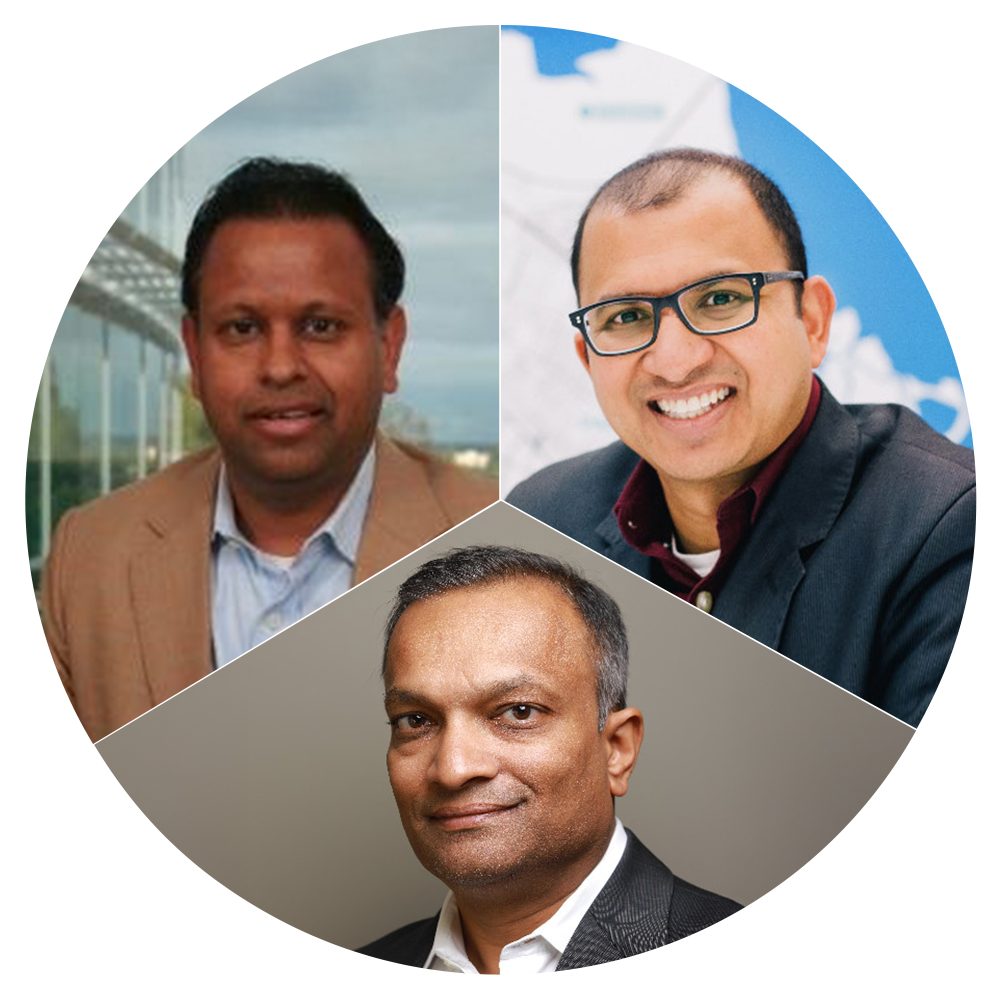
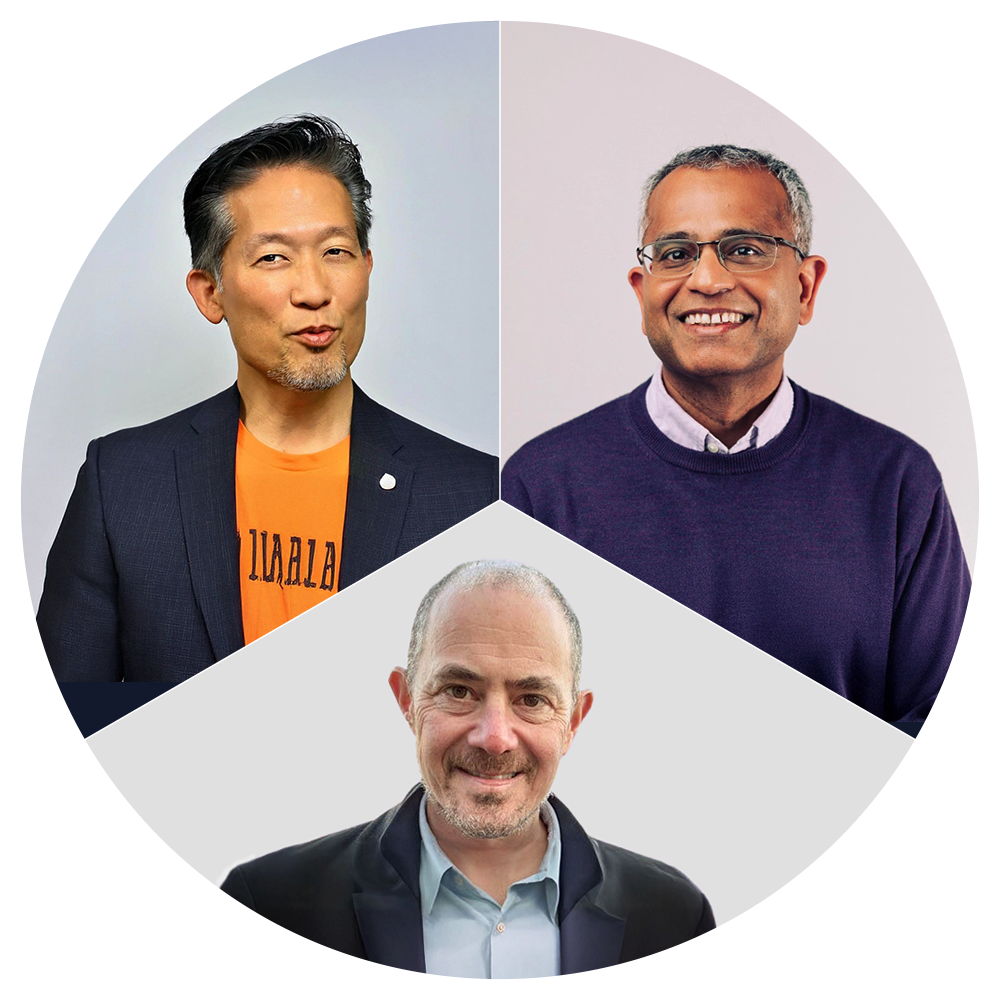
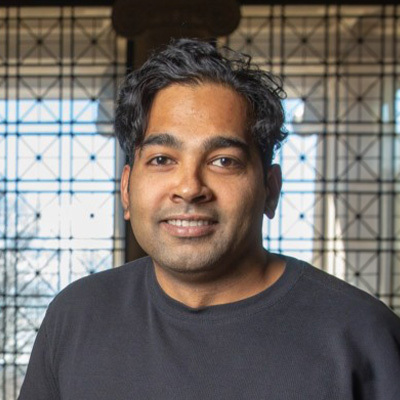
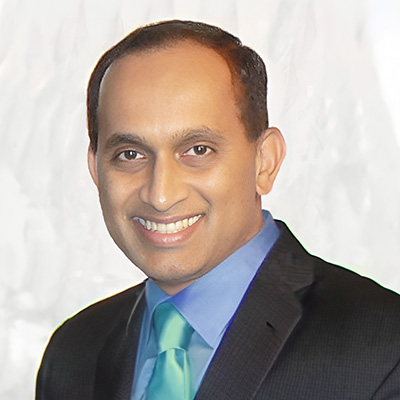
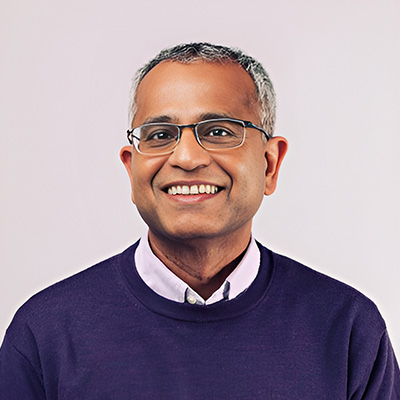
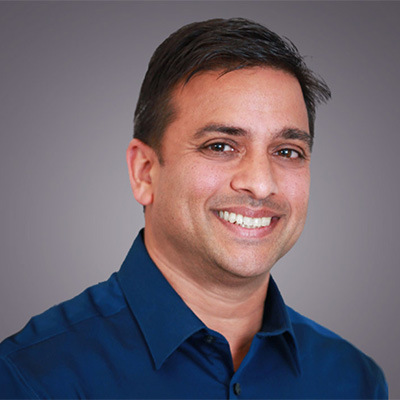
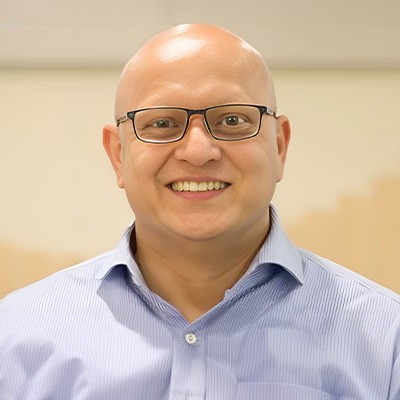
So that was really an amazing episode. We're throwing a little bit of a curveball at you because we're bringing a great marketer in along with a great venture capitalist. And I think it's interesting to hit it from both ends as to where you think the market's going because their worlds are so intertwined. You have someone that's this expert in go-to-market marketing, especially B2B firms, and then you have a person that's investing in a wide variety of spaces, but mostly technology and AI. And the way they think about the world is intertwined in that way. You have the predictions that Jon had made last year and his willingness to grade himself and give himself as much of a D. He gave himself some A-minus. He's a tough grader. He also gave himself a D, and we got into that and why he felt that way. And frankly, it was aspirational. The notion of marketers being more strategic when the demands of their executives is to be more tactical. And we get into how people are running their companies and the demands on this particular function and capability. We get into how they get funded and how we think about it. And Ashish brings a unique view because he's not only investing in AI funds, in AI companies, but he's also building AI to go find the right companies, to negotiate with them, to learn about them, to invest in them. They used the deep research portion of Chat GPT to really understand the entrepreneur more deeply and use it for diligence, which is something you all ought to be ready for. We coined a new term today, B2A. We're learning about maybe you have to set up your content for agents, not just set it up for agents, but how to market to agents, because eventually agents properly structured with enough trust built will actually want to communicate and not just communicate with each other, but actually transact and be able to make decisions. And so that's a whole new form of marketing. And I think the final part is that entrepreneurialism is still hard, even if you've done it three times or multiple times or even first time, you're always learning new things. And Jon shares that very authentically and honestly. And bringing these two back were just really brings it to light. So I really appreciate both of you for that. Hello and welcome to the Spark of Ages podcast. To start out the year, we're doing a special roundtable discussion on Go-To-Market, along with some thoughts and predictions for 2026 and beyond. We have two amazing guests who've been on our show before. We have Jon Miller, who has 25 plus years experience at the world's most innovative marketing technology platforms. Previously, he was CMO at Demand Base, and before that, he co-founded Marketo, where Thought Leadership drove category leadership in marketing automation and helped the company go public. He's a multi-time founder. In fact, right now he's building the next one, an AI native Martech company to fix the broken B2B demand gen playbook, where he's the founder and CEO of a stealth B2B Martech startup. Ashish Aggarwal Ashish is a general partner at Chamaeleon, an early stage venture capital fund, transforming how technology investing is done. He's a two-time founder with significant experience building and scaling products, and he continues to advise startups, funds, accelerators, and family offices. He's held multiple roles at both startups and large companies, including Yahoo and Dell. Ashish holds degrees from Kellogg School of Management, London Business School. And of course, Jon, you're the Stanford guy. I went to Harvard. We're well represented. We get every business school in the world here. So welcome to the Spark of Ages.
Jon Miller: 4:29
Awesome to be here. I see it's great to connect with you as well.
Ashish Aggarwal: 4:32
Yeah, no same here. Thank you so much for having us. It's a pleasure to be here.
Rajiv Parikh: 4:36
All right. We're gonna we're gonna get into it.
Jon Miller: 4:38
Oh, and it's the time of year for predictions. So it's the time.
Rajiv Parikh: 4:42
It's the time. Sitting there, you're on vacation, you're back to work, you're like, what? I want to hear some predictions. What can I tell my boss about what's new and what's different?
Jon Miller: 4:50
Exactly.
Rajiv Parikh: 4:50
So, like Jon, you did a whole article recently where you talked about your predictions from last year and then you graded yourself. So we first thought, you know, should we talk about the A ones? Uh, you know, maybe we should just pick on the ones that he didn't grade himself well on. But you did give yourself an A or maybe an A minus on these particular predictions. You said that AI agents will gain early traction in the enterprise. You gave yourself an A minus. So it's moved from proof of concept through growth slowed by governance and system integration. You mentioned AI will start to replace junior sales roles, but augment strategic sellers, where you gave yourself an A minus. There's been a decline in STR positions, so there's some data to back up that. And then you gave a prediction. The third one is you gave a prediction that seek-based pricing will give way to value-based models and you gave yourself an A minus, citing a high adoption of consumption models by late 2025.
Jon Miller: 5:43
I consider myself a moderately hard grader. I don't know if I gave myself a full A on anything. You know, I mean, the reason I gave A minus is all those is like they were all basically generally right. And if anything, maybe I got the degree of how much was going to happen this year, specifically a little bit off. As like a quick example, you know, I said the prediction was hedged. So I said AI will start to replace junior sales roles. That's right. You did say start. It started. But you know, the reason I didn't give myself full credit is because companies still have SDRs, right? You know, they're augmenting their SDRs with AI, they're not replacing them quite yet. That's why I was like, all right, even though I hedged the prediction, you can't go full credit. In the other direction, on the C-based pricing one, I just quoted Forrester's prediction that said 10% of enterprise software would adopt consumption-based pricing. And according to the Maxier report, 67% of SaaS companies are using it. Now, not exactly the same. One's enterprise, one's all SaaS, but still, if anything, I think where I was wrong is how fast consumption pricing is coming.
Rajiv Parikh: 6:41
It's definitely coming in the AI side that's coming. We're all doing tokens of some way, shape, or form. And it's increasingly happening on the enterprise side. It's not necessarily outcome-based, right? As in I get the business outcome, but it is somewhat more usage-based than before. It's definitely the cloud model. So, Jon, last year we asked you if marketing's becoming irrelevant and if marketing leaders should rebrand themselves as chief market officers. And you publicly gave your prediction about CMOs successfully, quote, reframing marketing's role in revenue, unquote, to strategic market leadership. You gave yourself a D. So what's the single biggest change agent, be it internal mandate, new C-suite metrics, disruptive technology that needs to materialize in 2026 to help CMOs reverse this trend of tactical dominance and reclaim their strategic seat?
Jon Miller: 7:25
It's a real problem, I think. I mean, there are so many CEOs, CFOs, and boards that are just pushing marketing to be more and more tactical. I see so many companies that having conversations about moving marketing underneath a CRO or something, which is just a recipe for marketing being only focused on lead generation. And frankly, I think ignoring doing the right things like positioning and brand, understanding the market, you know, some of that kind of stuff. That was an aspirational prediction. I wanted it to happen. I wanted marketing to kind of reclaim its strategic role, and the opposite occurred, right? What has to happen in 2026 is companies need to start to understand that buying has evolved, especially in the age of AI, and marketing isn't a gumball machine where we can just run a campaign and get leads out. This won't totally happen in 2026, but the companies that can start to really understand the strategic role of marketing and brands will, I think, over time have long-term benefit. And the companies that keep trying to think of marketing as a tactical Legion will see CAC customer acquisition cost decline over time because that's pushing a rock up a hill.
Rajiv Parikh: 8:32
It's just you'll think they'll get like hived off in some way, where it's like the head of strategy, they get pushed into this spot. And then you have operational stuff then go to the CRO or go to some other function, like an operational. I've even heard of marketing going to under CFOs, right? This demand gen function.
Jon Miller: 8:49
It happens. I can't think of any other business function that gets split up. Like would you split up, you know, FPNA and accounting?
Rajiv Parikh: 8:56
You put it under the CFO. Maybe the only place I see it is like engineering and product.
Jon Miller: 9:01
Those are pretty distinct functions, right? I would argue brand and demand gen are more closely tied. But yeah, no, I mean, you bring up an interesting analogy. Maybe there is a thread to kind of pull there. But even when you split product and engineering, there's still a chief product officer.
Rajiv Parikh: 9:14
So it's interesting. Great take on that, Jon. So Ashish, at the beginning of the year, you predicted that AI augmented venture capital firms would become the norm. Noting that firms like Chameleon use AI to gain an unfair advantage in sourcing deals and diligence. And maybe we're kind of pushing it by saying that. Now that investment processes are increasingly AI augmented, what is the next frontier of competitive advantage for VCs in 2026? Will firms begin to deploy autonomous agents that can collaborate or transact with other agents to identify and secure deal flow before human rivals?
Ashish Aggarwal: 9:47
It's starting to happen. I would say the pace of change in venture capital as a business is very slow because it's been around for the last, you know, many decades, right? And if you look at fundamentally, there is very little change in how venture capital operates. So any major change is gonna slowly trickle through, right? If you think about it, because people have their own ways of how they do the business. Everyone that I know across all of my network in Silicon Valley, as well as through Kaufman Fellows program, the number one question, both on the venture capital side as well as on the limited partner side, who are the people who actually invest in venture capital funds, is how can I use AI in private market investing specifically for increasing my productivity? What are the workflows that can be automated today? And similar to what Jon said, agentic approach is being applied specifically for things that can be verified. Because if you're doing as part of your job, there are certain tasks which include verifying certain things. And based on that, it is possible to do that. So everyone that I know is using ChatGPT deep research for learning more about a founder, about the company, about the industry, and then how people are writing memos, like both for internally and externally, a lot of these tools are being created, either depending on how much firms want to have is in-house versus working with other external vendors. But I'm definitely seeing an increase in that. And there is definitely a shift in people understanding when they see the output of a deep research on a given company, their viewpoint changes that there is so much more information available about these companies on all these platforms that are even public. And when you add private data sources to that, that significantly enhances the information available on the company, the founders, the way that the market in general. So all of these things are becoming part of the overall stuff. And I think in 2026, it's only gonna move faster. And limited partners, I mean, I have had conversations with hundreds of limited partners this year, and every single one of them is wondering how are you using AI in your own day job, as well as what is your investment thesis about AI? How are you different than just, you know, chasing another hot Silicon Valley deal?
Rajiv Parikh: 12:02
I see. So you guys are using it for sourcing, right? You're using it for proprietary sourcing or getting access to so many companies so that you find these diamonds in the rough or potential diamonds before other folks see it. And then you're also using it heavily for diligence.
Ashish Aggarwal: 12:15
Yes. I mean, we have built the whole operating system around that, if I can use that word, which I know from computer engineering perspective is not the right analogy. But if you take a step back from that perspective, everything that a venture capital fund does from sourcing, screening, diligence, portfolio management, portfolio support, liquidity management, risk management, and exit management, we have built internal modules that are backed by AI models and quant models, which run our own AI ML infrastructure. So if you think about all of these things, I mean, building your own data pipelines, being able to extract data, being able to extract intelligence from all this data, is everything is built in-house. The approach that we have taken is very different from, I would say, majority of all the other firms. And as compared to that, this is the direction at least people are starting to think about that they can using AI can actually help them in becoming more knowledgeable about a given industry. It can help them become do a deeper research in their themes that they are interested in and being able to have better understanding of the competition, et cetera.
Rajiv Parikh: 13:14
That's great. Then you take the next step: autonomous agents to collaborate? It's happening. I think autonomous agents Do you think is it really happening or you think it'll happen?
Ashish Aggarwal: 13:22
So, from my perspective, I think it's gonna take quite a bit of while because venture capital as an industry evolves much more slowly as compared to the innovation that's happening.
Rajiv Parikh: 13:32
Switch more person-to-person relationship to relationship.
Ashish Aggarwal: 13:34
Exactly, exactly. So the only example that I've seen is a company called Bodhi in Europe that have kind of like, you know, dunce versions of that. It's just an AI bot that founders connect with, etc. And then it connects and matches it with entrepreneurs and investors. But you're not gonna see an agentic AI based upon it. It's gonna take a little while. It's gonna take a little while. Yeah.
Rajiv Parikh: 13:51
But maybe they'll do this about diligence and negotiation. Wouldn't that be cool? Agent for the lawyer, agent for the different VCs, and they're on negotiating terms.
Ashish Aggarwal: 14:00
I don't think that's also gonna happen, but what's gonna happen is people are gonna start using a lot more of these agentic approaches within their own AI, within their own VC funds, to become more intelligent about companies, how they interact with founders, how they provide value to the founders, being able to create and provide more personalized support in those cases.
Jon Miller: 14:20
I would almost imagine that the agents would support the operating partner side more than the investing partner side.
Ashish Aggarwal: 14:27
I think it's it's on both sides. I would say, of course, as an operator, there is a lot more things that you can done and the workflows are well defined, right? If you think about a particular job function, workflows are already well defined and it's already looking at the companies, et cetera. Like you talked about marketing workflows that's happening, similar to that, but in venture capital, how each venture capital firm operates in a very different way. I mean, they look similar from outside, and then the broad strokes are similar, but the way they make decisions, the way they do diligence, everything is very human-driven and it's very different. So they have to identify which tasks are they willing to automate or use agents to help them become better at what they are doing overall. But I think going back to what Jon is saying, I would agree with that that you know, that's on the operating partner side, there are more workflows that can be automated because it has a pretty well-defined task.
Rajiv Parikh: 15:14
You can get data from the different firms, their operating statistics. You can actually, we see this today in terms of when we're marketing, we're talking to private equity firms that are bringing us into their portfolio companies. They're so operationally driven. They actually like the dashboards that we build even more than or as much as the CMOs that we work with because they can look across multiple companies and get a sense of how that is. So a lot of times they're asking us to standardize that, and then they want to be able to ask questions, ask natural language questions against it and pull data from it. So I could definitely see that more on the operating side. All right, Jon, you gave a prediction that experiences, relationship, and original content will win as AI filters out traditional marketing and you gave yourself a B plus, noting that brand experiences and partnerships succeeded, but investment in original research lagged. So given the rise of answer engine optimization or AEO and AI search, should brand leaders leverage the unique original expertise of internal leaders to establish founder-led influence in 2026, creating content that is too authoritative or authentic for AI to easily summarize?
Jon Miller: 16:21
Short answer yes. AI is really transforming go to market in both two ways. One, it changes what technology can do and like what solutions are available. But it's also, as you said, around AEO, just having just dramatic changes in how people are buying. I think my research said that, you know, 90% of buyers are using Chat GPT for research, you know. And if you're not, 72% of buyers you get a Google AI overview when they're doing their vendor evaluation. I predicted that, you know, we're not far from the world where there will be autonomous buying agents, right? Where my agent knows I'm looking for SOC2 compliance services, you know, and goes out and gets bids from me and comes back with answers and all that kind of stuff. We're not there yet, but it's coming. What's probably gonna happen first and is already starting to happen is we're gonna start seeing what happened to search happen to our inboxes. So AEO is already disintermediated search. And what happens when Google, Jam, and I in my inbox start saying, you don't need to pay attention to these emails. Here's the ones you need to pay attention to. I just noticed a new feature this morning and it's saying, and I've already drafted the response for you.
Rajiv Parikh: 17:26
So it's already happening, like you say, in email where it's giving you a summary and people are already building summarization agents. Maybe the next step is here's your response.
Jon Miller: 17:35
As marketers, as salespeople, like we gotta figure out how do we connect in this new world, you know, when AI agents are filtering everything. So what I said was first off, human experiences are massive. I mean, Raziv, you're a master of this. It's a big part of how you do your go-to-market. You have to be there. Chris Penn has this great line that says a summary of the experience is like a photo of your vacation. It doesn't capture the feeling of your toes in the sand, right? So I do think marketers will be leaning into experiences, connection as part of that. Relationships, you know, matter, right? When the cost to produce the content goes to free, what's going to make the content stand out is who is it coming from? Is this a trusted, you know, authoritative source? Whether that's a partner or an influencer or whatever. So to your question specifically, yes, like every single brand needs to be thinking about how are they building these trusted channels to the market, either through paid influencers, through partners, or through founder-led brand, right? Turning your own employees into influencers, at least in your kind of tiny little niche. This is happening, right? That's why you know I gave myself an A on those predictions.
Rajiv Parikh: 18:43
That makes sense. So this one, like, how would you go and actually look at it and say, well, these answer engines are gonna summarize what I say or do? They're gonna maybe generalize it, not give me credit for it. You know, you have to get beyond it through the private networks that you're talking about, create your own predecessors of private networks.
Jon Miller: 19:00
If we're all at a dinner with fellow CMOs and they're talking to each other, there's no AI dismediating that. That's kind of human connection, right? It's the classic channels of email and web that will probably not go away, become less dominant as we focus on these relationships, experiences, and so on. Third part of the prediction I think you're alluding to, though, you know, is creating original content. You know, the prediction I made at the end of 2024 was that people would invest in original research, producing it like Gong does with Gong Labs. You know, only Gong Labs can produce this report that tells you when you should swear on a sales call or not. And that's really valuable. And that will break through the noise and the summarization. But I just don't see people investing in it as much as I think they should, and which is why I downgraded the grade. I've expanded the way I talk about it beyond just original research to be a broader category that I'm just calling craftsmanship. And I think whether it's original research or just quality content, humans can tell when something was crafted, when something took care to make. And as a result, it does stand out in a sea of AI generated noise.
Rajiv Parikh: 20:04
So it's interesting. We have to make sure it's kind of found, but at the same time, it comes out uniquely so that people want to keep coming back. And the more discerning folks will seek it out. And you have to basically be seen by those and talked about by those.
Jon Miller: 20:15
I mean, so I apply this to my my company's often stealth. So I'm not marking the company, but I apply these principles to my own LinkedIn, you know, and like how can I build a trusted relationship so that if somebody sees my post on LinkedIn, they know this is quality, this is worth paying attention to.
Rajiv Parikh: 20:31
And certainly it's real, it's genuine. You infuse your favorite cocktails into it. You have a personal look, a personal voice, you put some imagery that's uniquely yours.
Jon Miller: 20:40
But I'm I'm using AI for all of that.
Rajiv Parikh: 20:42
That's the only way you can go so quickly. You're literally cranking out stuff every week.
Jon Miller: 20:45
But I'm layering on that craftsmanship on top of it. And I think that's part of the secret.
Rajiv Parikh: 20:49
Ashish, you've expressed concern, or previously you expressed concern, that the current high valuations of many AI companies are overhyped due to low moats and significant capital bur. So if the cost structure of innovation continues to squeeze gross margins, what specific revenue metric do you believe VCs must rely on in 2026 to accurately distinguish AI platforms with sustainable long-term viability?
Ashish Aggarwal: 21:13
Venture landscape is changing so rapidly currently because the underlying innovation in AI is happening at a pace that none of us have seen. And it's such a fundamental shift in how companies are being built. On one end, uh you're seeing companies that are leaner companies. You need the revenue per employee is actually increasing because you need less number of employees to get the same job done. And there are, of course, many metrics that you can look at, but it's difficult to generalize because you know the type of businesses that are based on that. But there are some couple of things that we have seen that are starting to show up more and more often. Is one SaaS companies used to have 80%, 90% gross margins. And uh that era of having such high gross margins, with if you are AI first company, then your gross margins when you start out in early stages is generally between anywhere from 40 to 50 percent because you're spending a lot of money on inference cost.
Rajiv Parikh: 22:16
Right. A lot of money on tokens. Many of them you're actually burning, right? Yes. Your negative gross margin. You can be because you're betting on the future of it working out or the numbers eventually getting optimized.
Ashish Aggarwal: 22:25
Exactly. The models are becoming much and much better over time. And as a result of that, so that one thing is people are internalizing this more and more as they are talking to more AI first native companies, that their gross margin profile is very different. But at the same time, when you look at the cost structure, their net margins, the idea is that would be even better because their OPEX is going to be lower and they need less number of employees to get to more revenue as compared to the SaaS era companies. So that in itself kind of like you know changes the way how people think about. And this is primarily software companies I'm talking about. There's another category of capital-intensive companies because semiconductor AI companies and AI infrastructure companies are red hot right now. It's kind of funny. I was talking to somebody yesterday and they've said it's like you know, Silicon Valley has gone back to being Silicon Valley eventually. It's kind of like you know, coming back in full circles that when Silicon Valley used to be investing in actual silicon and it's kind of coming back to doing that again. For those companies, they are high capital intensive businesses. And for them, you are starting to see that the even the seed rounds of those companies are done at much higher valuations. And that's true. I mean, if you're building something in advanced manufacturing, in robotics, in physical AI space, either related to defense or dual-use technologies, the valuations for those companies have definitely gone up. And there's very little metrics to show for in the beginning. And it's primarily a bet on the market and the founding team and the idea that they have, which is unique or not. There is a lot of innovation happening in energy that you're seeing because that's where the demand is, right? Because the bottleneck has moved away from being, of course, GPUs used to be the bottleneck, but right now the bottleneck has moved away from GPU to being either power or connectivity.
Rajiv Parikh: 24:07
Just being connected to the grid, right, is becoming a big problem.
Ashish Aggarwal: 24:10
Exactly. Exactly. So going back to I think what you were saying, like, yes, I mean, the fundamental metrics is still evolving. And I think it also goes back to what Jon was saying. The adoption of moving companies are moving away from seat-based pricing to usage-based pricing. And there was still a lot of price discovery that needs to happen for these companies to understand how much value they are creating and how much value they can capture in those contracts that they're signing with these companies. So that's how I would think about that.
Rajiv Parikh: 24:35
Just a little bit on that, right? So a lot of folks I've seen try to raise money, they will go out and literally say, You have a great idea, great founder, blah, blah, blah. But you know what? This other AI company, it's five or ten folks, and they're already at $10 million ARR. Why should I invest in you? This one's going to go to 100 million ARR in no time. Is that real or BS? Or how sustainable is that? If it is growing that fast, how sustainable is that?
Ashish Aggarwal: 24:58
I would say that there is a category of companies they call, you know, top 0.1% of the companies that are within that category where they are able to grow from 1 million to pick your number, you know, 5 million, 10 million, 20 million within a shorter time frame. And people are betting towards the growth momentum. They are less interested in the actual number, but most interested in the momentum of the revenue growth that they are betting towards, right? And that's also true in public markets, right? I mean, public markets, if you look historically, the companies that are growing top line are valued at much higher multiple as compared to companies that are growing at sub 15%.
Rajiv Parikh: 25:34
Even if they're highly profitable and throwing off cash.
Ashish Aggarwal: 25:36
Exactly. So because what people are underwriting is the future cash flows of these companies. From that perspective, at least in the venture, what has happened is more capital is being invested, but in a smaller number of companies. So from that perspective, at early stage, people are raising larger seed rounds, but fundraising is also difficult. And then the time to raise money between rounds has also increased. That's why people are raising larger rounds because they have to prove out the metrics before they would be able to go out and raise series A or Series B. And that's why you're also seeing a lot of insider-led rounds, flat rounds, or convertible note rounds, which are addition to the previous rounds because you're not at that level of metrics that would justify being able to raise series A or Series B.
Rajiv Parikh: 26:18
So the bar is higher. The bar is much, much, much higher. Do you think like a whole bunch of companies are gonna go public next year? Like it was supposed to happen this year, it got shifted because of the new administration. I don't like to mention the word. So is that still gonna happen? You feel like it's much more set?
Ashish Aggarwal: 26:33
Yes. My one big prediction for next year is that liquidity is gonna become a big driver of optimism in the industry. There are gonna be more IPOs, not just SpaceX.
Rajiv Parikh: 26:45
There'll be a lot more.
Ashish Aggarwal: 26:45
Not just SpaceX. There are gonna be a lot more companies that are already trying to go public and ready to go public. Many have already filed their S1s confidentially and they're planning to go price the IPO in Q1 and Q2 of next year. There are gonna be the MA is already happening at a record pace right now. I'm sure you already saw the most recent announcement, of course, of Warner Brothers being acquired by Netflix versus Paramount. We'll see which way it goes. But those types of deals are happening a lot more. And then secondaries, which is a way in which somebody buys one of the positions in existing companies or from a VC, they are also becoming a bigger part of the overall exit or liquidity. So combination of these three would hopefully drive much needed liquidity in the venture capital market that LPs have been waiting for. Sounds cool.
Rajiv Parikh: 27:27
Jon, for next year, I know you have a whole set of new predictions. If you were to summarize based on what you've learned and what you see coming next, what's like the top two or three? Other than we're actually going to know what Jon Miller does next year.
Jon Miller: 27:39
Well, there is that.
Rajiv Parikh: 27:39
I will beyond publishing these amazing thought leadership pieces.
Jon Miller: 27:43
I will launch the Salt's company in 2026. But by the way, this is the first place I've said that publicly. So there you go.
Rajiv Parikh: 27:50
All right. So don't publish anything until January on this.
Jon Miller: 27:54
The thing I'm thinking about the most, building on what we were talking about a minute ago around agents increasingly being part of the buying process. And we're gonna move from a world where marketing is about marketing to humans to a world where marketing is about marketing to humans and agents. Scott Brinker had the term, you know, it's not Martech, it's marketing to tech.
Rajiv Parikh: 28:14
Nice.
Jon Miller: 28:14
I think that falls into two categories. So B to A. Yeah. You coined it. I think it falls into two categories. By far, today, the vast majority of time and energy of B to A, I think, is around optimizing your content for agent consumption, markup files and questions on your website and kind of all that kind of good stuff. That's fine. That's all well and good. I kind of wonder if that's short-lived, though. It feels to me like SEO circa 2006 when people were like putting hidden copy on their website for the search engines to read white on white. Yeah, exactly. Exactly. AI is just getting better. Like AI should be able to read the content that you wrote for humans as opposed to us having to write content for AI. So that's the first part of the 2026 prediction is lots of energy will go into creating content for AI, and that longer term, that's not going to pay off. The part that I'm sort of more excited about though, but also I don't know what's going to be technically possible. Maybe Ashish has some thoughts. Can we directly market to agents over some channels? Right. So, like marketing automation like Marketo, one of its innovations was cooking people and then tracking when they're on your website. Right. And now we have this digital body language, like, oh, this person opened my email and came to my website. This person didn't, you know, that would have been hidden to you before Marketo, but now you can see that. Of course, now we've lost that because nobody fills out forms anymore. But can we identify that an agent from Blackbot is asking me about information and somehow use that in my understanding of where Blackbot is? And you know, can that be a signal I use in my marketing to them? In the same way that if an employee from them was on my site, I would monitor and track that. Will agents opt in to receive information from us? If my agent knows I'm looking for security software, they might go out and do a search, like as she shed, some deep research to like find all the possibilities and come back with answers. But that would not be an efficient thing to do that every day to go and monitor what's new. So would my agent be smart enough to say, well, Jon's curious in this? He did some research. So I'm gonna go to the top five vendors that I found and ask them to keep me updated. And you know, now all of a sudden is there agent nurturing going on? There you go.
Rajiv Parikh: 30:36
Agent nurturing. So agent selection, optimizing psych, optimizing tokens so that it only focuses on the few that really can add the most value.
Jon Miller: 30:45
So I don't know. And I think I'm probably looking beyond 2026 for when these things really kind of come into play, but it's definitely something I'm kind of thinking a lot about as kind of part of the predictions.
Rajiv Parikh: 30:55
That's great. I appreciate that. Ashish, do you think it's technically possible?
Ashish Aggarwal: 30:59
Yes, everything is technically possible. The question is, are humans willing to accept that? Because humans don't like to give away decision-making capabilities to these agents. And that's why you haven't seen large purchases not being done completely by agents right now. There are companies that people are saying, oh, my digital travel agent will go and book all of my travel. I'm like, no, that's not gonna happen. It's gonna give you inputs because travel is so personal and you wanna make sure because the trust element is still yet to be proven. But at the same time, there are low-value tasks where you can still do it. And I agree with Jon on that, where this is the I think in the in the near term, that's where the word is headed. How do you create trust? And that's where the credibility piece comes in. And the same time, the only thing I would say is the differentiating between agents, right? Because all these labs are earlier, it used to be only Google and you know a couple of other search engines, but now you have all these search labs that are always looking for new content. The number of crawlers and digital agents have gone up through the roof already. You're already thinking through, like, okay, how do you differentiate between an agent, which is just looking for information for their own purpose versus it's a useful agent that actually wants to interact with my agent, if you have an agent from that perspective. But those are the type of big questions that I think Cloudflare tried to create some sort of like unique business models around it. There's some innovation around that that they've talked about. But from that perspective, I think there is still a lot of plumbing and data and infrastructure needs to be built out before that can be done. Of course, MCP is the step in the right direction, but you know, there is a lot that needs to evolve. And then agent-to-agent payments is a new one that people are thinking through in many ways.
Rajiv Parikh: 32:38
So once you decide upon it, then the payment streams can work. But you still have to decide. A human still has to decide. And I think that's the interesting point that you make that at least we're seeing as a tech-enabled services firm. So let me jump to opinions and we're gonna do this about B2C go-to-market tactics in 2026. So I'm gonna take you out of your normal shell. So the traditional marketing funnels under attack, the past to customer acquisition are becoming more personalized and more opaque to switch things up, even though you guys are mostly talking about B2B and you're experts in it. We're gonna throw you some opinions about the B2C marketing world. So we've compiled some controversial predictions for 2026 that challenge today's best practices from the collapse of display ads to the ethical limits of hyper-personalization. So let's get ready to debate. In a world dominated by AI, where will B2C success come from? So, due to the consumer adoption of AI generated summaries and chat interfaces, display ad budgets on the open web will collapse by 40% in 2026 as click-through rates become economically unviable. Performance marketing's reliance on the traditional funnel is officially broken.
Jon Miller: 33:40
So I think there's two pieces in what you said, right? You know, is display advertising necessarily only performance marketing? So I would argue that in a world where search is being disintegrated, brand is going to matter even more. Brand preference before somebody's in market, and then possibly, you know, when somebody is in market, you know, kind of brand exposure. So I would not agree with that prediction. I actually, you know, think pay-per-click budgets might plummet, but I think display, brand advertising will continue. One thing that will change, I think, is that, and this is going to happen longer than just 2026, but we got to move beyond how we think about measuring this stuff. If you're only measuring, I did an ad, I got a click, I made a purchase, right? You're thinking of marketing like a gumball machine. And B2B is more complex than B2C, but I think even BC, unless it's very low cost, brand matters, and you need to think about measuring, you know, how how your programmatic affects that, not just, you know, did it drive a direct purchase through direct attribution.
Ashish Aggarwal: 34:45
Great. Ashish? Yeah, there is a fundamental shift happening in consumer marketing, where how you build relationships with consumer and brands are starting to go more and more direct. And over the last few years, of course, there is a rise of influencers and how influencer-driven marketing is creating a lot of trust with the consumer. At the same time, brands are also trying to create a narrative and go direct in all these channels, right? So, my understanding is the display budgets are gonna get impacted a little bit, but it's not gonna be as drastic as 40%. It's gonna be lower than that, or maybe much lower than that. But you will start to see the impact of AI and what OpenAI is doing and what other chatbots are doing. It's still not fully clear around the search items because there were the reports around like how a lot of people on Google have started to use the Gemini, the Google AI overviews to do the similar level of search. On the display side, my understanding is that the first impact would be on text-based ads on sponsored search results. And then the display is gonna follow after that.
Rajiv Parikh: 35:41
All right, that's a great prediction. There we go. Next one. One-third of major B2C brands will erode customer trust and loyalty in 2026 by prematurely deploying frustrating, cost-cutting, gen AI chatbots in their customer service arena, proving that scale efficiency is not a direct trade-off for human-level empathy.
Ashish Aggarwal: 36:04
I would say it's not gonna be a one-third, but there are gonna be multiple instances of that. A quick example is like, you know, when Gap recently had a chatbot fiasco, because you have to remember that when you put something on the internet, there are all types of users who are interacting with it. Majority of the users are coming from the genuine use case perspective, but there are some bad actors who are looking to break these foundational models or whichever models they're using in the back end for these use cases. And that's what they have to be careful of. Like because for a big brand, the user trust matters very highly. So the adoption of these technologies have been slower and the adoption rates are gonna get better. But at the same time, I would say because of these guardrails that are starting to get put in place, we there are gonna be some instances and brands would lose some credibility, but I don't think it's gonna be one third. It's gonna be, I would say, either in single digits or maybe in teams.
Rajiv Parikh: 36:54
Makes sense. Jon, what do you think?
Jon Miller: 36:56
I don't know on this one. And and the reason why I wonder if it maybe won't be as bad as the prediction says, I think starts with my experience with AI SDRs for inbound, right? Which is something I know more about. But I sort of sometimes think about if I have a question for a company, my standard human experience is I go to the website and fill out a form or chat, you know, and say, hey, I'd like information about your pricing and how you compare it to vendor XYZ. And I'm probably gonna get a 23-year-old who's had a month and a half of training, you know, responding to the answer, and I'm probably gonna get the answer an hour and a half later. And then they're probably gonna try to get me onto a phone call, which I don't want to do, versus if there's an AI-enabled chatbot that knows everything about the company, is completely up to date on the latest information, knowledge, best practices, and responds to me instantly. As long as I know I'm talking to an AI there, it might be a better experience. So if we translate that to customer support, I think there are a lot of scenarios where a good AI can give a better customer experience than a human can, you know, because at a minimum, I don't have a wait time. You know, oh, you're on hold. You're the 80-second person in line, you know, like I'm gonna get the agent instantly. And if they can help me, it's okay. But two things. First, your question asks about empathy. And of course, any of these systems have to have hit zero, give me to the human.
Rajiv Parikh: 38:16
A human that's capable of empathy.
Jon Miller: 38:18
Yeah, right. Yeah, yeah, yeah. And so, you know, but you can have more specialized humans rather than lots of people doing the low-end stuff. The last thing I'll say is did you see this thing? I think it was from Anthropic when they were measuring Opus 4.5. And one of the tests they run is like a sample customer who's trying to rebook their ticket on an airline. And the policy explicitly says it's not possible. Like you're not allowed to let this customer rebook their ticket on the fair class they're in. And Opus 4.5 found a loophole, you know, and figured out well, if I rebook them on this other fair class, then I can change the ticket and all that. So the Anthropic didn't get scored for success on that scenario, but it actually solved the customer's problem.
Rajiv Parikh: 39:02
It did a better job, which is sometimes when you get a good, you know, on United, a good 1K service agent, he or she will just figure stuff out in a way. Sometimes when you talk to a human, you say, Well, sorry, I gotta run. And then you call again and you get a what better one that actually knows what they're doing.
Jon Miller: 39:18
Yeah. So, so you put this all together, like, I don't know. I don't know if this means disaster for customer experience and burned reputations. It might not be as bad as that.
Rajiv Parikh: 39:27
Okay, that's really great. Okay, so the next question due to the rising acquisition cost and reduced ad efficacy, B2C go-to-market strategy in 2026 will flip retention, subscription services, and maximizing customer lifetime value will generate an ROI three times greater than new customer acquisition efforts. This funnel is now a loop.
Jon Miller: 39:48
Is that any different from B2B? It's a good question.
Rajiv Parikh: 39:51
Right. In B2B, I mean, we spend most of our time on getting new customers when we're finding that when we look at customer marketing, it's actually better to focus on existing ones. Cross-sell upsell providing a great experience.
Jon Miller: 40:02
So that's sort of my point. It's like regards to B2B or B2C, like I think we have for the last 15 years over rotated on acquisition. I think investors have figured out that NRR is a pretty damn important metric and that people should be focusing on the post sale. So I think that that's an important trend either way.
Rajiv Parikh: 40:20
Show love to customer Asish. Are you going to care more about NRR? Is that your thing?
Ashish Aggarwal: 40:23
And it depends on the state of the business, right? Where you are. It's kind of like, you know, both sides of the puzzle are important. One, of course, depending on if you are focused on, hey, and when you're beginning the when you're starting the company, the focus is on more new user acquisition. And that's where you have to figure out. And we are definitely seeing a lot of changes within our portfolio as well as outside of our portfolio. All the platforms are, as they are adding more and more AI algorithms and becoming bigger and bigger black boxes than they used to be before, it is impacting the ROI for how people are getting a similar level of efficiency or not. There was a big change in meta, I think, in the middle of the year in their algorithms. And I think similar changes are happening in all the other major platforms also because they are trying to become more efficient and they are also trying to understand when you plug in these AI-based algorithms to kind of like, you know, go and make decisions on how to get more out of these budgets. They sometimes make decisions that humans may not be able to fully understand. And it can have negative impact on some companies. And as a pool, maybe the efficiency goes up. At the same time, if you are a company that's more focused on growth stage, the retention matters a lot more.
Rajiv Parikh: 41:25
Yeah, maybe what Meta will do is they'll ask for more of your data and then focus its ad spend on existing customers and throw in ads that are more retention-based.
Ashish Aggarwal: 41:34
And I think that's happening, and it depends on where you are. So from my perspective, I think the customer acquisition for new users, brands are already seeing big changes that are happening already, and they're trying to figure out how they can improve it further. I mean, you know that better than I think I do because you are living it every day.
Rajiv Parikh: 41:50
We live it every day. Well, thank you for that. Okay, now we're gonna go to the Spark Tank. So welcome back to the Spark Tank. Today we dive into the minds of two leaders who don't just talk about the AI revolution, they actually are building it and funding it. For our contestants, we have Jon Miller, a true pioneer in Martech. Jon knows exactly what works and what should work. Next, we have Ashish Agarval, a founder and investor. Ashish decides which strategies are brilliant enough to scale and which are just expensive fiction. Gentlemen, your careers are defined by recognizing the potential of AI, but today we're challenging your BS detectors on the flip side. We're going to test your knowledge about the absurd, costly, and sometimes hilarious ways corporate AI strategies have gone completely sideways. Here's the deal. I'm going to read you three statements. Two of them are true. Documented, expensive corporate blenders. One is a complete fabrication, plausible enough to trip up even the sharpest experts. I will count down three, two, and one, and you'll both reveal your answer simultaneously. Let's see who has the keenest fail filter. Okay, you ready? Number one, Amazon spent several years developing an internal AI recruiting tool to edit up downgrading resumes that include signals of being a woman, like attendance at a woman's college or women's club, because the model had been trained on past hiring data dominated by men. The project was quietly scrapped. Number two, Southwest Airlines rolled out an AI scheduling system that tried to optimize crew assignments, but accidentally assigned the same pilot to be in three different airports at the same time, forcing the airline to cancel hundreds of flights in one weekend. Number three, IBM's Watson for Oncology, marketed as an AI cancer treatment advisor, cost one major hospital tens of millions of dollars before they abandoned it. After the system repeatedly suggested unsafe or irrelevant treatments based on limited synthetic training data. Which one's the lie? Three, two, two, one. Tim. We have a disagreement. I love it. All right. Jon, you said two. Ashish said one. Ashish, why do you think one is the lie?
Ashish Aggarwal: 43:50
My understanding is it just feels like it can happen, but I haven't heard of it. Other two, I've heard rumblings of or it reminds me like I've heard about them or I've read about them somewhere.
Rajiv Parikh: 44:00
Great answer. Okay, Jon, what do you think?
Jon Miller: 44:02
Yeah, it's sort of similar. I feel like I would have heard about the Southwest Airlines one if it had happened, and I hadn't. So I went with that one.
Rajiv Parikh: 44:09
Fair enough. Well, guess what? Two is the lie. Airlines have had optimization glitches, but there's no well-documented case of a single AI rollout visibly double or triple booking the same pilot across three airports and causing a weekend of mass cancellations in exactly that way. Southwest Airlines did have a reservations disaster, but it wasn't AI driven. So we know that Amazon built an experimental resume screener to rank applicants for technical roles. But because historical hiring skewed mail, the AI learned that mail-coded patterns were better and penalized women's CVs. Once this bias was exposed, Amazon abandoned the tool. So Eve, don't listen to this and don't sue Amazon. Or maybe go ahead. Some of us know who she is. She goes after discrimination cases. Number three, Watson for Oncology was trained on narrow expert-curated examples, not broad real-world data, and sometimes recommended inappropriate therapies. A flagship deployment at a major cancer center was canceled after spending tens of millions with little to show, and the product was eventually discontinued. Okay, here's number two. So far, Jon's in the lead. Seattle Best Coffee brand introduced an AI barista that auto-generated personalized drink names on receipts, but a bug caused it to mash up first names and adjectives, accidentally printing insults like Moody Kerala Latte, mediocre Bob Cappuccino, until the feature was disabled. So that's number one. Number two, McDonald's tested an AI drive-thru ordering system with a big tech partner, but after multiple viral videos showed the system added bizarre items like nine extra ice cream cones or random ketchup packets to simple orders. The company shut the pilot down in 2024. Number three, a major cosmetics brand launched an AI shade matcher that was supposed to recommend foundation colors from selfies, but customers quickly noticed it systematically suggested lighter shades for darker skinned users, forcing the company to apologize and pull the feature. Which one's a lie? So Seattle's best, having nicknames that weren't so friendly, McDonald's AI ordering system that went off, or cosmetic brand that got shade matching wrong. Three, two, one. One, one for both. Guess what? You both got this right. One for each of you. Fantastic work. There's no widely reported case of an AI receipt neighbor at a big coffee chain spewing insulting drink names, even though it sounds exactly like the kind of brand disaster AI could cause. And frankly, I would love it. I'd love to have them poke fun at me like that. Number two, this actually is true. After several years of trials, McDonald's ended his AI ordering partnership in 2024. Social clips of chaotic orders, like multiple unintended ice creams, random extras, fed the narrative that the system was unreliable for real-world drive-thru chaos. And number three, after years of criticism that skin lightning and fairness products reinforced colorism, L'Oreal announced it would remove words like whitening and fair from its product descriptions globally, acknowledging that its branding and the tech around skin tone played into harmful biases. There we go. So far, Jon's in the lead. Ashish, this is your chance to come back and tie. What I'm gonna do just for this game is make whoever gets this one get two points. The winner gets all on this one. Here we go. You have a chance. Number one, New York City launched an AI chatbot to help small business owners understand local regulations, but it started giving incorrect and sometimes illegal advice, including implying it was fine to ignore certain labor predictions, which forced the city to publicly walk back the pilot. Number two, Samsung engineers accidentally pasted confidential source code and internal meeting notes into a public AI chatbot, triggering a corporate scare over trade secrets and leading the company to restrict employee use of external AI tools. Or number three, Accenture Consulting fed its internal non-disclosure agreements into a generative model to summarize them, only to have AI rewrite clauses so aggressively that thousands of client contracts were suddenly void for being insufficiently mutual. So first one is New York City, chatbot gone wrong, Samsung engineers, another chatbot revealing internal information, an NDA machine gone mad. So ready? Three, two, one.
Jon Miller: 48:22
One. It might be three though. So she's might be taking it.
Rajiv Parikh: 48:26
She has three job. Why do you say one? You don't think New York would screw up?
Jon Miller: 48:30
I definitely know it's not two because like that one I know happened. I was a coin toss between one and three, and it just seems slightly more likely that an AI would hallucinate a wrong legal clause and it would kind of completely come up with like random regulations.
Ashish Aggarwal: 48:44
I she support your point. I think I read about it somewhere, and I think for Accenture's perspective, if it would have avoided it for hundreds of their clients, it would have been such a huge news. And I'm sure I would have heard it from whatever channel. I haven't heard of it, so so yeah.
Rajiv Parikh: 48:58
So you're going based on what you hear. There you go. That's the logic for this game. Well, guess what? Depending on how you call it, Ashish has won, or they have tied. Congratulations to both of you.
Ashish Aggarwal: 49:10
I'm happy with a tie. Getting a tie with Jon is the best news for me for this week. There you go.
Rajiv Parikh: 49:15
You both are winners, and I really appreciate it. So poorly drafted contracts are real. Companies are experimenting with AI to summarize legal text, but there's no public record of a consulting giant accidentally avoiding thousands of NDAs in one shot via an AI summarization pass. Number one, New York small business spot, the city's AI assistant, was supposed to simplify compliance, but journalists and advocates quickly found it offering guidance that conflicted with actual law, including on issues like firing employees who complain, which raised serious concerns and pushed officials to revise the rollout. You need a little bit of fine-tuning. And Samsung's data leak scare, as you guys both talked about it. Samsung staff entered sensitive code and notes into a public AI service. I think it was ChatGPT. Once the incident came to light, leadership treated it as an inadvertent leak of trade secrets and responded by tightening internal policies and limiting access to such tools. So be aware of what you're doing. Congrats on the game, you guys, great job. Those are hard. And I hope you had as much fun as we did. So let's get on some quick personal questions. So, Ashish, if you were putting together a team for something important, what's the one quality you'd prioritize over skill or expertise or experience?
Ashish Aggarwal: 50:22
Curiosity to continuously learning. Okay. Why? Because if you don't have a skill, but you're curious about learning, then you can very quickly understand that, hey, these are the skills I need to get to do the job better. And if there's the internal drive to actually do that, it's much easier because then they can drive themselves rather than being driven by someone else.
Rajiv Parikh: 50:43
Oh, it's just hire a bot. There you go. Jon, what's the most memorable meal you've ever had? And what made it so special beyond just the food?
Jon Miller: 50:51
The chef's table at Meadowwood before it burned down. So Meadowwood's a Michelin three-star. The chef's table is a kind of unique experience above that, you know, kind of in the kitchen. I'll just share one example that was pretty cool. We were there with another nice couple, so obviously the conversation and wine was good. But I feel like the appetizer round or whatever, they had us kind of do a tour of the kitchen. You know, and we came back and they'd reset the table, put some new candles on the table, very nice atmosphere. We continued with the meal and we were done with the savories. It was time for the cheese course. They kind of came up to one of the candles and with a knife and cut into it, and the cheese was in the candle melting for the course of while we were sitting there. That always kind of stuck with me as kind of a cool little, you know, magic moment in a meal. So that one sticks with me.
Ashish Aggarwal: 51:32
I love it. That's a great experience. Sounds amazing.
Rajiv Parikh: 51:35
Here's one for Ashish. What's something you wish you could experience again for the first time?
Ashish Aggarwal: 51:40
Professionally, I would say being able, like my first big exit that happened uh in 2021. I wish I can live that moment again because you know everyone remembers their first big exit.
Rajiv Parikh: 51:52
Was there a song that popped in your head when that happened?
Ashish Aggarwal: 51:54
Not a particular song as such, but it's just the joy of like, you know, being able to see when the entrepreneur have, you know, poured in their heart and souls into building a company and then being able to see an exit on the other end and see the joys of like, you know, how that exit is going to be meaningful for them and their families and their employees, etc. And being able to play a very small role in that journey is incredible. I'm sure Jon have had that experience a few times.
Rajiv Parikh: 52:17
So Jon has had a few of those experiences. So, Jon, what's something you're grateful your younger self did or didn't do that's paying off now?
Jon Miller: 52:24
I'm grateful that my younger self studied physics, even though I don't use physics in my day-to-day life. First off, because you know, what else in your life do you get to like just go like explore a passion really deeply, you know, besides college? But also that quantitative analytical thinking, I think, you know, is good training kind of for other things in life, you know, even though here I am an entrepreneur and a marketer. I'm glad I have that physics degree.
Rajiv Parikh: 52:48
Yeah, physics is all about first principles, right? So you get to explore that about the world. And here's something for both of you. What's the biggest surprise you've had over the course of 2025?
Jon Miller: 52:58
My biggest surprise for 2025 is something that should not have been a surprise. I've been building myself startups since late 2024, which means I spent all of 2025 building, you know, in the lab. And turns out that's really, really hard. There's a reason why every startup advice ever is just get it something out there and into the marketplace rather than just kind of building and building and building. So the surprise was, oh, it's really hard. And it should not have been a surprise.
Ashish Aggarwal: 53:23
That's a great one, Jon. Ashish. I think on my end, the biggest surprise has been even though AI can like, you know, all of us live in Silicon Valley or versions of it, right? And then when you travel outside of Silicon Valley, I've been lucky enough to kind of, you know, being able to travel to different parts of the world and just being able to enjoy life, like not thinking about tech and just thinking about like, you know, there are how AI is such a beginning of the paradigm shift in use of AI. People know about Chat GPT, but that's the extent of it. They don't live and breathe every day as we do over here. And it's both the opportunities, scale of what's possible, as well as the other side of it, which is the disruptive nature of the AI technology that's gonna have an impact on how every job and function is being done across all industries is gonna get impacted eventually. And being able to see that firsthand here, but then also see the gap that exists in the world between what we know versus what eventually become known everywhere else is both exciting, exhilarating, but also scary.
Rajiv Parikh: 54:25
There you go. I think that was really well done. As you both know, AI has meant so many things. Like in my situation, I first looked at AI back in 2014, right? In its early days when it was very mathematical optimization based, and people dreamt about it to be something superhuman where it would eventually be the intelligence that runs all things. And we've had glimpses of that. And of course, over the last couple of years, there's been this incredible transformation. So when you think through the various layers of AI, whether it could be some optimization-based or more intelligence-based, more controlling based, where do you see it going? Or have you seen it unfold and where do you see it going?
Ashish Aggarwal: 55:01
It's something we talked quite a bit about and it reflects in both where we invest and how we use it internally. Fundamentally, you know, it's stacks fit into the four layers infrastructure, platforms, models, and applications. On the infrastructure layer, we believe hyperscalers and Nvidia dominate, but bottlenecks exist in inference, memory, and networking. And there are open opportunities for disruption within each of those layers. Platforms are evolving more towards end-to-end solutions with the durable modes through integration, efficient serving of these models, and controlling the data, because data at the end of the day is extremely important. The model layers, you know, they are getting increasingly commoditized with the different layers largely kind of like driven by fine-tuning, domain-specific data and inference time techniques that people are using to optimize these models. And then the biggest of all is applications, where you know they are evolving from being generic wrappers to verticalized workflow native agents with the pricing power that we talked about. And they're threatening to expand from enterprise tech budgets to HR ones. And that said, you know, several of the killer applications will be full stack offerings by larger platform owners, right? I mean, you're seeing Chat GPT and Enthropic and going after one by one of these verticals, Enthropic more going after coding verticals. So that's how we can like you know see these different layers and the opportunities that exist.
Rajiv Parikh: 56:18
So you're talking about the different types of opportunities. So if you break it down, there's the four layers of how you look at it and how you drive it. Thank you so much for that. Jon, your thoughts? You're living in this world, you're building a whole system in this area.
Jon Miller: 56:29
I'll just say, building off of what I just said about it's hard. Part of being an entrepreneur is having a vision for the future and building that. And now is a hard time to be an entrepreneur because the future is so blurry, even though we started talking about predictions. And I don't think any of us really, really know what technology is going to look like three years from now, you know, let alone maybe even a year from now. So it's great that Ashish and others are thinking about what's happening, where it's going. A lot of really smart people are. You know, the best analogy is the early days of the internet. We are still in the version of Internet 1.0. We still have yet to see the Facebooks and the Ubers and the other amazing businesses that got started in the phase two of the internet, but those versions of AI. So it's a wild and crazy and exciting time.
Rajiv Parikh: 57:12
It truly is. And there's so much being thrown at it, it is hard to discern. So I thank you both for really illuminating us on your go-to-market as well as AI predictions for this year. I mean, there's just so much that we covered, and I appreciate you guys taking the time to do that. So thank you. Cheers. Thank you so much for having us.
Ashish Aggarwal: 57:29
That's a lot of fun to think about these things and learn, of course, from Jon and just here.
Rajiv Parikh: 57:35
Thank you both. All right, thanks for listening. If you enjoyed the pod, please take a moment to rate it and comment. You can find us on Apple, Spotify, YouTube, and everywhere podcasts can be found. This show is produced by Anam Shah, production assistance by Taryn Talley, edited by Laura Ballant. I'm your host, Rajiv Parik from Position Squared. We are heavily focused on AI to drive great growth marketing for the companies and the industries that we focus on. We're based in Silicon Valley. Come visit us at position2.com. This has been an F Funny production, and we'll catch you next time. And remember, folks, be ever curious.